



That L Magazine picked their "8 Bands You Need to Hear" for the year is kind of old news. But I just bothered to sit down and read it and then felt inspired to make some observations.
First of all, there are a handful of good picks. Miniboone, Asa Ransom and among runners up Led Er Est and Pet Ghost Project are all bands I told you to check out a long time ago, and L Magazine has finally realized that I am right.
But here's really what I want to get at. Combined, the eight bands selected by L Magazine have forty members. Of those forty, five are women, leaving a whooping 87% of slots for menfolk. And of those five women, one plays piano and sings, while the other four only sing. Proportions by race are similar to those by gender as well. I don't think this is entirely L Mag's fault, I think it's a sad reflection of what is actually happening in Brooklyn. In conjunction with indie music moving towards an ultraconservative folk/pop/baroque movement of non-confrontation and complacency, it seems to me that fewer women are playing indie/rock/pop than were a decade ago. Even if it's not worse than it was, it's certainly not better nor acceptable. Affluent white men are running the show like they always have. But indie used to be punk and that used to be about dissidence, progress and empowerment.
Am I the only person who's seeing this??
[l mag article]
Showing posts with label old news. Show all posts
Showing posts with label old news. Show all posts
Monday, April 12, 2010


Wednesday, May 13, 2009
Dust It Off: Blind Mr. Jones - Stereo Musicale

Album: Stereo Musicale
Cherry Red, 1992
I haven't been doing enough shoegaze in the "Dust It Off" feature and Salvador thought I should write up Blind Mr. Jones this week. I agree.
The way people talk about things now, it sounds as if there were only ever about a half dozen influential shoegaze bands. But the style is more than just My Bloody Valentine and Slowdive and among the oft-forgotten is Blind Mr. Jones. This band, like most classic shoegazers, formed in England in the early 90's, put out a couple of albums and dissolved into obscurity.
Stereo Musicale, their first album, stands out from the shoegaze pack through its use of flute, but it also distinguishes itself by hinting at Celtic and Nordic roots, folk music and an overall sense of wintry isolation. It sounds like it could have been written in a snowbound cabin at the edge of the sea. That said, it's still uptempo noise-pop - moody, perhaps, but not depressive.
The album opens with a beautifully dense instrumental before the vocals enter in "Spooky Vibes." The male vocal harmonies and subdued melodies distinctly follow British tradition, but the prevalence of minor keys adds an unusual urgency. The songs get a little "samey" as the album wears on, but the stormy soundscapes are fantastic throughout.
From the remote "Small Caravan" to the sweeping sounds of "Unforgettable Waltz," Stereo Musicale is must-have for shoegaze enthusiasts and, at the very least, a great listen for everyone else.
[MySpace]
Wednesday, April 29, 2009
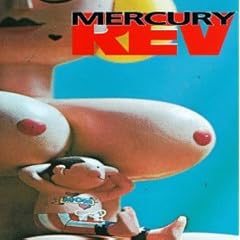
Dust It Off: Mercury Rev - Boces
Album: Boces
Columbia, 1993
Although Mercury Rev is a widely recognized name among indie rockers, especially those with roots in the 90's, the group's first two albums - their best - have fallen by the wayside. There's a reason for that: the band lost founding member and singer David Baker to "creative differences" after the release of Boces, their sophomore effort. There seems to be bad blood, given that the band has all but disowned their first two records. The biography on the band website intentionally understates Baker's role, but there's strong evidence that he had a broad influence on the band's creative directions.
Even if it was not due to Baker's departure, there is no doubt the group took a radical turn, following up Boces with increasingly commercial, mellow, straight-forward releases, most notably 1998's highly touted Deserter's Songs. This is the Mercury Rev you are most likely to have heard; Boces has drifted in and out print with frustratingly little availability in U.S. stores.
But Boces is Mercury Rev at its finest. It's an explosion of tripped-out technicolor pop. Each tiny, quirky part falls magically into place like so many gears in a crazed inventor's masterpiece. The arrangements are at once fragmented and seamless, an effect achieved through intricate - but never dense - layers of sound.
The first song, the ten and a half minute "Meth of a Rockette's Kick," breaks too many pop song rules to count. With its length and slow start, it's a risky choice to open the album, but its bright pop melodies are masterfully spaced out with floating sections and it never once becomes boring. The whole track ends with a funky racket starring everything from trombone to saxophone to glockenspiel to piano. This outburst is pushed to its climax with the addition of bizarre sixties girl group vocals, mixed low. It's an unabashed snapshot of pop music's history at its most cheesy and its most backwards. And it is hard to swallow at first, but once the confusion wears off, it's the album's most beautiful moment.
The other tracks don't fall far short. "Bronx Cheer" is a noise-pop gem, burying an irresistible mini-melody under layers of fuzzy sound and delivering it at a deliberately breakneck speed. "Boys Peel Out" is a loungey meditation on 1950's pop culture, while "Something For Joey" and "Hi-Speed Boats" are pure pop gold. The album's central ballad, "Downs Are Feminine Balloons," playfully but sadly proclaims "if there's one thing I can't stand, it's up."
The entire album sounds like a dream, defiant of logic and explanation. But only if your dream is set in a candy shop where a hundred bright colors are a hundred different kinds of delicious. Blending the druggy sweetness of the 60's with the lo-fi noise of the 90's, Boces is a unique achievement in American underground pop, a fun listen from the first note on and an interesting record the hundredth time through.
Wednesday, April 22, 2009
Dust It Off: Nihilist Spasm Band - No Record

Album: No Record
Allied Record Corp., 1968
Another oldie for you this week! The Nihilist Spasm Band formed way back in 1965, the year the Beatles released Rubber Soul and two years before the first official release of the Velvet Underground. In other words, in 1965, rock was in its adolescence, at most.
In the few years that followed, rock'n'roll would grow up fast, with a small but growing number of bands attempting to fuse high art with rock populism. These bands - the Velvet Underground, Captain Beefheart and MC5, among others - would draw on the free improvisation of progressive jazz music, most notably Ornette Coleman, Albert Ayler, John Coltrane and Sun Ra. They would also consider developments in modern classical music from highly experimental composers like La Monte Young and John Cage, trying to inject the avant-garde ideas of these musicians into a rock'n'roll context.
But in 1965, a group of pranksters in London, Ontario formed a band that would manage to place the experimentalism of other genres in a rock context, not only in terms of musical foundations but also in terms of spirit. Unlike their artistic peers the Velvets and Beefheart, NSB did not cling to any sense of "pop," but somehow, they seem far more down-to-earth than such contemporaries. For a highly conceptual band, NSB shows little elitist artistic pretension.
Some of the lack of pretention undoubtedly stems for the fact on a technical level, NSB are godawful. While this makes the band a difficult listen, it also makes them an eerie precursor to punk - the idea that you don't have to be glamorous or technically proficient to make rock music is clearly present in their ideology. Moreover, the fact that their first record is called "No Record" is an uncanny, if not clairvoyant, foreshadowing of art-rock's future, the late 70's "no wave" movement.
It's easy to overstate the influence of NSB. Truth be told, few musicians of the 60's and 70's ever heard the band, and the first major figure to publicly acknowledge their impact was Sonic Youth's Thurston Moore, not a player in the music scene until the 1980's.
Also, No Record is not really a great listen. If it were produced today, it would be nothing short of terrible. But it's a rare piece of history, and with its context in mind, the record becomes a fascinating and outstanding achievement.
The Nihilist Spasm Band is alive and well today in their hometown in Ontario, Canada. Since their inception, they've played a local show every Monday night, and those are still going ahead as they were forty years ago. Even if they did not shape the course of popular music, the band's dedication to making a racket and having fun is unparalleled, and their avant-garde approach is one that would not be matched for decades after their formation.
MySpace
Wednesday, April 15, 2009
Dust It Off: Karen Dalton - In My Own Time

Album: In My Own Time
Paramount, 1971
This is gonna be a long one, but trust me, she deserves it...
So it's tax time, and when I was trying to fill out my 1040, I had to scrounge up last year's tax documents, which I keep in my "papers I don't want to throw away" drawer. When I finally managed to locate the tax documents in the pile, sandwiched between them I found a small slip of paper that bore unfamiliar handwriting reading: "Karen Dalton 'In My Own Time' 1970?"
It took me a while to figure out where this paper had come from, but at last I recalled that over a year ago, I was chilling in Cake Shop with a friend when some music came on that caught our attention. I'd never heard anything like it. Somewhere in the no-man's land between soul, blues and lo-fi folk, the song was dominated by a voice so unique and emotive it literally took my breath away. And once I resumed breathing, I found the young man who seemed to be manning the iPod, he jotted down a name and I tucked the paper away for later.
The fact that I was so struck by Dalton's music knowing nothing about the singer's identity or the music's age (I assumed it was contemporary) proves that Dalton's merits are not dependent on her tragic backstory. But it's still a story worth telling.
A Cherokee Indian, Dalton was born in Enid, Oklahoma, at the tail end of the Great Depression. However, as a young woman, she found her way to New York City in time for the Greenwich Village-centered folk revival of the early 60's. Dalton was already an established figure within the tiny movement by the time Bob Dylan arrived in the city, and she became Dylan's immediate favorite among the first Village folkies.

Karen Dalton
But despite this, she would remain an obscure figure in music history for the rest of her life. A notoriously slow recorder, she didn't put out a record until 1969, and didn't put out In My Own Time, her masterpiece, until 1971, even though she'd been a leader in the folk revival from its earliest days. She had already begun to struggle with serious drug and alcohol abuse and after the album's release, she sank into its mire once and for all. In My Own Time would be her final recording.
The last two decades of Dalton's life are relatively undocumented. After years of struggling with addiction, illness and financial ruin, Dalton died of AIDS in 1993. At the time of her death, she was homeless. (However, contrary to many reports, she spent her final weeks not on the streets but in the care of longtime friend and fellow musician Peter Walker.)
In hindsight, it's easy to find Dalton's personal tragedy foreshadowed in her music, but it's also important to remember that even if her life had taken a different course, In Your Own Time would remain one of the most powerful recordings of its time.
Dalton has been primarily classified as folk because it's in the folk community that she found acceptance. However, her music has as betrays a much greater influence of motown, soul and country blues than any of her folk comptemporaries'. She also developed a close relationship with the Holy Modal Rounders, linking her to the New York art-rock scene that would give rise to the Velvet Underground.
In addition to being an exceptional singer, Dalton was also a talented twelve-string guitar and long-neck banjo player, and throughout the album, her skills are backed by a wide variety of instrumentation. Some songs are richly orchestrated, others feature only Dalton's banjo or guitar as backing, which allows some tracks to sound like early soul, others like old-timey blues and yet others like the folk bands with whom she is most commonly associated.
Unlike most folk revivalists, Dalton didn't write her own material, but her versions were anything but derivative. The most obvious example, "When A Man Loves A Woman," is a completely different song when Dalton sings it - completely different from Percy Sledge's original R&B version, that is. (To compare it to the cringe-inducing Michael Bolton version is like comparing apples and oranges. Actually, more like comparing apples and the War of 1812.)
The most important piece of Dalton's unique music is her voice, which bears an often-noted resemblance to Billie Holiday's - rich and deep, yet weary and almost distant. At times, the music is profoundly relaxing; at others, it is tortured and haunting. The sweet sigh of "Something On Your Mind" is music to come home to, while "Same Old Man" would make a better soundtrack for suicide.
The album features only two true folk songs. The first is "Katie Cruel," an enigmatic Scottish ballad: "When I first came to town / They called me the roving jewel / Now they've changed their tune / They call me Katie Cruel." The song never explains what changed, but it's thick with regret and betrayal. Even more chilling is "Same Old Man," an adaptation of a little-known folk song, which included what could fittingly have been Dalton's last words:
"My mind is failing and my body grows weak
My lips won't form the words I speak
I'm floating away on a parallel plane
New York City won't see me again"
The injustice of Dalton's obscurity and her tragic death overshadow her intensely affecting and beautiful music. Isolation rings through in every note. It's too late to undo the cruelty with which life treated her, but it's not too late to pay tribute to one of music's greatest overlooked greats. May she never be forgotten and may her soul rest in peace.
Wednesday, April 8, 2009
Dust It Off: The Adolescents - The Adolescents

Album: The Adolescents
Frontier Records, 1981
Although the Adolescents are considered a classic band of the early 80's West Coast punk scene, outside of punk cirles, they've never acheived the same level of recognition as their peers Black Flag, Minor Threat and the Dead Kennedys - to name a few. That's despite the fact that this, their first and best album, was recorded and released before Black Flag's masterpiece Damaged and Minor Threat's first EP. It also easily predates the first proper releases by their venerated Orange County peers Social Distortion, DC's seminal Bad Brians and L.A.'s Descendents. The list could go on, but my point is simply that though the Adolescents were influenced by all these bands, they mastered and honed the style, recorded it and sent it out into the world while many of the groups who touched off the hardcore movement were still just beginning to get their shit together.
On the surface, The Adolescents sounds exactly like you'd expect from early hardcore - simple, fast and loud. But a closer attention to detail reveals that even as the hardcore was only beginning to define its identity, the Adolescents were already pushing its boundaries. Their arrangements are far more complex than the three-chord constructions of their contemporaries, and their songs are augmented with slower sections and even guitar solos, both big no-no's in the original hardcore rulebook.
But despite that, The Adolescents don't sound like a proto-punk band still filtering out the excesses of arena rock - the complexity never seems self-indulgent and never takes the focus off the music's loud-fast core. The Adolescents sound like a band that has fully grasped the essence of hardcore punk and its implications and moved on to expand its horizons, all by 1981.
Nor do they sound like a punk band that has overthought its sound and lost its spirit. The truly "adolescent" yell of Tony Cadena (who was just 18 at the album's release) is geniune.
The album gets off on the right foot with the opener "I Hate Children" (final line: "Kill all children dead!"). Anthems like "No Way" and the more lyrically thoughtful "Ameoba" are classics. The common themes like rejection by peers ("No Friends," "Creatures") and political repression ("Democracy") make plenty of appearances, but they stand alongside more personal lyrics. The anguished chorus of "Who Is Who" proclaims "the walls are closing in on me / I don't know what to do," while the fictional drug addict in "Self Destruct" admits "Crying, I'm sorry, I'm out of my head."
The album's true peak is its centerpiece "Kids of the Black Hole," a whopping five-minute track that despite its length, doesn't back off the high-speed attack of the rest of the album. Lyrically, the song is a potent tale of the depravity of youth culture, taking to task both their peers and society as a whole for leaving an entire generation directionless, drug-dependent and without a future. Musically, a two-note lead sounds like Joy Division on speed, while a careful arrangement keeps the song interesting throughout its entire span - a good five times the length of most hardcore songs.
Years ahead of its time, Adolescents is an essential album of early 80's American punk. It's also a rare musical acheivement for its genre, one that could appeal to a broad audience far beyond hardcore's usual boundaries.
Wednesday, March 18, 2009
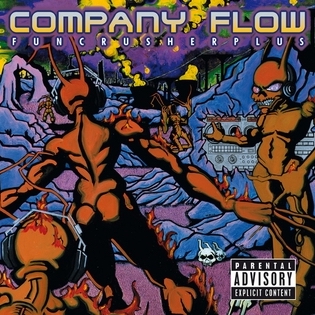
Dust It Off: Company Flow - Funcrusher Plus
Album: Funcrusher Plus
Rawkus Records, 1997
Here at RFR, I don't talk a whole lot about rap, but that doesn't mean I'm not listening to it. And for this Wednesday's "Dust If Off," it seems like it's time to once again step outside the boundaries of rock to review one of the greatest hip-hop albums of all time.
Hailing from our very own New York City, Company Flow represents the hardest line of underground rap. Funcrusher Plus sounds like the music we'll be hearing after the apocalypse - stark, militant and haunted. Unlike many other independent hip-hop artists, Company Flow never went in for electronica, ambiance or indie rock tricks. Their rap is a straightforward, hardcore verbal assault.
Funcrusher is the group's finest achievement and arguably the finest achievement in the history of underground rap. Unlike other 90's hip-hop, it doesn't sound dated, even though it's been more than ten years since its release. This is largely due to the minimalism of the beats, with little other than drums supporting the voice on many tracks.
Funcrusher is a concept album, and while the concept is a bit hard to completely follow, it's undeniably post-apocalyptic - the barren beats imitate futuristic wastelands and the rapping is delivered with an urgency that's unrelentingly ominous. At times, the production borders on avant-garde, without losing its hip-hop cool. For example, "The Fire In Which You Burn" features only a pounding off-beat rhythm and a simple, slowly plucked sitar under the words.
The vocals are dense, with few repeating choruses, so after dozens of listens, you'll still have only caught about half the words. There's a dystopian theme made clear by songs like "Population Control," but this metaphorical setting ties flawlessly in to the album's more concrete subjects - the disturbing cycle of poverty and oppression in inner-city neighborhoods, the corruption of the music industry and the terrifying power huge corporations wield in our lives. I don't usually go in for the political lyrics, but Company Flow makes the politics personal - they aren't talking about ideals as much as trying to survive in a violent and repressive society.
Those put off by gangsta rap's glorification of violence will be relieved by tracks like "Last Good Sleep," a harrowing personal account of the spectre of domestic abuse, and "8 Steps to Perfection," which proclaims "if you murder up in the ghetto, you murder in a temple." It can be slightly preachy, but for the most part, that is counteracted by its absolutely anti-idealistic worldview.
By all counts, this is one of the greatest albums of its time. Its sparseness was a major coup for independent and underground rap, proving you don't need a major label budget to put out something astounding and hardcore. It's a musical triumph as well, pushing rap to its extreme in density and complexity of rhythm - few MCs have ever matched El-P's delivery. Most importantly, the sonic and verbal assault is gripping, with intelligent rage bleeding through on every track.
Wednesday, March 11, 2009
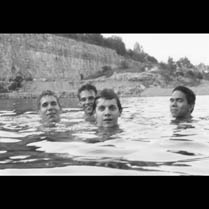
Dust It Off: Slint - Spiderland
Album: Spiderland
Touch & Go, 1991
Among indie rock geeks, Spiderland is far from obscure, but I've been surprised a number of times recently by musically literate people who have simply never heard of Slint. Here's what you should know: Slint was the first and best of the "math rock" bands, a genre known for changing time-signatures, angular guitars, dynamic contrast and complex composition. It was also essential in kicking off "post rock," making way for bands like Godspeed You! Black Emperor, Sigur Ros and Mogwai.
Spiderland, Slint's haunting masterpiece, has only six songs, each of them telling a different dark story. Brian McMahon's vocals are mostly spoken or screamed (though at times inadvertently tunefully), allegedly because he was too insecure to sing them. This delivery would be annoying in most contexts, but here, it's extremely powerful - McMahon simply lays the dark corners of his mind bare for his audience, without hiding behind a forced melody or song structure. Spiderland is a window into a deeply damaged psyche and its immediacy is startling and deeply unsettling.
Unlike many later post rock bands, Slint never used electronics or orchestral noise, instead focusing on traditional rock-band palette of electric guitar, bass and drums. This makes the music heavy-hitting and aggressive, an effect enhanced by the band's technique of dropping everything to a haunting whisper before slamming more out at top volume. Meanwhile, though the structures borrow more from prog rock than pop, they are clearly conceived with great care, each providing a new alien landscape against which McMahon's stories unfold.
Rumor has it that members of Slint were in and out of mental institutions throughout the recording of Spiderland, and whether or not that's true, Spiderland is one of the most anguished, painful records ever made. "Breadcrumb Trail" tells a story of an innocent romance with a fortune-teller, but the tale is shrouded in ominous details, while "Don, Aman" seems to be a harrowing if enigmatic account of mental illness.
Most chilling of all is the closer, "Good Morning, Captain." Based loosely on Coleridge's "Rime of an Ancient Mariner," the song tells the story the sole survivor of a shipwreck, an old sailor shunned when he seeks help or even witness on shore. Near the end of the song, however, McMahon seems to break down and instead of finishing the narrative, he just starts screaming "I miss you" over and over at the top of his voice until the album's close.
It's a staggering work that sounds like nothing before or since. Musically, it is a pivotal experiment in the use of changing time signatures and contrast dynamics. Emotionally, it protrays agony, horror and dispair with unsurpassed intensity. A landmark album in indie rock, Spiderland should be required listening for everyone.
Wednesday, March 4, 2009
Dust It Off: Walt Mink - El Producto

Album: El Producto (Walt Mink)
Atlantic, 1996
This album's biggest claim to fame is that it is one of fewer than a dozen albums to receive a 10/10 from Pitchfork Media upon its initial release, a rating even the band's own mothers must have known was undeserved. But despite it not being a 10/10 sort of record, it is a great record. And it would have been known as one if it weren't for a serious of crappy twists of fate (mostly caused by the messy internal politics at Atlantic) that kept it under most listeners' radars .
Walt Mink is quintessentially 90's and quintessentially American indie, equally because of its clear post-Nirvana wussiness and because of its heavy-handed alt-rock production. The band's catchy pop is delivered at lightspeed in ever-changing time signatures and with a healthy sheen of distortion. It sounds like the poppiest of Husker Du or Mudhoney, but about twice as fast.
Though Walt Mink's line-up changed several times, it always featured John Kimbrough, and only John Kimbrough, on guitar. Backed only by a rhythm section, Kimbrough developed a quick half finger-picking, half strumming technique that allowed him to be both lead and rhythm guitarist, churning out quick riffs while holding down a steady chord with a few fingers. It's not that this approach is revolutionary, but it's surprisingly effective and on El Producto, it's at its best.
Kimbrough's high-ish voice can be a bit whiny and annoying at times, and his lyrics are often, well, dumb. But that doesn't stop songs like "Stood Up" and "Overgrown" from being some of the rockin'est moments of the 90's. And in what was often a heavy decade for rock music, Walt Mink's lightness - achieved through sheer speed and an unswerving refusal to hit weighty, low-register chords on the guitar - makes it a fresh voice among its contemporaries.
From punk-inspired underground pop tracks to a handful of sweet acoustic numbers, El Producto shines because of its superb (if simple) songwriting. The complex hooks are irresistible while the veering time signatures hold a more intellectual appeal. This album didn't shake the foundations of rock'n'roll, but it's solid and smart and it doesn't sound like anyone except Walt Mink.
Tuesday, March 3, 2009
News: Strangest Supergroup Ever
Hi kids! My friend known here as "Helga" sent me a news article announcing the formation of a new supergroup featuring James Iha (the Smashing Pumpkins' hippie guitarist), Taylor Hanson (yeah, Hanson, as in "Mmmbop"), Adam Schlesinger (Fountains of Wayne, Ivy) and Bun E. Carlos (Cheap Trick's drummer). What can I say? Except: what the fuck???
The band is called Tinted Windows. Their debut is out in April.
Source: "Who's Next?" (Yahoo)
The band is called Tinted Windows. Their debut is out in April.
Source: "Who's Next?" (Yahoo)
Wednesday, February 25, 2009
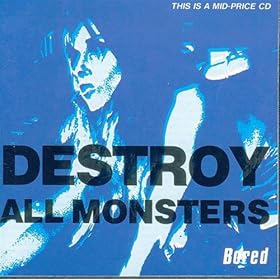
Dust It Off: Destroy All Monsters - Bored
Here at Radio Flyer Review, I like to tell you about the cutting edge of indie music, but I hardly ever get a chance to tell you about the great stuff you may have overlooked or forgotten from the last fifty years. So I've decided to run a weekly feature highlighting "cult classic" albums of yesteryear. Hope you enjoy!
Album: Bored (Destroy All Monsters)
Cherry Red, 1999
Recording date: 1978-1979
Talk about your cult classics! Destroy All Monsters was formed in Ann Arbor in 1973 by a group of art students led by ex-model turned artist and singer Niagara and her boyfriend Cary Loren. None of the original members of the band were musicians and their highly avant-garde early years were spent jamming with records and then descending into chaotic noise rock when the record stopped. Their only shows were played guerrilla style - setting up uninvited at parties, etc. - and they were usually promptly ejected.
DAM's second era began in around 1977 when the band basically pestered Ron Asheton of the Stooges and Michael Davis of MC5 into joining. The addition of experienced rock musicians to the line-up was coupled with the explosion of the punk movement, the first scene edgy enough to connect with DAM's music. Combined, these factors moved DAM away from highly avant-garde performance art towards a more musical form of rock.
It was this greatly transformed incarnation of DAM that recorded the three singles featured on Bored. Asheton (always my favorite Stooge) uses his characteristic gritty guitar while Niagara sounds eerily like Sonic Youth's Kim Gordon. And if sounding exactly like Sonic Youth in 1978 isn't being ahead of your time, I don't know what is.
Songs like "You're Gonna Die" spew the band's typical morbid nonsense, while others seem to hint at undecipherable political points. Despite its vast musical differences from the band's early work, Bored accomplishes the same thing - providing a raw and wry commentary on music, art and society. Punk is all about stripping rock to its barest bones and rebuilding it from scratch, but few bands have managed deconstruction to the same extreme as DAM. But for all its artiness, it comes down to this: Bored is a damn fun listen!
Album: Bored (Destroy All Monsters)
Cherry Red, 1999
Recording date: 1978-1979
Talk about your cult classics! Destroy All Monsters was formed in Ann Arbor in 1973 by a group of art students led by ex-model turned artist and singer Niagara and her boyfriend Cary Loren. None of the original members of the band were musicians and their highly avant-garde early years were spent jamming with records and then descending into chaotic noise rock when the record stopped. Their only shows were played guerrilla style - setting up uninvited at parties, etc. - and they were usually promptly ejected.
DAM's second era began in around 1977 when the band basically pestered Ron Asheton of the Stooges and Michael Davis of MC5 into joining. The addition of experienced rock musicians to the line-up was coupled with the explosion of the punk movement, the first scene edgy enough to connect with DAM's music. Combined, these factors moved DAM away from highly avant-garde performance art towards a more musical form of rock.
It was this greatly transformed incarnation of DAM that recorded the three singles featured on Bored. Asheton (always my favorite Stooge) uses his characteristic gritty guitar while Niagara sounds eerily like Sonic Youth's Kim Gordon. And if sounding exactly like Sonic Youth in 1978 isn't being ahead of your time, I don't know what is.
Songs like "You're Gonna Die" spew the band's typical morbid nonsense, while others seem to hint at undecipherable political points. Despite its vast musical differences from the band's early work, Bored accomplishes the same thing - providing a raw and wry commentary on music, art and society. Punk is all about stripping rock to its barest bones and rebuilding it from scratch, but few bands have managed deconstruction to the same extreme as DAM. But for all its artiness, it comes down to this: Bored is a damn fun listen!
Thursday, January 22, 2009
Upcoming Show: ESG - This Saturday!!!
OK, so yesterday, my friend was just telling me had to check out this band ESG who kind of ran with the No Wave crowd back in the early 80's. The four sisters from the South Bronx played a stripped-down, rhythm-focused funk that through odd twists of fate captured the attention first of the NYC No Wave scene and later of Factory Records in the UK.
ESG's innovative combination of rhythmic influences from the Rolling Stones to James Brown to Latin dance was profoundly influential in post punk, hip hop and club music. Sampling from ESG became a hip hop standard in the 90's, much to the group's frustration - they saw no money from the use of their work.
Over the last thirty years, ESG has flickered in and out of existence with slight line-up changes (most recently adding the daughters of founding member Renee). And apparently, I chose the perfect time to check them out, because when researching them last night, I was very surprised to stumble upon a current flier.
Show info:
ESG is playing Le Poisson Rouge (158 Bleecker St.) this Saturday at 10 PM. Tickets are kind of expensive ($20 adv/$25 door) but considering the band's historical significance and the fact that they are completely amazing, you'd do well to scrape together enough for a ticket. There are a number of other acts on the bill as well including Salvatore Principato of Liquid Liquid. It's not to be missed.
ESG's innovative combination of rhythmic influences from the Rolling Stones to James Brown to Latin dance was profoundly influential in post punk, hip hop and club music. Sampling from ESG became a hip hop standard in the 90's, much to the group's frustration - they saw no money from the use of their work.
Over the last thirty years, ESG has flickered in and out of existence with slight line-up changes (most recently adding the daughters of founding member Renee). And apparently, I chose the perfect time to check them out, because when researching them last night, I was very surprised to stumble upon a current flier.
Show info:
ESG is playing Le Poisson Rouge (158 Bleecker St.) this Saturday at 10 PM. Tickets are kind of expensive ($20 adv/$25 door) but considering the band's historical significance and the fact that they are completely amazing, you'd do well to scrape together enough for a ticket. There are a number of other acts on the bill as well including Salvatore Principato of Liquid Liquid. It's not to be missed.
Tuesday, January 13, 2009
Top Five Bands I Should Like But Don't
OK, I've been contemplating publishing this list for a while, but I've been hesistating, partly out of fear of misunderstanding. These are bands I respect a lot and want to love. But on an emotional level, I just don't like them. I know, I'm missing out!
5. R.E.M. - I don't get it. This is the only band on the list that I don't own albums by, but I've given them lots of listens, especially because people are always playing them for me, trying to win me over. I want to like them, but they don't hold my attention, just annoy me and then fade into the background.
Number of albums I own: 0
4. Nirvana - After listening to Nirvana intensively while working on a term paper about Kurt Cobain in college, I started to come around to appreciating the band, but I still can't stand Nevermind. It just seems whiny and dull to me. And it's probably the most important album of the last quarter century!
Number of albums I own: 3
3. Radiohead - I've tried so hard to love Radiohead, I bought a bunch of their albums when I was in high school and listened to them all the time. I convinced myself and others that Radiohead was one of my favorite bands, but the reality is, I never enjoyed it. I find OK Computer depressing, but only vaguely so, not in a way I find moving or even interesting. I could come around to some songs on The Bends, but try as I might, I've found it completely impossible to warm up to OK Computer.
Number of albums I own: 3
2. The Smiths - I couldn't begin to the count the number of times I've been told I'd really like the Smiths. I really disliked them when I first heard them as a teenager, but as I became more open-minded, I expected they would grow on me. They haven't. I get really annoyed after a couple of songs and have to turn them off. For some reason, I can't stand Morrisey's voice.
Number of albums I own: 1
1. The Ramones - I know. The RAMONES. How can a wannabe-punk such as myself dislike the greatest punk band of all time? The truth is, I've never been crazy about what happened between the Stooges and the advent of hardcore, but the Ramones remain my least favorite band from the era. The truth is, most of their melodies either bore or annoy me. I know they are worth my respect and love, and I hope with time, I'll come to understand what other people see in this band. But for the time being, I just don't get it.
Number of albums I own: 2
This list is a work in progress, in that I hope it will grow shorter with time. Suggestions, anyone?
5. R.E.M. - I don't get it. This is the only band on the list that I don't own albums by, but I've given them lots of listens, especially because people are always playing them for me, trying to win me over. I want to like them, but they don't hold my attention, just annoy me and then fade into the background.
Number of albums I own: 0
4. Nirvana - After listening to Nirvana intensively while working on a term paper about Kurt Cobain in college, I started to come around to appreciating the band, but I still can't stand Nevermind. It just seems whiny and dull to me. And it's probably the most important album of the last quarter century!
Number of albums I own: 3
3. Radiohead - I've tried so hard to love Radiohead, I bought a bunch of their albums when I was in high school and listened to them all the time. I convinced myself and others that Radiohead was one of my favorite bands, but the reality is, I never enjoyed it. I find OK Computer depressing, but only vaguely so, not in a way I find moving or even interesting. I could come around to some songs on The Bends, but try as I might, I've found it completely impossible to warm up to OK Computer.
Number of albums I own: 3
2. The Smiths - I couldn't begin to the count the number of times I've been told I'd really like the Smiths. I really disliked them when I first heard them as a teenager, but as I became more open-minded, I expected they would grow on me. They haven't. I get really annoyed after a couple of songs and have to turn them off. For some reason, I can't stand Morrisey's voice.
Number of albums I own: 1
1. The Ramones - I know. The RAMONES. How can a wannabe-punk such as myself dislike the greatest punk band of all time? The truth is, I've never been crazy about what happened between the Stooges and the advent of hardcore, but the Ramones remain my least favorite band from the era. The truth is, most of their melodies either bore or annoy me. I know they are worth my respect and love, and I hope with time, I'll come to understand what other people see in this band. But for the time being, I just don't get it.
Number of albums I own: 2
This list is a work in progress, in that I hope it will grow shorter with time. Suggestions, anyone?
Tuesday, November 4, 2008
Five Forgotten Pioneers: Part 2
OK, here's part two! (Part one is here.)
R. Stevie Moore
R. Stevie Moore has been making independent underground pop since the 1960's. Recording and releasing most of his music himself, Moore established a DIY aesthetic that would eventually be the hallmark of lo-fi, the dominant movement of American indie pop. Moore's music itself isn't lo-fi, but in his recordings, you can hear the beginnings of the intentionally messy and proudly raw sounds later adopted by the likes of Sebadoh and Pavement. Even the use of basic multitrack recording equipment like Moore's has become a badge of honor among American indie bands from Guided by Voices to the White Stripes.
Moore's releases number in the hundreds if not thousands, so of course, there's a lot of dud songs in there, but the average quality is surprisingly high. The variety among the releases is itself amazing, with genre-crossing composition at times akin to Beck's. Experimental but accessible, his pop music has always been forward-looking, innovative and fun.
NEWS: R. Stevie Moore is playing November 11, 2008 at Cake Shop in NYC. See you there!
Mirrors (a.k.a. the Styrenes)
Of the many groups immediately preceding the punk movement, few have been more forgotten than Mirrors. Part of the Cleveland scene that hatched the Electric Eels, Rocket from the Tombs and Pere Ubu, Mirrors formed in 1973, recorded a small amount of material (the majority of which went unreleased until 2001), then changed names and directions and continued into the 1980's at the Styrenes.
Mirrors play a raw, aggressive proto-punk like the Stooges or the Electric Eels, but with more thoughtful experimentalism than these bands, borrowing from early Pink Floyd as well as the Velvet Underground-inspired Cleveland and Detroit scenes. The intellectual approach of Mirrors to the subversively raw proto-punk of their peers in many ways predicts the post-punk movement, which would add the very same slowed-down thoughtfulness to its punk roots. Intelligent and creative, Mirrors included touches of prog rock and noise in their music, but they never once forgot to rock out.
R. Stevie Moore
R. Stevie Moore has been making independent underground pop since the 1960's. Recording and releasing most of his music himself, Moore established a DIY aesthetic that would eventually be the hallmark of lo-fi, the dominant movement of American indie pop. Moore's music itself isn't lo-fi, but in his recordings, you can hear the beginnings of the intentionally messy and proudly raw sounds later adopted by the likes of Sebadoh and Pavement. Even the use of basic multitrack recording equipment like Moore's has become a badge of honor among American indie bands from Guided by Voices to the White Stripes.
Moore's releases number in the hundreds if not thousands, so of course, there's a lot of dud songs in there, but the average quality is surprisingly high. The variety among the releases is itself amazing, with genre-crossing composition at times akin to Beck's. Experimental but accessible, his pop music has always been forward-looking, innovative and fun.
NEWS: R. Stevie Moore is playing November 11, 2008 at Cake Shop in NYC. See you there!
Mirrors (a.k.a. the Styrenes)
Of the many groups immediately preceding the punk movement, few have been more forgotten than Mirrors. Part of the Cleveland scene that hatched the Electric Eels, Rocket from the Tombs and Pere Ubu, Mirrors formed in 1973, recorded a small amount of material (the majority of which went unreleased until 2001), then changed names and directions and continued into the 1980's at the Styrenes.
Mirrors play a raw, aggressive proto-punk like the Stooges or the Electric Eels, but with more thoughtful experimentalism than these bands, borrowing from early Pink Floyd as well as the Velvet Underground-inspired Cleveland and Detroit scenes. The intellectual approach of Mirrors to the subversively raw proto-punk of their peers in many ways predicts the post-punk movement, which would add the very same slowed-down thoughtfulness to its punk roots. Intelligent and creative, Mirrors included touches of prog rock and noise in their music, but they never once forgot to rock out.
Friday, October 31, 2008
Five Creepy Songs for Halloween
5. Bela Lugosi's Dead (Bauhaus) - Duh.
4. I Love You But You're Dead (Destroy All Monsters) - This song is about the confusion you feel when you love a person, but they have died and are just a corpse. And how that's kind of a problem in your relationship. Key lyric: "I love you, but you're dead / You make my bed all red!"
3. TIE: Mildred Pierce v. Pacific Coast Highway (Sonic Youth) - Hard to pick the creepier of these Sonic Youth tunes. Mildred Pierce involves a tense, repetitive guitar line followed by shrieking. Pacific Coast Highway features really sweet sounding lyrics (read them first if you can) sung by Kim Gordon in a way that makes them deeply disturbing. I don't think I slept for a week after I heard this one. Sonic Youth runner-up: Dude Ranch Nurse ("Let nurse give you a shot / It's something to do...")
2. Blue Flowers (Dr. Octagon) - The production on this underground rap classic sounds like an old horror film. And it's from an album that chronicles the adventures of a serial killer alien gynecologist. Seriously.
1. Carol (Slint) - This song is completely terrifying.
4. I Love You But You're Dead (Destroy All Monsters) - This song is about the confusion you feel when you love a person, but they have died and are just a corpse. And how that's kind of a problem in your relationship. Key lyric: "I love you, but you're dead / You make my bed all red!"
3. TIE: Mildred Pierce v. Pacific Coast Highway (Sonic Youth) - Hard to pick the creepier of these Sonic Youth tunes. Mildred Pierce involves a tense, repetitive guitar line followed by shrieking. Pacific Coast Highway features really sweet sounding lyrics (read them first if you can) sung by Kim Gordon in a way that makes them deeply disturbing. I don't think I slept for a week after I heard this one. Sonic Youth runner-up: Dude Ranch Nurse ("Let nurse give you a shot / It's something to do...")
2. Blue Flowers (Dr. Octagon) - The production on this underground rap classic sounds like an old horror film. And it's from an album that chronicles the adventures of a serial killer alien gynecologist. Seriously.
1. Carol (Slint) - This song is completely terrifying.
Thursday, October 30, 2008
Five Forgotten Pioneers: Part 1
I've made a list of five rock/pop innovators who I think are too often overlooked, and I'm going to tell you about them. Here's the first three, yay:
The Swell Maps
This band influenced Sonic Youth and Pavement, but no one seems to talk about them on this side of the Atlantic. And frankly, that's a travesty - they were one of the greatest bands of the post-punk era. Their music is difficult to classify, probably because the songs were written collectively or alternately by the band's vastly differing members. There's a lot of punk here, but also a lot of Krautrock, prog and experimental noise rock. Their albums are hodge-podge, but it somehow works, melding pop energy with visionary innovations. Experimental punk isn't unheard of (e.g. Sonic Youth, Pere Ubu) but Swell Maps were among the first and best.
Squirrel Bait
A punk band consisting of four or five high school students from Kentucky, Squirrel Bait achieved almost no recognition during their lifetime and might have been forever forgotten if its members hadn't gone on to form landmark post-rock bands Slint and Gastr del Sol (among others). There's nothing immediately experimental about this band, until you remember that this is pre-Nirvana and pre-grunge - which puts their metal-tinged punk completely ahead of its time. In 1986, no other band's sound as accurately predicted the future of rock music as Squirrel Bait, whose resemblance to Nirvana is at times uncanny.
Not only did Squirrel Bait combine metal influence with punk and melodic pop first, they also are among the best bands to use this sound. They don't top Nirvana, but might reasonably vie for second place. Perhaps because they pre-date Cobain's first releases, Squirrel Bait has a vitality and an inspired quality that's missing from the later sound-alikes. If you like Nirvana's punkier side (or even if you don't), check these guys out!
Lizzy Mercier Descloux / Rosa Yemen
One of music's true innovators, Lizzy Mercier Descloux deserved to be remembered, but today, almost no one knows her name. Descloux's career was two-fold. First, both as a solo artist and as half of duo Rosa Yemen, she was an innovative minimalist in New York City's arty No Wave scene. Her music involves simple guitar lines, complex rhythms and pseudo-melodic shrieks of nonsense in French, Descloux's native language.
The second part of her career is marked by travels throughout the Caribbean, Africa and South America, where she collected new ideas for sound and rhythm and incorporated them into her albums. AllMusic Guide essentially credits her with the invention of "world music" but that's just insulting. Today, "world music" most often refers to cheap and gimmicky "fusion" of two styles that don't belong together but that someone decided to put through a mixer to look more cultured (I'm looking at you, Sting! Not to mention Peter Gabriel and Mickey Hart.). However, in Descloux's music, the style is as it should be - an organic, open-minded melding of influences. Especially in her earlier "world" albums, her work is truly inspired and truly beautiful.
Part two is coming soon...
The Swell Maps
This band influenced Sonic Youth and Pavement, but no one seems to talk about them on this side of the Atlantic. And frankly, that's a travesty - they were one of the greatest bands of the post-punk era. Their music is difficult to classify, probably because the songs were written collectively or alternately by the band's vastly differing members. There's a lot of punk here, but also a lot of Krautrock, prog and experimental noise rock. Their albums are hodge-podge, but it somehow works, melding pop energy with visionary innovations. Experimental punk isn't unheard of (e.g. Sonic Youth, Pere Ubu) but Swell Maps were among the first and best.
Squirrel Bait
A punk band consisting of four or five high school students from Kentucky, Squirrel Bait achieved almost no recognition during their lifetime and might have been forever forgotten if its members hadn't gone on to form landmark post-rock bands Slint and Gastr del Sol (among others). There's nothing immediately experimental about this band, until you remember that this is pre-Nirvana and pre-grunge - which puts their metal-tinged punk completely ahead of its time. In 1986, no other band's sound as accurately predicted the future of rock music as Squirrel Bait, whose resemblance to Nirvana is at times uncanny.
Not only did Squirrel Bait combine metal influence with punk and melodic pop first, they also are among the best bands to use this sound. They don't top Nirvana, but might reasonably vie for second place. Perhaps because they pre-date Cobain's first releases, Squirrel Bait has a vitality and an inspired quality that's missing from the later sound-alikes. If you like Nirvana's punkier side (or even if you don't), check these guys out!
Lizzy Mercier Descloux / Rosa Yemen
One of music's true innovators, Lizzy Mercier Descloux deserved to be remembered, but today, almost no one knows her name. Descloux's career was two-fold. First, both as a solo artist and as half of duo Rosa Yemen, she was an innovative minimalist in New York City's arty No Wave scene. Her music involves simple guitar lines, complex rhythms and pseudo-melodic shrieks of nonsense in French, Descloux's native language.
The second part of her career is marked by travels throughout the Caribbean, Africa and South America, where she collected new ideas for sound and rhythm and incorporated them into her albums. AllMusic Guide essentially credits her with the invention of "world music" but that's just insulting. Today, "world music" most often refers to cheap and gimmicky "fusion" of two styles that don't belong together but that someone decided to put through a mixer to look more cultured (I'm looking at you, Sting! Not to mention Peter Gabriel and Mickey Hart.). However, in Descloux's music, the style is as it should be - an organic, open-minded melding of influences. Especially in her earlier "world" albums, her work is truly inspired and truly beautiful.
Part two is coming soon...
Subscribe to:
Posts (Atom)


