Showing posts with label noise pop. Show all posts

Wednesday, February 22, 2012

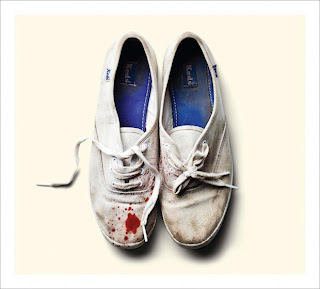
Album: Sleigh Bells - Reign of Terror

Reign of Terror (Sleigh Bells)
Album: Reign of Terror
Mom & Pop
Release Date: February 21, 2012
Rating: ******* (7/10)

Personally, I think you’d have been foolish to harbor high hopes for Sleigh Bells’ follow-up to their 2010 debut, Treats. Sure, Treats was, hands down, the best album of 2010. But remember, 2010 wasn’t exactly 1991. The reason Treats was such a treat is that it was one of the only albums that sounded like 2010. >> Read the full review at piquedmag.com

Tuesday, February 7, 2012

Album: A Place To Bury Strangers - Onwards to the Wall [EP]

Onward to the Wall (A Place to Bury Strangers)
Album: Onward to the Wall
Dead Oceans
Release Date: February 7, 2012
Rating: ******* (7/10)

It's no secret that A Place to Bury Strangers is a one-trick pony, but it's a damn good trick. Guitarist and singer Oliver Ackermann makes his own custom guitar pedals and uses them to annihilate his songs in a peeling monolith of distortion and feedback. A driving beat and heavily reverbed tenor vocals emerge from the murk and shape the wash of noize into irresistible bite-sized songs.

The band's new E.P., Onwards to the Wall, is in many ways a more interesting release than the band’s last full-length album, 2009’s Exploding Head. >> Read the full review at piquedmag.com

Monday, July 18, 2011

Live: Ringo Deathstarr, Heaven, Dead Leaf Echo

When: July 3
Where: Shea Stadium

How do I get so far behind on these?!

So some shoegaze bands played a show.  The Vandelles played first which is weird because they never play first and are far too good to play first.  So anyway, I missed their set as did most people.  LAME.  Anyway, some of their badassery was captured on video, which is cool but may make you (me) regret missing it all the more.

The next band to play was called Heaven.  They're a sort of obscure shoegaze supergroup with a member of Ambulance Ltd and one from the Big Sleep/Snowden.  Someone was telling me they had a member of Swervedriver, but I don't think that's true.  It does look like two members played on Swervedriver's Adam Franklin's solo record so that's probably the origin of that story.  One of them has also played with Dean & Britta (of Galaxie 500/Luna) so basically, what this means is that in their niche genre, they're about as pedigree as you can git.

They're newish and they were pretty good.  Interestingly, they were by far their best when they were doing more ambient, hazy muzak than when they tried to get all songy.  And this is coming from someone who has absolutely no patience with that wishy washy stuff.  Which means two things: 1) they were really good at that wishy washy stuff and 2) they were really not great at more beat+plus+melody, faster paced songs.

At their subtler moments, though, the band was transcendent.  Really spiritual stuff.  Which is why I started like shoegaze in the first place (well, that and it's loud).  It was in these moments when the not-very-groove-centric drummer was at his best, laying down massive slabs o' drum.  Likewise, the vocals shined in these not-trying-to-be-catchy moments - there was something very genuine and natural about them.  [video]

I wrote up Dead Leaf Echo pretty recently and I don't really have anything to add.  It's just nice to finally see all their pieces fall into place.  By the way, if you were wondering where the awesome bass was coming from (as the people behind me during the set were), the band is sans bassist, but their stuff sounds way better than your average prerecorded bass line.  That's because they stacked several layers of properly studio-recorded bass on the track.  Then, they routed the recording through a proper bass amp in addition to the PA.  Which is freaking brilliant.  It was, in fact, the best prerecorded bass I think I've ever heard.  [video]

Of course, all of the bands were just building up to Austin-based shoegaze gods Ringo Deathstarr.  This band makes me swoon.  Their guitar can obliterate your speakers and ear drums.  (In the best possible way.)  This rich guitar, full of phantom melodies and shifting pitches, is straight out of Loveless, but the vocals are more tuneful that My Bloody Valentine's, a lot closer to the good old pop tunes of the Jesus & Mary Chain (who ripped them off the Beach Boys, but that's neither here nor there).

"Jasper" once asked an Austin shoegazer of his acquaintance about the band and was informed that everyone in Austin thought they were a joke and "that girl doesn't even play an instrument" or something like that.  If that was ever true, the joke's now on him.  "That girl," bassist Alex Gehring, is sick.  She's an absolutely great bassist - her lines simultaneously groove deeply and punch you in the chest.  As is typical in the genre, the bass carries a lot of melody while the guitar becomes sheer roar.  Meanwhile, electro/dance-derived icy beats from drummer Daniel Coburn make the whole thing sound a lot like "Soon" (you know, that last song on Loveless that's everyone's favorite MBV song ever).

But what's really great about Ringo Deathstarr isn't that they write amazing songs and get mindblowing sounds out of their instruments.  It's that they're genuinely insane.  Cracked.  Unhinged.  Pure batshit out of their mind nuts.  Which is what made this one of the most punk rock shoegaze shows of all time.  I mean, first of all, in direct defiance of the name of the genre, guitarist Elliot Frazier at several points leapt into the audience midsong.  Then at some point, they invited a bunch of people up on stage (primarily from the previous bands) and somehow things devolved such that both the guitar and drums had been seized by people who weren't in the band at all and the music fell apart in chaos.  But that's not the insane part.  The insane part is that after the song finally stopped breathing, Gehrig insisted that her two bandmates return to their instruments to finish the song (which had veered in the direction of crazytown before its as-recorded coda).  Coburn, I believe, thought the set was over and had gone to the bathroom so the band announced that they would wait (and therefore all of us would wait) for the drummer to return to the stage.  So everyone stood around awkwardly for a few minutes, and then Coburn showed up and they immediately launched into the song where they'd left off.  For about twenty seconds, until the song was over.

I mean, who does that?  Only a true genius.  And only by accident.  It was, obviously, one of the best endings to a show I've ever seen.  And I've seen a lot.  [video]....[more video]

Tuesday, June 21, 2011

Album: Ty Segall - Goodbye Bread

Goodbye Bread (Ty Segall)
Album: Goodbye Bread
Drag City
Release Date: 6/21/11
Rating: ******* (7/10)

On the one hand, more scuzzy garage rock may not exactly be what the indie world needs right now, but on the other, Ty Segall does it right. There's a reason Segall became a rock critic's darling with last year's Lemons. His songs are well composed - simple but full of not-quite-predictable hooks and supercool licks, and he keeps it up on this new LP with impressive consistency.

The album certainly benefited from Segall's experience on multiple instruments. Prior to (and concurrent with) his solo career, he played drums and guitar in a variety of bands. The arrangements are brilliant. While staying within the minimalist confines of the psych/garage/punk genre, they demonstrate a knowledge of the potential of each voice. The guitar and vocals make plenty of room for drums and bass, and none of the parts sound like afterthoughts.

Some of the tracks on Goodbye Bread go in for big, blues, rock'n'roll riffs - "California Commercial" and "The Floor" rock hard, all crashing drums, bristling guitar and meaty bass. The strongest track on the album is the vocal-driven anthem "You Make the Sun Fry," boasting one of Segall's best melodies ever, a near-perfect bass line and a rad solo.

The album is its best at its brightest, most youthful moments. The most obvious foray into minor keys, "My Head Explodes," falls short, starting on the right track but ultimately coming off a bit limp. "Where Your Mind Goes" is a more successful attempt to give the album a darker side. It's an exciting song, but could use to be whittled down from four minutes to three. Most of the rest of the album consists of slower, ballad-y songs under 70 BPM (i.e. a bit slower than "Hey Jude"). But while the tempo suggests ballad and the volume is generally restrained on these songs, they still have that garage grit to them.

Ty Segall does his thing well, but he definitely has a "thing," and it's pretty much just one thing. So despite great songwriting, Goodbye gets a little samey at times. It's also generic enough in style (garage rockers have been a dime a dozen since the 60's) that it's somewhat forgettable. Let's just say unless you've been in a coma for the last fifty years, it's not going to blow your mind. But it might set your head to bobbin' and maybe, when you're home alone, you'll bust out your air guitar for a track or two. At the very least, it's a lot of fun.

Monday, June 20, 2011

Album: Jeff the Brotherhood - We Are the Champions

We Are the Champions
Album: We Are the Champions
Infinity Cat
Rating: ******** (8/10)
Release Date: June 21, 2011

The new Jeff the Brotherhood album is exactly what fans of the band's 2008 debut will be expecting. It polishes the band's three-string psych rock and like their first album, it's a celebration of rock'n'roll excess. The indulgent fun of the album is first announced by an ungodly amount of flange at the beginning of the opening track. I'm not the only person who considers flange top among guitar's guilty pleasures - too cheap a trick to actually use in writing but super fun for enjoyment in one's bedroom. (For those that don't know, flange is an effect pedal that causes a "sweeping" sound without the guitarist actually doing anything.) But Jeff has always wallowed in cheap rock cliches, and in the best possible way. In the face of the wussy anti-rock bias of indie music, someone needs to bring back the wailing solo, the guitar hero posturing, the distortion pedal and the nasty riff. Oh yeah, and over that flange is not one but two guitar solos. At the same time. It's pretty sick.

Although the album does show the band moving towards more sophisticated musicianship, writing and production, they don't really step out of the boundaries they established on Heavy Days, just hone their craft within those boundaries. Some of the riffs even sound like particular riffs off Heavy Days, just reworked and embellished. That's not quite fair, but on the other hand, it's hard not to notice how familiar some of the songs ("Cool Out," "Mellow Out") sound.

The band does amp up their psychedelic side with songs like "Diamond Way," "Stay Up Late" and most of all, "Health and Strength," complete with Beatles-style sitar and high vocal wails. This may be a new dimension for the band, but it's such a 60's throwback that it doesn't really feel like an expansion. To the band's credit, though, they don't opt for a 60's vibe in the processing of their sound, using modern digital effects and beefy 90's guitar tones. As a result, as much as they consciously recall the 60's, their recordings wouldn't be mistaken for actual records from the time. Although they do seek a return to a time of simpler fun, Jeff aren't nostalgic in the sappy way of so many indie bands in the last decade and they aren't afraid to sound modern. They also aren't afraid to rock.

And in terms of rock, there's plenty here. Those thirsting for more ditties by the King of the Riff (Jeff's Jake Orrall) won't be disappointed by Champions, especially if they listen all the way through. Some of the early songs have the band tripping over their own ideas by adding too many complications to their ultra-simple formula. "Cool Out" and "Shredder" are rad tunes, but the album doesn't fully take off until "Ripper," one of the few songs that beats the raw power of the band's debut. Like the original raw power masters, the Stooges, Jeff don't shy away from the grittiest, simplest primal rock'n'roll urges - but unlike the Stooges, there's nothing anguished about Jeff. They're about raw fun.

Unfortunately, the band brings back one rock cliche we could all do without on their ambiguously misogynistic "Wastoid Girl." I know that's not what the band's about, but it's still a bad move on their part.

That track aside, Champions is an enjoyable listen. For folks new to the band, I'd probably recommend Heavy Days. It's got more weak links but its best tracks still pack more punch than almost anything on the new record. Still, it's a toss-up and fans will find lots to love about the new disc - as long as they don't have the audacity to expect something new.

Tuesday, June 7, 2011

Album: Arctic Monkeys - Suck It and See

Suck It and See (Arctic Monkeys)
Album: Suck It and See
Domino
Release date: 6/7/11
Rating: ***** (5/10)

The Arctic Monkeys are one of the better semi-indie bands to make it big lately, but after a couple of good albums, they've really dropped the ball with their latest release, Suck It and See. It's not bad in any particular way, it's just so fucking boring. So far, the record has garnered a lot of really positive reviews but I can't figure out why.

The album was meant to be "more vintage" than the last couple releases and it seems to have accomplished, with earthy production and mellow songwriting that recalls Lou Reed. The songs are almost all the same tempo (130 BPM give or take 10). They almost all start with guitar, then add vocals, then add the rhythm section. They're mostly in the same couple key signatures. There's little distortion, mostly just a slight amp-generated crunch. Nearly every track features tambourine and although the drum beats vary, they are so produced and unspectacular that they end up sounding the same. The vocals never stray from their most comfortable range. There is reverb on the vocals, guitars and drums and it never varies noticeably anywhere on the album.

Taken individually, most of the songs are above average in terms of both writing and execution. The melodies are poppy but pleasantly languid and certainly tasteful. The simple arrangements are well thought out and the guitar sound is beautifully controlled. The topics of the lyrics are generic but more clever than most.

The record does have its moments. "Library Pictures," the album's heaviest track, is propelled by frantic bass and drumming - but even this song drops down to half tempo for half the song and returns to the jangly crunchy guitar of every other track. "All My Own Stunts" is satisfyingly dark and the vocal melody is the only one on the album that breaks the mold. Meanwhile, "Brick by Brick" rocks hard and recalls the minimal blues-punk of the White Stripes and the gritty psychedelia of bands like Black Rebel Motorcycle Club and Brian Jonestown Massacre. The album's lead single, "Don't Sit Down 'Cause I've Moved Your Chair" - though similar in mood - takes its time in the introduction and with the slow tempo and highly repetitive, generic melody on the verse, it doesn't really accomplish what it sets out to do.

As for the songs that match the album's signature formula, of course, some are better than others. The title track is warm and gently enticing. And the closer, "That's Where You're Wrong," is a subtle, exquisitely written song, all jangling guitars and finespun hooks. In contrast, the first two songs are painfully boring and entirely lacking in melodic interest in the vocals (although there are a couple of good guitar riffs thrown in).

Arctic Monkeys may be good songwriters and they may have perfected their sound, but there is a vacuum in Suck It, a void where energy and inspiration should be. I'd rather hear a sloppy, mistaken-ridden record than one that's polished and lifeless. Skip it.

Monday, June 6, 2011

Album: Fucked Up - David Comes to Life

David Comes to Life (Fucked Up)
Album: David Comes to Life
Matador
Release Date: 6/7/11
Rating: ******** (8/10)

I don't like rock operas. Not Tommy. Not Zen Arcade. Not even really Ziggy Stardust. I like a lot of the songs on those records but I find the whole opera thing really hard to get past. And Fucked Up's new album, David Comes to Life, is no exception. But that's a personal hangup. And setting personal shit aside, David is an outstanding accomplishment.

The double album, clocking in at 80 minutes, is a proletarian meta-drama that explores themes like the subjectivity of truth and personal redemption in the face of guilt. The title character, David, is a factory worker (perhaps the very same worker imagined by guitarist 10,000 Marbles in his flagrantly Dickensian interview with Stereogum) who falls in love with a woman with whom he plots an insurrection of sorts. Soon after the lovers meet, the woman is killed in an explosion and David takes the blame for her death. However, the listener eventually learns that the originally distant narrator was actually (probably) responsible. The truth comes out and David finds redemption and peace, his belief in love restored.

Fucked Up have reinvented hardcore punk before and here they continue to push the boundaries of the genre. There's no mistaking Damian Abraham's voice for any other style, but just as the Who proved rock could reach the epic level of opera, Fucked Up are here to show the same for punk, more convincingly than anyone else has managed to date. Abraham's roar is couched in a wash of guitar, the sort of shimmering layers of sound that characterized the band's last release. Lead guitar also frequently joins Abraham on the melodies, outlining the tunes his gruff voice implies. It all works.

Moreover, David recalls the Who's Tommy not only in its story and the statement it makes on rock music but even in its sound. Although the layers of guitar could be no one but Fucked Up, some of the scintillating textures and broad open chords have Pete Townshend all over them. Although compositionally the furthest the band has gotten from traditional pop, the album is the band's brightest to date in terms of the chords, keys and melodies.

The lyrics are literate and clever. The story isn't all that clear because the band chooses to focus on the characters' internal battles rather than the plot that links them together. Although the ambiguity of the album can be frustrating, it's actually much better for this decision. After all, the whole story is metaphor and allegory. The moral of the tale seems to be "believe in love and seize the day," which is in itself not all that original, but it works because the band tackles huge subjects en route to this conclusion - truth, justice, religion, class struggle and free will among others. The unreliable narrator is not a new literary device, but it's rare to find a narrator so actively and candidly discussing his role as narrator and his reason for taking on this role - to hide his own guilt.

The band's approach here does have its drawbacks, though. There is some dialog among the characters that comes off as a little trite and the constant couplets are a bit annoying for those looking for the kind of pop-structured ragers of the band's previous releases. The lack of straightforward songs is the most disappointing thing about this album - but then again, the bands songs were never terribly straightforward by conventional standards anyway. The album's best tracks are often its simplest. Anthems "A Slanted Tone" and "Serve Me Right" stand out and the quality of the songs seems to improve as the album carries on - as the band's passion peaks and the story's broader implications come into focus.

David is an ambitious undertaking but Fucked Up has not overreached. Indeed, they've earned this and their execution, while occasionally burdensome, is never indulgent. Fucked Up have approached this project with the same passion and love with which they do everything. And despite the heavy subject matter and daunting length of the record, it rocks as hard as anything the band has done to date. I doubt it will find itself in as frequent rotation in my headphones as the band's more song-oriented releases, but it's a humbling achievement and a vital contribution to punk.

You can hear the whole album for yourself right here.

Wednesday, May 25, 2011

Album + Live: Her Vanished Grace


Album: See the Moon
Athame Music, 2011
Rating: ******* (7/10)

I've more or less retired from reviewing local shoegaze and shoegaze-affiliated bands for a number of reasons, but against my better judgment, I'm temporarily suspending the moratorium to do a couple of reviews.

First against the wall is Her Vanished Grace, who are not really a shoegaze band but are a part of that scene. Their music is dream pop - a style that takes the processed layers of shoegaze but tones them down enough to make audible their concisely-written indieish pop tunes. At times, HVG sounds more like U2 than they do My Bloody Valentine.

Her Vanished Grace have been making music in NYC for about twenty years now. The core of the band are married couple Nance and Charlie Nieland who both play guitar and trade lead vocal roles. For quite a while now, the duo has been joined by a rhythm section of Maria Theodosiadou (bass) and Billy Loose (drums). The quartet cranks out a new album every year or two and despite the volume of output (it adds up after this many years), the quality of the band's LPs is impressively consistent.

There is a parallel consistency between the tracks of their latest release, See the Moon. None of the record's eleven tracks sound like filler; each seems to have been given the same level of attention. Rather than looking for a way to fill up 45 minutes, the band seems to have waited until they had 45 minutes of material, then released their record.

Just because the songs are given equal attention doesn't mean they are equally successful. There are some standout moments, like the second track, "Passenger," and the album's lush centerpiece "Beauty Lingers." There are some awesome bass lines ("Make It Lighter" is the best example of many) and strong melodies and drumming throughout.

If you have low tolerance for sappy pop cliches, there are plenty of points where this album will put you off, but that's the nature of the genre. The album is genuine and for music so "dreamy," it's strikingly down-to-earth. Although the sound is beautiful, the transitions can be charmingly un-smooth, a reminder that this band is indeed just regular folk in a modest Brooklyn studio, great soundsmiths and great songwriters but neither aloof nor pretentious. Even the processing on some of the vocals and all of the guitars reminds us of the music's humanity even as it gives aural polish.

Live
When: May 19
Where: Pianos

I love seeing HVG live mainly because the band loves playing live. Many bands are so mired in ambition, whether it be for major label deals or hipster cred or artistic revolution, that they seem to forget why most of us got into playing in the first place - it's fun. But every time they take the stage, HVG seem delighted just to play their songs for their friends and whoever happens to want to listen . That's not to say the band is without ambition - but whatever hopes they may have for their music, they enjoy the moment for what it is.

On stage, Charlie and Nance are one of those adorable couples that seems to still really, really like each other even though they've been together quite a while as bandmates and spouses, stealing admiring glances at each other across the stage. Meanwhile, unassuming badass Theodosiadou rocks out over on stage left, her face seldom visible from behind a curtain of hair. And Loose manages to find a technique that's surprisingly interesting for an oppressively mid-tempo, 4/4 genre, filling the sound with swelling fills and crashing cymbals without once overplaying.

HVG aren't out to shatter preconceived notions about art. They aren't out to be cooler than you or to get rich. They're day-job types who have spent years making music they love. And their sincerity (and no small amount of talent) makes them a refreshing, compelling and relevant band that will outlast trend and whim alike.

I also want to make a quick note about the other band I saw at Pianos on Thursday, one Dead Leaf Echo who, unlike HVG, are pretty clearly a shoegaze band. I shouldn't review them - after all, I quit reviewing shoegaze bands for a lot of reasons. Not the least of these reasons was that my general philosophy of supporting bands and scenes through criticism seemed to be in direct conflict with a prevalent attitude shoegaze circles which sees criticism (even its positive elements) as counterproductive and antithetical to the creation of music. There's validity in both viewpoints and not any chance of coming to a compromise, so I thought it best to bow out. (The other reason I stopped writing about shoegaze is that my own tastes shifted, but I never stopped loving the genre even as I came to love other styles more.)

So, allow me to keep this note very brief. To avoid any confusion, this is a positive review. The last time I reviewed DLE was ages ago and I panned them pretty severely for a lack of songwriting and momentum. But based on the show Thursday, it's a totally different story now. It was never in question that DLE could create beautiful layers of sound, but in their latest songs, they've sculpted those layers into exciting songs full of energy and momentum. It's not a matter of conforming to conventional pop structures, it's just a matter of crafting a musical arc instead of a stagnant pool of sound. And DLE have honed this skill in recent years. Their new material still has moments of sound collage, as it should, but they don't overstay their welcome, and there are moments where the band truly rocks a la kindred neo-psychedelics BRMC and A Place to Bury Strangers.

The band has forgone a live bassist and shockingly, doesn't seem to suffer one bit from the shift to prerecorded b-lines. Frontman Lloyd Galyon is now joined by Ana Breton (formerly of Mahogany) and Christo Buffam (of the Vandelles), both of whom complement Galyon's scintillating 12-string ambiance, Breton with thick, dreamy textures and Buffam with sheets of white noise. The greater contrast in textures actually makes the music more coherent - and more memorable - than ever before. Galyon's obvious talent for soundmaking is finally articulated in these new songs and lives up to its potential at last. Whether that's the new band members, personal evolution as a musician or most likely a combination of the two, DLE are out of a rut and on a roll. Check out their new EP, Verisimilitude, out now.

Monday, May 23, 2011

Album: Boris - Attention Please

Attention Please (Boris)
Album: Attention Please
Sargent House
Release date: May 24, 2011
Rating: ******* (8/10)

I think you'd be hard put to argue that Boris isn't one of the best bands on earth right now. And in 2011, it seems they are only surpassed in prolificacy, historically, by Bob Pollard and R. Stevie Moore, in terms of the sheer number of songs and albums one can possibly release in a year. On closer examination, you'll find a large number of songs here overlapping with other Boris releases - but any that have seen more than one release have been significantly reworked.

What makes this seventeenth LP unique in Boris's discography is that all lead vocals are sung by Wata, the band's female guitarist. If you've ever seen Wata play, you'll know she can shred like a motherfucker. Her singing is eerie and ethereal, making this Boris's most dreamy record to date (of the ones that I've heard, anyway - to be fair, I haven't listened to all seventeen).

Boris is a difficult band to explain. In one way, they wear their influences on their sleeve, but those influences are so diverse that the band never sounds like anyone else. And while a fair number of bands incorporate vastly different styles, few do it as seamlessly as this group. Sounds reminiscent of My Bloody Valentine or Brian Eno lock into doom metal drones. Industrial racket segues into a sort of demented folk music. Alt rock flare folds into chirping electronica. Nods to the wildman yelps of the Boredoms slip naturally into gaps between speed metal riffs. Attention Please is at once light and heavy, smooth and jagged, gentle and harsh. It's also - as all Boris albums are - simultaneously inviting and impenetrable, accessible on one level but entirely esoteric on another.

That said, Attention Please is more accessible and less esoteric than most Boris releases. That's not necessarily a good thing - this album just doesn't sound as original as most of the band's output. It's softer, more atmospheric and less metal than the last few LPs from the band. The restraint is interesting, especially on songs like the tense title track, with its pulsing house groove, creeping guitar textures and Wata's near-whisper. "Party Boy," with its thickly distorted guitar mixed low over another throbbing dance club beat is less immediately haunting, but also seems to boil just under the surface. Throughout the album, there seems to be a buried anxiety on the verge of exploding.

Attention Please suffers a little from the electronic aspects. Drummer Atsuo's playing is one of Boris's greatest strengths. His approach to drums is raw, animate, wild, vital in a way that is the antithesis of the mechanical beats on much of Attention Please. The mechanical beats have their own charm, and it's not the first time we've heard Boris dabble in electronics. In fact, they use these sort of robotic beats very well, creating a cold, industrial sense of alienation. But despite being effective, it just doesn't sound as fresh - other bands use these sorts of beats, but no other band has Atsuo behind an acoustic drumkit.

Between the foreboding electro ("Attention Please," "Party Boy," "Tokyo Wonder Land") and the hushed noisescapes ("See You Next Week," "You," "Hand In Hand") are some moments of pure pop. I mean, weird, scrambled pop that's juiced up and tripped out, but poppy rock'n'roll ragers nonetheless. "Spoon" is the obvious example, a soaring dream pop anthem, as lush and warm as anything the band has ever put out. In both this song and the similar "Hope" (the album's single), the guitar grows increasingly hard-edged as the song wears on and in the final minute, the band's metal influences seem to take over. But somehow it works, making sure the songs rock without weighing them down.

"Les Paul Custom '86" is an odder track, but hooky with a strange spluttering beat, a quirky and very Japanese (a la Boredoms, Shonen Knife) lead guitar line, and some strange coughing (again recalling the Boredoms). But there are warmer layers of sound here as well, something deeper and more solid than that would imply - it's a layer of low-register sound that prevents the song from drifting off as oddball songs are wont to do.

For a band with such high output, Boris do an exceptional job of keeping things fresh. This album isn't as good as their 2005 record Pink, but in many ways, it can be better to have an album that's not quite as good as, say, Pink, but that also doesn't sound exactly like Pink, or anything like Pink at all. This album is worth buying because you don't already have it. If you have one Boris album, you have one; the band is in a constant state of discovery and invention. That takes both courage and ingenuity and few bands could match Boris on either of those fronts.

Wednesday, May 18, 2011

Live: Total Slacker, Weekends, Selebrities, Beast Make Bomb

When: 5/13
Where: Monster Island Basement

The first band I caught at Monster Island Basement last weekend was Beast Make Bomb.  They are a pop-punk (heavy on the pop) sort of band with a moderate feminist bent.  The band is fronted by two women and backed by two men on bass and drums respectively.  The main singer and rhythm guitarist isn't afraid to dance, which was kind of awkward but definitely a good thing anyway.  The most impressive member of the band, though, is the androgynous lead guitarist.  She's not Hendrix or anything, but she knows what she's doing and got a tasty overdriven sound out of her hollow-body guitar.  Her backing vocals were low enough to be gender-bending.  Meanwhile, the bassist spent a lot of time way up on the neck, well into guitar range.  This gave the music a certain exuberant energy.

Ultimately, the band was kind of generic.  They're fun and they're good at what they do, but they are one of those bands that so adheres to tried and tested formulas that their songs sound familiar the first time you hear them.  I don't mean that they are ripping anyone off or that they are boring - just don't expect them to revolutionize your understanding of popular music.

The next band, Selebrities, made a deeper impression.  I couldn't look away, but I'm not sure if that was out of horror or love.  It depends on the band's intentions.

Selebrities play a synth-driven post-punk that recalls late Joy Division more than it does New Order.  What immediately caught my attention was that out of the dozens upon dozens of bands I've heard rip off Joy Division, this was the first to have a female vocalist.  I'm sure they aren't the only one, but they're the first I've encountered.  But as their set wore on, their focus on synths and heavily processed guitar pointed more towards the Human League, Soft Cell, Erasure and their ilk, the futurist bands of yesteryear that now sound so very dated.  And like those bands, Selebrities' songs were cheesy and overstated.  There was little in the way of subtlety and nuance.

But before writing off Selebrities as a cheesy throwback, several things gave me pause.  One is simply something I read about French-Swiss filmmaker Jean-Luc Godard recently.  Godard was a critic before he was a filmmaker and I read a quote where he said he considered his films to BE criticism.  Could Selebrities be offering something similar, musically?

Other than my pure good-hearted desire to give the band the benefit of the doubt (HA HA yeah right), the main indicator that Selebrities might have something beneath the surface is the singing.  Singer Maria Usbeck was terrible.  I hope to god she knows that, and if not, I hope she doesn't read it here, because that's the kind of thing that can screw up a young musician.  But honestly, she didn't hit a right note once in the set.  She was close enough that you knew exactly what the melody was meant to be, but she never got on pitch.  And this was the band's main redeeming factor - in simple, cheesy 80's synthpop, the vocalist's correct delivery of the melody is simply a given.  But this is different, and that interests me.

As I see it, there are two possibilities here.  Either the band knows exactly what they are doing - artless, synthshit throwback - or they have no idea and just really like that genre and want to play it.  If the former is true, they are amazing, providing a keen critique of the state of popular music.  If the latter is true, they are awful.  And honestly, that's the more likely option.  Still, I'm going to give the band the benefit of the doubt for now.  If nothing else, they have some courage to get up and play when they are so very bad.  Which may sound like a backhanded insult, but I really mean it - I respect any band that puts themselves out there in way so vulnerable to derisive criticism (like this).

The highlight of the night, and the reason for my attendance, was of course Total Slacker.  Total Slacker are so fucking cool.  There's something about the tall, hunched guitar madness of Tucker (I dunno his last name) that recalls a young Thurston Moore, and indeed, with her frosty stoicism, bassist Emily (I don't know her last name) could be his own Kim Gordon.  The band don't sound like Sonic Youth at all, but they have a similar wild energy, endlessly creative but never taking things too seriously.

Total Slacker play songs that suit their name, sloppy, out of tune songs about "taco people" and being freaked out by cops.  I found it somewhat ironic that the band should spend ten minutes tuning (or playing "The Tuning Song," as they called it) when everything they play sounds blatantly out of tune.  But of course, the secret to Total Slacker is that their chaos is controlled.  It's genuine in their attitude, but as musicians, they know exactly what they're doing.

In fact, Tucker is a guitar hero on par with any of his contemporaries.  He can shred solos with his guitar behind his head and when the solos sound like all wrong notes, it's because he knows which notes will sound wrong in the right way.  Emily, for her part, is a mean bassist.  She doesn't overplay and is willing to repeat the same damn riff for fifteen minutes if that's what's called for.  But her succinct lines are near-perfect and nasty.  Emily and Tucker share vocals that are as skillfully detuned as their guitars.  Tucker is particularly sloppy, seeming to forget half the time that he needs to be near the mic.  Which is, of course, perfect.

The musical chemistry also extends to drummer Ross (I dunno his last name) and all three seem to read each other's minds, anchoring their fuck-all-cares chaos to their satisfying and actually carefully written songs - nearly every one a gem in its own right.

The set ended in chaos, but not with the destruction of a guitar, which makes this the first Total Slacker show in which an ax wasn't axed.  The band is heading out on tour so maybe they realized they can't keep up smashing their shit and lighting it on fire indefinitely.  I knew (or hoped) they weren't going to destroy their guitar when Tucker didn't change instruments for the final song, instead staying on his absolutely gorgeous 70's Fender Stratocaster.  I may not have the most acute ear for the nuances of guitar sound, but with that one, I could hear the difference.  And although the band's deconstruction of popular music didn't extend this time to the physical deconstruction of a guitar, Tucker was all over the place with wild energy, running to the back of the room with his guitar on the final song, while Ross stacked and then toppled his drum kit amid the feedback and disintegration of the closer.

Total Slacker may be my favorite Brooklyn band right now; they are certainly the most fun to watch.  Words can't do them justice - you'll have to check them out yourself.  Maybe on their tour.

Weekends closed out the night.  An energetic art-punk duo in the vein of No Age (and also comparable to their Baltimore kin Ponytail, duos Japanther and Lightning Bolt and kindred spirits Pterodactyl), Weekends play noise pop, feeding guitar through layers of distortion and delay and playing drums noisy and fast, which is the best way to play drums.  The two members switch places behind guitar and drums.  They jump around a lot and knock things over.  Brendan Sullivan, who played the guitar first, cut his thumb wide open on a falling cymbal, so the guitar neck was covered in blood for the rest of the set.

Although they were infectiously energetic, there was something missing.  The band has all the right ingredients but seems unsure how to make the soup.  They also drenched the vocals in completely superfluous amounts of reverb and delay.  Lightning Bolt does this, but their vocals are so minimal and ancillary, it makes sense.  When Weekends did it, they just sounded rudderless.  Maybe 25% of the time, the effects made sense, but the rest kind of seemed like the band was trying to disguise their lack of singing abilities (c'mon guys, who cares!  none of the other bands who played friday could sing!).  Maybe they just thought the vocals would work better with the effect-laden guitar that way, but if so, they were mistaken.  The songs would have been more enjoyable if there'd been a vocal line to grab onto.  Without that sort of melodic (or even anti-melodic) spine, the songs sounded amorphous and samey.

Weekends are great, but the whole is less than the sum of the parts.  Although they've been around a few years, they're a fairly young band so I'm hoping it's only a matter of time until they figure out what they're trying to do and fuckin do it.  When they do, they'll be one of the best bands around.

Tuesday, May 17, 2011

Album: Gold-Bears - Are You Falling In Love

Are You Falling In Love? (Gold-Bears)
Album: Are You Falling In Love?
Slumberland Records
Release Date: May 17, 2011
Rating: ******** (8/10)

It would be nearly impossible for me to overstate my love of Haribo Gold-Bears candy. The floor of my room is littered with empty gummy bear packages and I've been known to hide stashes of the little bear-chens around my room drug-addict style. When friends come from Europe, they come bearing Bears - at least, if they want to sleep on my couch, they do. So admittedly, I am a bit biased in favor of the new Slumberland band by the same name - I mean, if they are the kind of people who appreciate this candy, they're my kind of people. And really, they do have a fair amount in common with the kindercandy - their sound is technicolor and sugary and makes me smile!

Calling Gold-Bears Atlanta's very own Pains of Being Pure at Heart would be lazy and not entirely accurate, but it's hard to ignore the parallels between the bands. Both are adorable indie pop quartets with catchy melodies buried beneath walls of guitar sound. Both are signed to Slumberland Records. Both feature three white guys and an Asian woman. Both are playing at Cake Shop Thursday for the opening night of NYC Popfest 2011.

But there are some key differences. Gold-Bears' melodies are more nuanced than the Pains - still Chock full o' Hooks, but with a scattering of unexpected notes that shift the emotion of whole songs. Their noise is also different from that of the Pains. The Pains' songs are coated in a shoegazy sheen, while Gold-Bears' songs sink into pools of sonic murk. The result is a much darker sounding album, one where the saccharine poptunes seem barely able to keep their heads above water - relentless bleak/black waves threaten to swallow them entirely.

The best example of this sonic struggle for survival is the title track. Warm blankets of guitar muffle the vocals and drums. But these blankets are at once comforting and dangerous - squeals of feedback peel out of the drone. It's as the though the guitar is some half-wild animal loose in a corral - the band isn't making this sound, just containing it. Indeed, they seem to approach the sound like you would an animal you hope one day to tame - gently coaxing it, patiently nurturing it but respecting that it's a long way from being yours.

There are more than a few songs on Are You Falling that would need only minor adjustments to fit snugly under the "pop-punk" label. In their composition, tunes like "Record Store" and "In this City, I'm Invincible" are all youthful energy; the band's sophisticated sound defines the band as indie pop or post punk, but in terms of songwriting, this band could be mistaken for high-end kiddiepunk. Which may sound like a jab, but it's not meant that way at all - it's far from easy to master songwriting with the consistency displayed on Are You Falling and the deceptively simple, bite-sized and easily digestible song structures are what guide us through the album's more abstruse elements.

In addition, Gold-Bears are succinct and even abrupt. While many "twee" bands shy away from anything startling, these kids aren't afraid of quick starts and stops. The music isn't jerky but when the band decides a song has lived its life, they cut it off and jump into the next without stopping for a breath. It's easy to get swept up in this exhilarating pop rush and it's also refreshing to find a band that seems eager not to waste our time.

Although the lyrics can be hard to make out in the aural fog, they seem to hit your usual indie pop subjects. The beautiful anthem "East Station Attendant" is a classic crush-from-a-distance tale, while "Beside You," a story of confused young love, is a bittersweet goodbye letter to childhood. The naive "Xmas Song" confesses secret insecurities and the restrained "Are You Falling In Love?" is a modern love story, equal parts regret and hope.

From the triumphant (and excellently named) "Totally Called It" to the pleading "Yeah, Tonight," Are You Falling is a heartfelt record of youth trying to make sense of beauty and pain. It's executed with rare talent and rare passion. Sure, it's not the most original album in history and may be a bit sappy for some, but as an exercise in indie pop, it succeeds beautifully. Indeed, it is one of the most accomplished albums in its genre in recent years and it will stay with you long after its (startling) end.

Tuesday, May 3, 2011

Live: Grass Widow

This review is late.  It was supposed to be up early last week, but, ya know.

So Grass Widow.  Everybody's nuts for these three girls from Oakland, CA, and the other weekend was the first time I'd seen them live.

Basically: yes, the live up to the hype.  It looked like about every decent musician in Brooklyn had turned out to see them at one of their two DIY shows.  I caught up with them at Death By Audio.

Grass Widow's greatest strength is melody, and it translates well live.  All three members of Grass Widow sing on pretty much every song, weaving melodies and harmonies deftly.  And their melodies are great - sticky sweet but always just a little strange and off-centered.  While many bands who seem to receive praise for their melodies actually fail to generate the momentum that comes with melodic arcs (rather than just three notes repeated, cough cough), Grass Widow's songs don't drag.

But the melodies alone aren't what makes this band so charming.  It's that their tunes are so unpolished.  The singing is decidedly amateur in sound and the instruments are equally raw - but that's not to say the band is unpracticed.  Having three melodic lines in addition to three instruments would pose a challenge to incompetent musicians, but these three ladies are locked in as tightly as I've heard any band in quite a while.

The band's ramshackle pop does have moments where vulnerability seems teeter on the brink of wimpiness, but there are also moments of pure bravery - such as a long section entirely unaccompanied by instruments.  That's no small thing, dropping the sound out of your band to the point where you can hear exactly what proportion of the audience is bored and has turned to their friends for a chat.  In this case, though, most of the audience was rapt.

The set was concise, ending quickly but not flagging for a minute.  And any doubts I had about the group's musical sincerity were assuaged by the bands they played with - experimental, feminist noise like Talk Normal and Broken Water (at Death By Audio) and K-Holes (at Glasslands).  Grass Widow are the real thing - a band with true talent and true inspiration.  Believe the hype. [myspace]

##

Monday, May 2, 2011

Album: The Anters - Burst Apart

Burst Apart (The Antlers)
Album: Burst Apart
Frenchkiss Records
Release Date: May 10, 2011
Rating: ******** (8/10)

It would be difficult for me to overstate the impact that the Antlers' debut album, Hospice, had on me when I first started listening to it in early 2009. The arrival of my review copy coincided with a moment in my life when I was turning to face certain demons in my past. Hospice put into words, into sounds and into metaphor what I couldn't - the feelings of guilt and confusion that haunt us in the wake of abuse by a loved one. (Many critics seem unable to grasp metaphor and insist the album is about a dying friend, but Peter Silberman, Antlers' songwriter and singer, stated in interviews that the album was about the breakup of an abusive relationship.) I was at a dark point and felt no one could understand - until I heard Silberman singing exactly what I was trying to express. Hospice was a comfort to me, and a guide, and the first time I felt any absolution from the guilt that had pervaded my life for over a year.

So it's impossible that the Antlers' sophomore release would live up to that standard. Hospice grew out of an experience that was not chosen and out of Silberman's subsequent search for understanding and absolution from those closest to him. It's an intensely personal album that always sounded like it was directed more towards friends and family than to an audience of unknown fans. (After all, when Antlers wrote the album, they didn't have fans. I remember seeing them at Cake Shop in January 2009 with a whopping 15 people.)

As much as I touted Hospice, as much as I wanted that album to reach everyone who needed it, I knew success would likely doom the band to musical mediocrity. But when I saw the name, cover art and track listing for Burst Apart, I began to suspect the band was going to pull it off.

And they have. They made good decisions, particularly in not trying to make Hospice, Part 2. Burst Apart is not a concept album and surprisingly, it's not bloated at all. The band also found a way to take advantage of actually having money to record and to become more radio-friendly without capitulating to trend or losing their unique sound. Indeed, Burst Apart's most notable accomplishment lies in the way it establishes the Antlers' sonic identity, staying true to the musical ideas explored in Hospice but also growing naturally into the band's audibly higher production budget. The band passed their toughest challenge with more sure-handedness than anyone could have expected.

The Antlers have said that they wanted to explore a broader emotional range on their second album and hope to establish that they aren't just sad. But with song titles like "No Windows," "Every Night My Teeth are Falling Out" and "Putting the Dog to Sleep," Burst Apart isn't exactly a barrel of laughs. The album is still melancholy, but it is infused with hope and redemption.

"I Don't Want Love" is the perfect opener. It recycles a melody from Hospice (an album that was defined by its reappearing melodic themes) while showcasing the band's shiny new sound, larger and brighter than anything on the first album. The song is breathtaking, one of the band's best to date, all glimmering layers of guitar and synth. It shows a band ready to pick up where they left off and move forward into new territory - musically and emotionally.

Despite successfully establishing the Antlers' identity, the album does suffer in some production choices. In particular, there often seems to be a disconnect between the many layers in the sound. It's obvious the band is not attempting to recreate a live sound, nor should they, but the studio imprint on Burst Apart, the gaps between each instrumental line, dilutes the album's humanity and damages its sincerity. In addition, the heavy effects, mostly reverb, put on the drums often come off as a bit cheesy and lacking in subtlety.

The second song, "French Exit," is a great, radio-ready pop hit, but it suffers from an uncharacteristically bad mix - the synth that carries the melody between vocal strands is far too high in the mix, effectively killing the actual complexity of sound behind it. It's an odd error for a band that usually excels in this area, particularly given how low Silberman's vocals are mixed throughout much of the record. Still, the strong songwriting makes "French Exit" a single-worthy, if flawed, track.

Next up, "Parentheses" shows a grittier, darker side of the Antlers. Silberman's high voice often recalls Thom Yorke, but here the elliptical dub-style bass and crunchy guitar scream Radiohead. While the song fails to quite reach its potential, it hints at what this band may be capable of, at what we might hear from them in years to come.

The middle of the album does drag a bit. There aren't any bad songs in the bunch and quite a few interesting ideas such as the juxtaposition of frail sounds (e.g. banjo) against swelling seas of synth or the low-mixed syncopation that pins down many songs. "Rolled Together" stands out, a brilliantly understated, bluesy ballad that drifts gently into existence but never builds much beyond a whisper. "Every Night My Teeth Are Falling Out" is another signature Antlers' song, boasting one of their best melodies yet. Still, sandwiched between weak tracks, these gems fail to generate the momentum they should. "Tiptoe" is probably the album's weakest point, a two-minute instrumental, that (mostly because the muted trumpet) doesn't fully mesh with the rest of the album - instead of building a bridge into the following track, it stagnates a bit.

"Hounds" is put in an unenviable position - a five minute track near the end, it's hard not to take it as some sort of intended climax. Twinkling guitars and distant-yet-warm vocals envelope the listener. The song may fall short of the masterpiece it's meant to be, but its restrained melodic hooks and subtle horns are triumphant and leave no doubt of the band's growing maturity and sophistication.

But the two closing tracks may be the album's greatest achievement. The lullaby hymn "Corsicana" treads lightly, but its sparse melody is deceptively powerful. The final song, "Putting the Dog to Sleep," is simply devastating. His clear voice punctuated by R&B guitar and bare-bones drums, Silberman is at his best. In some ways, the song sounds very much like Hospice, the compelling melody, the searing pain, the brutal lyrics. But it also shows how far the band has come, seamlessly incorporating new influences (like R&B), breaking the sound wide open, at once gigantic and sparse, vaulted in a way the claustrophobic Hospice never was.

Burst Apart is not as flooring a personal accomplishment as its predecessor, but it shows the Antlers at a new level of professionalism. And most importantly, it establishes the Antlers have greatness in them. It's rare that a young band can establish such a distinctive voice for themselves, especially in the wake of such a rapid rise to fame in 2009. It's a signpost, a foreshadowing of greatness to come. The Antlers have what it takes to change the course of independent music. They may still sink into banality, but if Burst Apart is any indication, Antlers have something earth-shattering in them. It's not here yet, but it's in them, that identity and drive that only comes along a few times in a decade. I knew it when I first saw them live and when I first heard Hospice - these guys are something special.

Monday, April 25, 2011

Album: Girls Names - Dead to Me

Dead to Me (Girls Names
Album: Dead to Me
Slumberland
Release Date: April 26, 2011
Rating: ******** (8/10)

At this point, it's becoming increasingly difficult to review bands that sound like C86, because I'm starting to feel like I've heard every one of these records before, dozens of times; someone just changed the titles of the tracks.

If you aren't familiar with C86, it's a compilation cassette that was released by NME and Rough Trade Records in 1986. A similar compilation had been released five years prior (C81), but while C81 actually documented the British indie scene in 1981, C86 was less representative and more of an attempt to steer the British indie scene. For better or worse (mostly worse), it succeeded - the scattered jangly guitar bands with their wimpy pop tunes, inspired by forerunners like Orange Juice in Scotland and Young Marble Giants in Wales, coalesced into the twee/anorak/shambling/C86 indie pop movement of the late 80's and early 90's.

The movement, led by Sarah Records and bands like the Field Mice and Heavenly, fizzled out by the mid-90's. The movement did a lot for indie rock - namely, freeing it of the machismo and chauvinism that dominated first hard rock and then punk and then hardcore - and produced some truly great records. The impact of the indie pop movement can still be felt across the indie world: most indie rockers are now ultrawimps and that's been the case since the mid-90's - twee faded out organically when its mission was accomplished and it was no longer relevant.

But suddenly, round about 2008, a whole new generation seemed to discover C86 and Sarah Records. And there's something still relevant about that music, perhaps just the clear message it conveys that anyone can have a band. Plus, there were a lot of forgotten gems that the new wave of indie bands dusted off and brought back to light: Black Tambourine, the Vaselines, etc. But it's three years later, three years of albums with wimpy vocal melodies, shimmery, jangly guitars, low production values and so so so so so so much reverb. Three years of bands with children's haircuts waxing lyrical about the glory days of Sarah and Slumberland, or if they're a little more sophisticated, Rough Trade and Postcard.

So, where does that leave Girls Names full-length debut? The truth is Dead To Me is one of the best C86-styled records of the new generation. It's hard for me to get past the fact that I have to sit through yet another record that sounds exactly like C86, but at least this one begins to do its influences justice.

The record starts out with a very promising stew of melancholy guitar so heavily processed its sounds more like a synthesizer. A swelling cloud of dark noise looms over the guitar, but then suddenly, the cloud breaks giving way to a truly great, clean-guitar riff. In fact, the first 60 seconds or so of the record don't sound like C86 at all.

But it's downhill from there, and fast. For the rest of the first track, muted drums clatter and the vocal melody floats around lazily. It's not bad, it's just been done. A lot. However, there are some noteworthy facets to the song and the two that follow, "I Could Die" and "When You Cry." First, the band is not afraid of being good at guitar, even soloing briefly. Second, the band is not as afraid of noise as many of their counterparts. They don't use much distortion, but their guitars come in and out with overdriven edges that give the music some muscle. Third, their songs are skillfully arranged with contours that propel them forward, instruments carefully entering and exiting, carving out a song that's more than just chords+beat+melody.

A number of the following songs fail to hold attention not because they are poorly constructed songs but because they are so "samey" with each other and with a zillion other bands. "I Lose" is the next track to really grab attention. The track starts with the classic dreamy drum beat of "Just Like Honey" and bright, tremolo'ed (vibrato'ed) chords which do just what an introduction should do, introduce the song, which kicks in after half a minute with sparkling guitar arpeggios and a driving drum beat. The quick guitar and drums are balanced with measured vocals, and periodically trip back to half-temo as Cathal Cully repeats in brilliantly unconvincing terms "I don't miss my old life."

The subsequent songs slip back in the forgettable swamp of samey-ness. To be fair, they are all very well written songs, but they fail to capture the listener's attention. The slower "Kiss Goodbye" stands out for its slight swing. And the closer, "Seance on a Wet Afternoon," from its dark flickering intro, the way it seems to flit between major and minor keys and the depth of noise that grows throughout the track's three minutes, is a worthy finale. In the last seconds of the album, the digital-era effects of the opening 30 seconds make a reappearance, hinting frustratingly at what the album could have been with modern production.

If the band had skipped the low production values and the reverb, this album could have really shined. But the band is condemning themselves, sealing their own fate, by placing themselves decidedly behind a curve, even if they are better than the bands ahead of them. Props to the band for knowing exactly what they're doing though: on their myspace page, they describe their music as "disposable noise pop songs." They also wear their influences on their sleeve: the Pastels, Beat Happening, Josef K, Black Tambourine. But these influences are on the dark and heavy side of indie pop and Dead to Me is the better for it. The album runs deeper than the band's own description would imply. It's just a few years too late to stand out from the crowd the way it deserves to. [MySpace].

Wednesday, April 13, 2011

Live: Parts and Labor, Zulus, Hunters

When: April 8
Where: Cake Shop

Although many of my favorite NYC bands have gone belly up or at least M.I.A. in the last year, one of the groups still giving me hope is Hunters, an experimental quartet who look like a cool band if you run into them on the street (as I recently did).  They've got "the look" in that slightly scary post-punk mad-scientist-meets-futuristic-slick way, minus all the post-glam trappings of the 1980's British scene.  There's nothing put on about the way Hunters look - they don't seem like one of those bands that sits down to discuss their "image."  They just look cool because they are cool.

Of course, looking edgy, or even looking cohesive, does not make or break a band.  Or at least it shouldn't.  But it can help set the stage for an edgy sound, and that's what Hunters have.  Their music is contradictory: turbid and murky, but somehow not at all muddy; at once stagnant and anarchic.  There is a sort of gothic bleakness about the band, but the music itself is a breakneck jumble of noise.  Live, the band seems a bit standoffish but also driven with an intensity that inevitably sets co-fronters Isabel Ibsen and Derek Watson rolling on the floor in a pseudo-sexual, violent mass of body and guitar.

But at Cake Shop, what caught my attention most was not the band's frenzy (which I've come to expect) but their pop appeal.  The last song of the set was a hooky sing-along, albeit enmeshed in No Wave-inflected chaos and noise.  The genuineness with which the band merges these two conflicting impulses - the catchy, spirited pop and the arty noise freakout - shows a band on the edge of something original and important.  I don't think they're there yet; there's still something unfocused and unarticulated in Hunters' post-post-post-post-post-punk set.  But if they keep moving, they just might end up making music that really matters. [myspace]

Zulus played next.  The band's overall sound was very appealing - massively loud guitars, heavy but with tempos fast enough to keep them from feeling bogged down.  However, with no open space for their songs to breathe, the constant guitar and samey tempos made it hard to disinguish one song from the next after a little while.  Moreover, the band's vocals all sounded like an afterthought, tacked on at the last minute out of deference to convention.  If the band learns to shift their vocals more towards the core of their songwriting and branches out in terms of tempo, they could very easily become an exciting band.  But as of now, they are just "okay." [myspace]

I missed the next band, Puffy Areolas and I kind of regret that, because I am curious about them.  However, the so-so-picky Pepe, who stayed for their set, gave them a non-verbal review of "Eh" and a shrug.  Take that as you will.

While these opening bands don't seem the most obvious picks to open for headliners Parts and Labor, the unifying theme of the night seemed to be sheer volume, and that actually worked to give the line-up so coherence (especially in Cake Shop, which boasts a P.A. powerful enough to cram the basement bar with as much sound as it could possibly hold).

Unlike the previous bands, Parts and Labor are all about cheesy mid-tempo pop songs, with soaring, emotion-laden melodies.  But Parts and Labor doesn't just sound like cheesy love songs, they sound like cheesy love songs with a GIANT ROBOT destroying a major city in the background.  You can hear skyscrapers' steel girders twisting and buildings shattering over concrete.  This post-human aesthetic comes primarily from the electronic wizardry of Dan Friel, a tall bloke with sunny ginger curls and a perpetual smile, who is also responsible for half the band's lead vocals.  New guitarist Tom Martin, a pretty-boy if ever there was one, held his own in his first show with the group, lacing the band's sound with an appropriately processed sheen.

But against this electronic, mechanical atmosphere, drummer Joe Wong (who looks deceptively like a fifth grader with his comb-down haircut and thin-rimmed glasses) adds a far more organic quality to the music.  While the other instruments conjure the man-made structures of urban modernity, the drums evoke an expansive mountain range, with peaks of fills and erupting cymbals over an earthy mantle of deep bass drum and toms.  While unassuming, Wong is one of the best drummers in New York City right now, providing a muscular base for the band's massive sound.  But muscular doesn't mean overly weighty - despite the sheer power of his playing, Wong's fills are lightning quick and his rhythms are in dynamic conversation with the rest of the band, responding to every shift in sound.

The gap between the sci-fi electronics and earthy drums is bridged by B. J. Warshaw, whose bass lines dive as low as music can go - although I cannot figure out if this is accomplished with an octave pedal or if the richness of the tone alone makes the bass sound so deep.  Emerging behind a frizzy beard and thick glasses, Warshaw's vocals are of that strained timbre that's so in vogue in post-2000 indie music.  But in vogue doesn't mean bad, quite the contrary in this case - Warshaw pulls off the slightly high, slightly thin sounding style just as it should be pulled off, creating a sense of vulnerability without resorting to untunefulness.

Parts & Labor's weak spot is always their melodies, and last weekend's show proved no different.  While the band embraces the dramatic open melodies of midtempo pop, their attempts are hit and miss.  When they're on, as with their crowning pop achievement "Nowheres Nigh," which closed the Cake Shop set, they're very, very on.  The melody's simplicity is compelling, but many of the bands' other songs sound adrift and fail to hook the ear.  Of course, if the band always hit the mark, they might become too sappy to bear, but many of their weaker melodies sound more accidentally limp than purposefully slack.

Despite that gaping hole (or at least inconsistency) in their songwriting, Parts & Labor continues to impress.  Part of that undoubtedly comes from the band's own conviction - there is nothing aloof about their delivery.  Each line and each chord sounds deeply felt and that alone draws in the audience in the moment.  Meanwhile, the band's unique sonic landscape, a sort of warm-blooded machine that always seems to be the music's textural protagonist, sets them apart from other heartfelt indie rockers, pushing them from just being moving to being lasting[myspace]

Monday, September 20, 2010

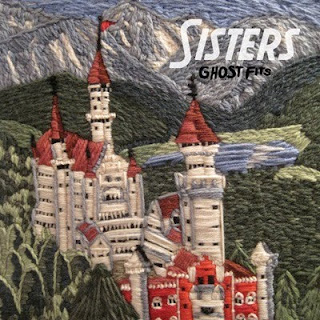
Album: Sisters - Ghost Fits

Ghost Fits (Sisters)
Album: Ghost Fits
Narnack, 2010
Rating: ******* (7/10)

Sisters, a poppy, fuzzy noise punk duo out of Brooklyn's Death By Audio family, piqued my interest at a spirited show at loft space Dead Herring House last year, and won my heart at the second show I attended. Drums'n'guitar duos aren't exactly a rare breed these days. Starting with the White Stripes' bold embrace of raw minimalism around the beginning of the 2000's, the theory that you only really need two people to make noisy songs (outside of electronica) has become increasingly tested and confirmed by bands like California's No Age, the similarly named Japanther and Japandroids and Sisters' associates (via Death By Audio Records) Jeff the Brotherhood. The considerable force of personality and exuberant energy needed to make a two-man band really pop, along with the sloppy, joyous freedom endowed by a simple two-part arrangements, makes these bands the most energetic and youthful sounding of the times.

Sisters is no exception. There is something distinctly untamed and young about them, and while it can be hard to capture this spirit in the studio, Ghost Fits succeeds remarkably well. Much of that has to do with the frenetic, spastic (yet spot-on) drumming of Matt Conboy, a tall, wild-haired man who at live shows dwarfs his bare-bones drumset. Aaron Pfannebecker's lo-fi guitar and youthful melodies jump on top of Conboy's reckless, crashing beats like a cowboy on a bronco. Bands with more members must play "tightly" and are commended for doing so. However, the two-part arrangements of Sisters allow for a looseness that has all the sloppy trappings of pure joy.

Ghost Fits is a collection of well-written pop gems, each boasting a catchy, unrefined melody. Among two-man bands of their style, Sisters may come closest to No Age; both bands display a remarkable depth of sound drawn mysteriously from a single guitar. Sisters' sound may not be as rich as No Age - their music is a little rawer - but there is a delicious lot of noise and no thin-sounding moments or uncomfortable gaps. (Granted, Sisters, unlike No Age, do use prerecorded tracks to cover more than two parts on occasion.)

Many of the songs are somewhat reminiscent of Thurston Moore and Sonic Youth, albeit in a less-than-obvious way. Pfannebecker builds many non-key chords on those open fourths and sweetly discordant harmonies famously explored by Sonic Youth, and even uses a similar clean, ringing tone in quieter moments. Meanwhile, Pfannebecker's melodies follow similar heartfelt flat-falling contours to Moore's more uptempo works.

It's difficult to pick highlights from the album; the consistency of the songwriting is remarkable. Centerpiece "Highway Scratch," with its bright, toy-keyboard melody, has been floating around for a while and remains one of the band's most lovable songs (which is saying something). Perhaps the record's most complex song, "Courthouse" doesn't lose momentum, even as it drifts away from a standard pop format. "Leaving Home," near the close of the album, features the deep whammy pitch-shifts of Isn't Anything-era My Bloody Valentine, with the chords bending in and out of key under one of the album's most creative melodies. At second-to-last, "Visions" is another winner, flipping between a tense, hushed, Sonic Youth-y verse and a crashing, thick and straight-forward chorus.

But the beginning of the album is just as strong, with simple treats like the opening track "The Curse." Sewn together with an earworm of a melody, the song points towards traditional lo-fi bands like Pavement, but with its 2010-style delighted simplicity, it entirely avoids sounding like a 90's throwback. The warm, technicolor "Glue" is even more irresistible, while the full-bodied "Sky" kicks the album's intensity up a notch (but still keeps it fun).

The soft, sweeping roar of the closing track, while not the strongest song on the album, does give it a sense of scope and completion. Although the catchiness of the songs almost makes this sound like a singles collection, it all adds up to a coherent LP. Throughout the record runs a current of youthful, openhearted sincerity. Sisters are refreshing in their almost naive simplicity - their sound is multidimensional enough but they hide behind nothing; they really mean it. Ghost Fits was made with love and it shows.

Tuesday, September 14, 2010

Album: Screaming Females - Castle Talk

Castle Talk (Screaming Females)
Album: Castle Talk
Don Giovanni, 2010
Rating: ******** (8/10)

FUCK. YES. Sick riff after sick riff after sick solo after sick riff. Castle Talk, out today, may well be Screaming Females' best album to date. The young New Jersey trio already has four full-lengths under their belt and while the records may never quite capture the excitement of their live show, not one of them is anything to sneeze at.

The main criticism usually leveled at Screaming Females (and as far as I can tell, the only legitimate one) is that they aren't doing anything original. That's true and it's a huge bummer. Not only are Screaming Females not revolutionizing rock music, they don't even revolutionize themselves. Their four albums, knock-outs though they are, pretty much stick to the same familiar ground laid out by the first. Yes, you can hear growing maturity over time, particularly in the production techniques but also in songwriting, but it's all a pretty straight, predictable trajectory from where the band started off.

So. Screaming Females are not the most innovative or creative band on earth. They aren't the most adventurous. They aren't the most brilliant. What they are is the best rock band on earth. They tread over familiar ground, but they easily rank among the best bands in their tradition. They play their guitars exactly the way electric guitars and bass guitars were meant to be played. They write songs the way songs should be written. They sing and scream the way the human voice was meant to. They may not be as fascinating as some of the boundary-pushers out there, but in terms of good ol' fun, catchy rock and roll, this is as good as it gets.

Announced by the first sound of the album, a deafening, distortion-fried chord, Castle Talk features the band's nastiest production to date. Their debut was recorded in true New Jersey style, pretty much live. For the follow-up, they recorded track-by-track, and received complaints from their loyal fans that the sound lacked the energy the three musicians generate when they all play at the same time. So for last year's record, the band went back to their old methods, but with a much fancier resources, spreading out to different rooms in a studio to craft their sound. The result was dynamic but still with tightly controlled production.

Castle Talk shows the band hasn't tired of trying new techniques. The album is by far the meanest sound the band has ever accomplished. It's gritty. All the spaces seem filled with distortion and buzz but nothing is sloppy or accidental. Every track seethes with noisy energy. Far more than any Screaming Females album to date, Castle Talk does the band justice.

The normal entry point to any discussion of Screaming Females is frontwoman Marissa Paternoster's sick guitar. But as always, the bass caught my attention just as much. Played by one Mike Abbate, it's the album's secret weapon - Abbate doesn't just support Paternoster, he shifts the context of songs, making Paternoster's guitar suddenly but subtly tenser, uglier or sweeter and keeping the listener from knowing quite what will happen next.

For her part, Paternoster is much more than simply one of the greatest guitarists of her generation (though she is that!). As she demonstrated on her solo album this summer, she is a powerful vocalist, with a distinctive but comfortable voice. I once compared it PJ Harvey channeling John Lennon. I think on this rougher, rawer album, she may be channeling more Vedder than Lennon, though. Or you know what? Screw that. It's more like PJ Harvey channeling PJ Harvey – not in tone (Pasternoster doesn't do any of Harvey's weird high stuff, for starters) but in spirit. In other words, the singing would certainly make anyone think twice before getting on Pasternoster's bad side.

Working collectively, Screaming Females have always been gifted songwriters, shifting the pop-rock formula just enough to keep their music slightly unpredictable from moment to moment. However, Castle Talk features the band's most consistent songwriting since their debut. Paternoster matches the group's compositions with equal (and I think significantly improved) lyrical prowess, diving into her usual rage, self-deprecation and general dysfunction that anyone who's ever been sixteen can relate to. "I wouldn't be surprised / if no one wants to waste their time on me / I'm joyfully[?] employed and normal," she proclaims on "Normal."

The album starts out with a bombshell, "Laura & Marty," a perfect example of what pop-oriented guitar rock can be, compete with a blistering and slightly decadent, but not overly indulgent, guitar solo. Paternoster's tone on her instrument calls to mind Billy Corgan (before he became a national joke), with that same wailing edge. Like Corgan, Paternoster seems to draw equally from metal and shoegaze, psychedelic and grunge, power-pop and hardcore, while never once landing even close to fitting any of those labels. The band sounds familiar (and critics would say generic) because it draws transparently from every great rock tradition. But there's something to be said for taking the best from every school and distilling it into one sick sound.

At track three, "Boss" is without a doubt, one of the band's best songs to date, if not exactly hit single material. The track starts out with hushed drums and a heartbreaking bass line, soon joined by a scalding, lonely guitar riff. The band crashes into the their familiar wall of sound, then drops away again for a restrained and beautiful verse. From there, the song flips between quiet verse to blasting chorus – nothing unusual. However, Paternoster's melody keeps the song at once catchy and slightly off-kilter, with her voice and lyrics both at their best. After a breakdown of sorts, the song closes out with a restrained but soaring, shimmering guitar riff.

"Normal" starts off with Pixies-esque guitar, wandering into faintly Spanish chords, and marks another high point for Paternoster's lyrics. Next up, "A New Kid" starts with a killer, old-school metal riff, opening into a measured, guitar-screeching, chanted verse. The chorus returns to the more familiar territory of intertwining melodies from Paternoster's fingers and mouth respectively, with the bass buried in the but relentlessly propelling the song forward.

"Fall Asleep" and "Wild" are familiar live staples. The former is one of the band's best, and most characteristic songs, split in half by a bare, mournful break. The latter is a little less interesting, with just a little too much unison between guitar and vocals, between guitar, bass and drums, and so on. "Nothing at All" is another gem following closely to the standard Screaming Females formula but boasting a badass breakdown at the song's end.

The only song to really depart from the usual Screaming Females guitar rock is the second to last track, "Deluxe." In what seems to be a reverb-drowned live recording, Paternoster's distant vocals drift in and out of sight under textured acoustic guitar. It's brief – under two minutes – and gives the album a much needed break from the distortion-loaded, vocals-forward sound of the rest of the album.

"Ghost Solo" brings the album to an appropriately rock and roll anthem ending and is one of the best examples of the band's knack for arrangement. Distant thundering drums and nervous bass lead into a building verse, with razor-sharp guitar riffs slicing through to underline (and harmonize with) fragments of Paternoster's melody. In the rich chorus, the vocals, guitar and bass take turns surging upwards, opening to one final, restrained solo before concisely closing out.

Castle Talk may not be a revolution, not in the slightest, but Screaming Females do what they do better than anybody else around. And that has some significance – this is the kind of album that could - and will - inspire girls and boys to pick up guitars and form bands. The album's raw energy and the band's clear love of their music, evident in every note, are contagious. We need people to push the envelope, but we also need bands like this to remind us what rock music is about in the first place – having fun.

Monday, July 12, 2010

Album: Noun - Holy Hell

Holy Hell (Noun)
Album: Holy Hell
Don Giovanni, 2010
Rating: ******* (7/10)

Although Holy Hell has been touted as the first solo release of Screaming Females' Marissa Paternoster, in truth Paternoster has been using the name "Noun" as a vehicle for releases for years now, they just haven't been very formal releases. However, now that Paternoster's band's career has taken off, her identity as a solo art seems to have crystallized as well. The songs that fall under the Noun moniker are still a scattered bunch and Holy Hell does seem like a bit of a dumping ground for odds and ends that fit nowhere else. However, Paternoster's identity as a musician is strong enough, especially when backed with her reputation in Screaming Females, that the album manages against odds to cohere as a statement.

What's most surprising about Holy Hell is that Paternoster's identity as a musician is not established through her much-noted guitar playing. Despite being one of the great guitar heroes of our time (evidenced despite her obscurity in features in Guitar World, Rolling Stone and the like), in Noun, Paternoster is a singer and songwriter. Sure, there's some blistering guitar in there, but when the music trades it in for piano, it's the strange but powerful voice that binds the music together.

Before I carry on, let me make one thing clear - by using terms like "songwriter" and "piano," I don't mean our screaming female has gone soft. The album may be less consistently rock and roll than her band's work, but even at its quietest, the album draws on anger, bitterness and rebellion. (Think PJ Harvey, but slightly less pissed and more sad. And I mean slightly.)

Paternoster was a strong singer even on Screaming Females' 2006 debut, but it seems in the last few years, she's developed a new level of comfort and maturity. "Wrong Things" may be the best example. The strange leaps between high and low voice, the peculiar tone, it's easy to forget Paternoster is only about 24 years old (give or take a year). It's difficult to even imagine what she'll be capable of in a few years.

Holy Hell starts boldly with the rather well-titled "Black Lamb," a sparse, haunted piano ballad that at once makes clear the album is not a vehicle for Paternoster to show off her guitar skills. "Outer Space" has got a kickin' enough riff to almost be a Screaming Females song, but it hasn't quite got a SF-style bass line or melody. "Old Friends" takes it down a notch again, with measured and emotive vocal harmonies over gently feedbacking guitar. The title track makes a strong but predictable centerpiece (a little early in the album for that, I guess, but it serves as such to my ears, a least).

After the astounding control of "Wrong Things," Pearly Gates rocks out with all-around distortion (on the vocals too) for a good but not standout track. "Call Earth" fails to quite click, but that's okay, because it's quickly obliterated by the excellent "So Rough," a thick guitar-pop song with delicious distortion and just a touch of flange. The quiet-loud contrast, with Paternoster's vocals standing bare ("How did it end this way? / I miss you day to day") then sailing in over a brilliant riff, is executed with near perfection. Although I know this song reminds distinctly of song I listened to a long time ago (ten bucks if you can name the source, cause I can't remember and it's driving me crazy), everything's ripped off somewhere. And this song is fucking awesome.

The dark, plodding "Brother" is more roar than murmur, but the restrained tempo and minimal drums keep the tune tense and edgy. Finally, the closer, "Talk," is a knock out of a song. The melancholy, swung melody shoots up into that same breaking range of "Wrong Things" over subtle lead guitar and no-to-barely-any drums, like an appropriately electrified lullaby for a true rock album.

If Holy Hell accomplishes one thing, it's stripping away Paternsoter's overshadowing guitar hero status to reveal a musician who can write and sing as well as she can shred. As any follower of Noun might expect, the album lacks a degree of cohesion and purpose, but the unbelievable quality of the songs suggests what we already suspected - that we have found one of the greatest musicians of this new generation, one with not only the potential but in fact the promise to change rock and roll.

[myspace]

Tuesday, July 6, 2010

Album: 28 Degrees Taurus - All the Stars in Your Eyes

All the Stars in Your Eyes (28 Degrees Taurus)
Album: All the Stars in Your Eyes
Self-released, 2010
Rating: ******** (8/10)

I listen to enough music at this point to be pretty jaded, and even when I really like something, there's a certain rush that I just don't get anymore. Sure, I can get excited about a lot of bands and jump up and down on the subway platform like a maniac and listen to songs on repeat for days on end, but there's a particular thrill of discovery that's an inevitable casualty of time and experience.

There are a handful of bands, however, who can bring that feeling back, like I'm fifteen and putting on some mix CD from my bandmate for the first time. Back then, everything sounded fresh and original but now, it's a rare band that doesn't automatically lock into a neat little slot of context - influences, artistic movements, harmonic analysis and all the rest. But sometimes, with originality and passion, a band can shut down my nerdy neurons and just make me happy. And 28 Degrees Taurus is one of these few.

It's hard to say exactly why. After all, it's not hard to play "name the influence" with the band's music - dream pop, shoegaze, psychedelic and ambient music make up 28DT's not-so-uncommon parentage. Still, there's something in the druggy haze that sets the band apart, a sort of new interpretation, or misinterpretation, of its sources. Like so many great bands, 28DT seems to have found their genius by accident, by following instinct and passion and genuine insanity and having enough talent to make their unintended experiments well worthwhile.

I don't want to exaggerate the band's originality. In many ways, they sound like any of dozens of the shoegaze revival bands that populate our fair East Coast these days. The clouds of guitar, measured drumming and subtle, guiding bass don't immediately stand out. It's in smaller ways that 28DT make themselves relevant. The ringing guitar riffs often have just the slightest hint of oriental modes, while the interplay of Karina Dacosta's floating, high-range melodies and Jinsen Liu's nearly-as-high, aspirated, otherworldly whisper make the record unmistakably 28 Degrees Taurus. The guitars wobble and shimmer if held underwater - in fact, even the drums seems as if seen from behind glass, perfectly clear yet somehow distant.

On the opening track, Dacosta's vocals rise with noticeable purity above the uncalm noise of the guitar in a sort of half-human duet. "Turn Me On" achieves a similar effect, but built on a more solid rhythm section into a more conventional song. Next up, "Universal Love" severs the album's last ties with the earth as Liu's strange voice takes the fore. The album doesn't wane on "Seeking Heat" and "Electricity" either, the former held aloft by Dacosta's breathtaking melody and the latter driven forward by Liu's gently raging guitar.

The entire album doesn't quite match its opening. "Sun Chaser" is an interesting experiment in blatantly country-style slide guitar, with a 28DT twist. The band tries the same experiment again "Missing You," again with success. Unfortunately, some of the other later tracks are just not as memorable and not only mildly disappoint, but also dilute the quality of the earlier songs. Still, they aren't bad songs by any means and the album is strong enough to withstand some simply "pretty good" filler.

I don't know that 28 Degrees Taurus will ever catch on in a big way and I don't know that they necessarily want to. Still, they remain one of the best and by far one of the most underrated East Coast bands around. They are better than 95% of what gets love from the indie scene. That's not just because they're more talented but also because they're more passionate and honest and pour more love into their music than the vast majority of bands. They have that purity of intention and a courage of exploration that, as a listener, I lost long ago. And reminding even a few listeners of that feeling is more than most bands can ever hope to achieve. Thanks, guys.

[myspace]

Tuesday, May 25, 2010

Album: Beach Fossils - Beach Fossils

Beach Fossils (S/T)
Album: Beach Fossils
Captured Tracks, 2010
Rating: ******* (7/10)

Here's a shocker! I don't hate the Beach Fossils album (self-titled, out today). I really thought I would, cause when I saw this band live, they just annoyed me and my tolerance has certainly not grown over time. But I have to admit, this album has its moments that are not just passable, but actually good.

Now, let's not get carried away. Beach Fossils still sound pretty much like the 9,000 other reverby, lo-fi-ish indie bands that are so popular right now. You know, the kind that make up 95% of Todd P bills and 50% of Stereogum playlists. But as I remarked after the last show, this band is definitely better in than most of them - they have good songs and hooky melodies and even some variance, track to track.

The opening track, though hitting it off in a major key, seems to herald something subtly sinister. Post-punk darkness casts a shadow over the sound. In fact, despite the name, this band little to do with surf and sun - the jangly reverb may take a page from Brian Wilson's book, but the melodies are more British post punk and even C86 than they are surf. In other (non-geek) words, the tunes are at once tight and open, warm and melancholy. "Vacation" is the perfect example - measured vocal harmonies over sparkling, appreggiated guitar chords and a quick but hushed, marchy beat.

A little further on, "Twelve Roses" finds the guitar with a richer, more immediate tone while a simple earworm of sung melody rings out in warm layers. "Daydream" falls in and out of step in a touchingly human way, while "Golden Age" kicks out a stronger beat over which guitar and vocals meld to almost indistinguishable tones. Near the end, the explorative guitar riff and sad singing of "Wide Awake" obscure a soft, intensely poignant bass line.

The album also has its share of forgettable tracks, especially arriving as it does in the heyday of its genre. The jazzy bass on the closer, "Gathering," is way overdone (despite being low in the mix) while songs like "Youth" and "Window View" fail to stand out from so many similar songs by similar bands on similar albums.

Still, if we're going to pay attention to anyone in this bloated DIY scene, it may as well be Beach Fossils. There are some moments of real beauty and meaning on Beach Fossils and some signs of real talent. Do you need this album? No. But if this kind of stuff floats your boat, throw out Real Estate and make space on the shelf for these guys.

[myspace]