Showing posts with label nineup. Show all posts

Tuesday, May 11, 2010

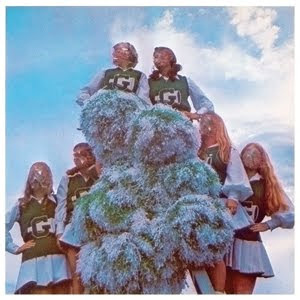
Album: Sleigh Bells - Treats

Treats (Sleigh Bells)
Album: Treats
Mom & Pop, 2010
Rating: ********* (9/10)

What a week for new music! In case you were in a coma during CMJ last fall, Sleigh Bells are a LOUD electronic duo that were the surprise stars of the festival. Their debut album is finally out (today) and it definitely lives up to the hype.

Now, I spend a lot of time lamenting the lack of balls in indie music. And Treats, from the first note, seems to agree. "Tell Em" starts out with explosive hits and nasty, distortion-laden guitar. Alexis Krauss tops the rage with a surprisingly sweet, quick melody, even while amplifiers around her explode.

"Kids" follows, a jolting, static-thick beat and peeling guitars broken by girlish monologues about sunglasses and vacation. "Riot Rhythm" runs along similar lines, while "Infinity Guitars" starts with a rock'n'roll guitar hook and finds vocals more shouted than sung (though still with a certain girlishness) over a bare-bones, slappy beat. It sounds like the Kills - well, if the Kills did a whole lot of crack and then turned their amps up way past eleven. Then, two minutes in, the song suddenly lurches into overdrive with the loudest guitars this side of A Place to Bury Strangers, a sheer atom bomb of sound.

The next few tracks don't quite live up to the strong starters, but hold out to "Rill Rill." A sampled guitar and piano over deep, deliberate beats support Krauss's finest moment on the album. By far the most melodic and, well, prettiest track on the album, "Rill Rill" has the potential to be a left-field hit. The open arrangement allows the vocals to shine and prove that they need no sonic tricks to prop them up.

After the song's closing chime, the in-your-face roar of the rest of the album is back. "Crown on the Ground" opens with sneering guitar, then BAM, a whomping beat with hip-hop smarts threatens to bust your speakers entirely. Here again, Krauss's melody is nothing short of lovely, standing as always in juxtaposition to the ruthless instrumentals. "Straight As" comes on even stronger, with a twisting minor-key guitar riff that borders on metal, switching between gritty crunch and a sheer wave of distortion.

The album ends a little weak on a title track that really doesn't live up to its name. But at this point, if you're not begging for mercy, you don't have your stereo loud enough. Sleigh Bells are here to cause as much hearing damage as possible and I have to say, it's worth it.

But aside from competing with A Place to Bury Strangers and My Bloody Valentine for the Loudest Band Award, Sleigh Bells present something totally fresh. Yes, there are precursors to their sound - Germany's EC8OR comes close - but in the constant contrast between the vocals and the instrumentals, in the strange annihilation of the border between guitar rock and electronica, in the particularities of the distorted, trashed production, Sleigh Bells have got something that's entirely their own. It's about fucking time.

[myspace]

Monday, January 25, 2010

Album: Los Campesinos! - Romance Is Boring

Romance Is Boring (Los Campesinos!)
Album: Romance Is Boring
Wichita/Arts & Crafts, 2010
Rating: ********* (9/10)

Friends, the news is bittersweet: Los Campesinos! are cute no more. That shouldn't be a big surprise, given the leaps in maturity the band made within the few months between Hold On Now Youngster and We Are Beautiful, We Are Doomed. Here, with over a year under their belts, Los Campesinos! continue on their dramatic trajectory. But even with the band's explicit attempts to distance themselves from their twee past and their glockenspiel, it would have been hard to see the trajectory reaching quite as far as it has on Romance is Boring, which often barely sounds like an "indie" album at all. Instead, you can hear echoes of every UK pop great of the last 30 years and could almost imagine this band taking their place among them.

Although their compositions and arrangements have grown, the most noticeable change is in the voices. Gareth (gotta use first names, the band doesn't use their last) has changed in his boyish holler for a professional, adult sound - not that the pitch has changed, just the tone. For her part, Aleks has also found a bit richer, more developed voice. Los Campesinos! are all grown up.

And the lyrics are grown up too. The band revealed their darker side on We Are Beautiful, but here, it hits full force and in the context of a fully developed LP (We Are Beautiful was more like an LP-length EP). In a minor key breakdown in "Media Res," Gareth announces "I'm leaving my body to science / Not medical but physics." Maybe this line could have fit with the band's indie pop days, but the delivery makes clear this is no joke but rather a serious meditation on mortality and physical decay. Later in the album comes its masterpiece, "The Sea Is a Good Place to Think About the Future." This track has been floating around for a while so maybe you've heard it. But if not, and especially in the context of the full album, it hits like a ton of bricks. Describing a self-destructive friend, the narration comes restrained, matter-of-fact tone with which we have to deal with life's most horrifying tragedies if we are going to survive them.

It's a far cry from "You! Me! Dancing!"

The musical developments keep up with the emotional strides. Much of the credit must go to producer John Goodmanson (Blonde Redhead, Death Cab, Nada Surf, Sleater-Kinney, etc.), who has beefed up the band's sound from the tinkering twee-punk of 2008 to an almost grandiose sound. The complex parts are still there, but even the glockenspiel solo on "Media Res" does not sound toyish, it's dark and alarming. Who knew glockenspiel could be dark and alarming?

However, while Goodmanson's skills did push the band to the next level, they can take even more credit themselves - their songwriting has become infinitely more sophisticated. The downside is that some songs are not quite as tight as the band's poppier material, but finally, the band's post-rock origins shine clearly, with swells of noise, counterpart melodies, vast choruses and subtle instrumentals. As with much post rock, the compositions seem to closer in mindset to classical than to the rest of pop/rock, but it's not overkill. The band reigns it in and keeps every song focused, without crossing the five-minute mark even once. The album even includes a short instrumental track ("200-102") and a distant, echoey post-shoegaze interlude with vocals ("Heart Swells/100-1").

I'm not entirely wild about the unison on the title track and I have trouble following some of the songs early in the second half, but even despite its rough patches, the album is a powerful statement. From the hyper-distorted, raging opening of "Plan A" (the group's most aggressive song to date) to the gentle ebbing of the guitars in "The Sea Is a Good Place," from Aleks's cynical "We've Got Your Back" (which lyrically and musically revisits and seems to attack "Drop It Doe Eyes" on the band's debut) to the understated closing track, burned on the edges with static, Romance Is Boring is an album to be reckoned with. Hold on now, young and old alike.

[myspace]

Monday, September 21, 2009

Album: Why? - Eskimo Snow

Eskimo Snow (Why?)
Album: Eskimo Snow
Anticon, 2009
Rating: ********* (9/10)

In 2008, Ohio-born, San Francisco-based Why? generated some excitement with their indie rock-styled rap album Alopecia. Though original and ultimately one of the most interesting releases of 2008, Alopecia was not the most sophisticated of records, including quite a few skippable tracks and only a handful of really memorable ones.

It's only 2009, but Eskimo Snow could hardly be further from its predecessor. Gone are almost all traces of rap, replaced with rich indie rock and twangy hints of country and folk. And yeah, that sounds awful, but it simply blows Alopecia out of the water. Introspective and startlingly earnest, the album shows a drastic leap in maturity. (True, this was recorded at the same time as Alopecia, but it sounds eons more grown-up.)

Despite the dramatic stylistic shift, Eskimo Snow doesn't confuse Why?'s identity as a band, probably because founder-singer-leader Yoni Wolf has a distinct unpolished voice and a distinct lyrical style, whether he's singing or rapping his lines. Of course, he's dropped the zingers of last year ("I never said I didn't have syphilis, Miss Listless") in favor of more brooding lines ("You might find me in the white pages yet / my name is next to numbers / like someone's father's father / left listed in the book of numbers"), but if anything, he's gotten more clever. From loaded images to morbid questions, Wolf's lyrics are relentlessly smart and sincerely affecting.

These rhymes are backed mostly with piano and percussion, but with some guitars and more synthesized sounds stepping up as needed. Ever the student of hip-hop, Wolf keeps a certain rhythmic sensibility even while departing fully from the genre (for the clearest example, check "On Rose Walk, Insomniac"). The best part of the album, however, may be the melodies. Foregoing simple catchy hooks, Eskimo Snow takes on the harder task of making complex melodies while not drifting off course. And in this, it succeeds far beyond expectation, keeping each song memorable and purposeful despite the lack of short-scale repetition. After each moment of excellence, one expects something a bit weaker to follow, but every single one of the album's ten tracks is as good as the last.

Why? albums have all been frank, but until now, Wolf has diluted his vulnerability with wit and the aforementioned "zingers," plays on words and general badassery. On Eskimo Snow, he rips himself open. It's courageous and profound, as he struggles with early adulthood and its profound fears and realizations. Emotional pain, personal battles and insecurities come flooding out, all with intelligence and a very healthy sense of humor.

Mid-way through the album, Wolf muses "Saying all this in public should make me feel funny / but you gotta yield yell[?] something that you never tell nobody." A surprisingly mature, accomplished and touching album, Eskimo Snow may be an upset in critics' year-end and even decade-end lists. And you should definitely get it in touch with your ears as soon as possible - i.e. its official release date, tomorrow.

[MySpace]

Tuesday, September 8, 2009

Album: Raekwon - Only Built 4 Cuban Linx II

Only Built for Cuban Links II (Raekwon)
Album: Only Built 4 Cuban Linx II
Ice H20, 2009
Rating: ********* (9/10)

The world has been waiting fourteen years for this follow-up to Raekwon's 1995 solo debut, which was hailed as one of the best rap albums of all time. Raekwon, who got his start in the Wu-Tang Clan, is known as Raekwon the Chef, and OB4CL I chronicled the drama of trafficking coke in intimate detail. Unsurprisingly, OB4CL II returns to these themes, with unsubtle song titles like "Pyrex Vision," "Baggin Crack" and "Ten Bricks."

However, the album seems more linked to the Wu-Tang debut 36 Chambers than to Raekwon's earlier opus. References to the themes and lyrics of that album abound. The entire original Wu-Tang Clan except U-God appears as well - even Ol' Dirty Bastard makes a posthumous appearance on "Ason Jones," a startlingly frank and loving tribute to the WTC founder. (The beat was also laid down by hip-hop master J Dilla before his own untimely death in 2006.)

OB4CL II features relatively few surprises - it remains in the general Wu-Tang style and, as expected, features some of the best hardcore rapping ever recorded. At twenty-three tracks, you'd expect some filler and the types of interludes used by Wu-Tang in the past. However, all two dozen tracks are full-fledged songs, if not all of consistent quality.

When I first listened to the album, the first two tracks didn't play and I didn't notice, so I started with "Sonny's Missing," an extremely (perhaps gratuitously) violent song with a spare, deep, dark beat and naked vocal attack. When I discovered the album actually followed the WTC tradition of including an introductory track, I was disappointed to learn OB4CL II hadn't broken the template at all. The album is simply and sadly not earth-shattering, no matter how good the tracks.

The second song, "House of Flying Daggers," features WTCers Inspectah Deck and Method Man in a well-executed throw back to 36 Chambers, made even edgier, darker and more aggressive. Unfortunately, some of the later WTC-centered tracks grasp less successfully for this hard-edged sound, ending up muddled or stale - "Black Mozart" and "Kiss the Ring" seem confused and overwrought, while "New Wu" slightly misses the (admittedly high) mark.

With over a dozen credited producers, the tracks lack some cohesion. Marley Marl's lazy, minor-key guitar loop on "Pyrex Vision" is followed by Icewater's overdone, orchestral production on "Cold Outside." Scram Jones's melodic sense makes a poor chaser for Allah Mathematics' "Mean Streets" and Dr. Dre's chilled out grooves rest uncomfortably in the midst of a distinctly East Coast album.

The more melodic songs are the most incongruous on the record. "Cold Outside" is a beautiful tune, but trumpets and grandiose production cost it its edge. The female R&B vocals on "Have Mercy" seem half-baked. In general, Icewater-produced songs seem greatly overdone in their heavy orchestration - part of WTC's appeal, and indeed part of the appeal of hardcore rap in general, is its raw minimalism. While the richer backing tracks work in a few places, like the highly dramatized "Canal Street," they mostly just gum up the works.

Better are the stripped, straight-forward beats of "Penitentiary" and "Broken Safety." The former builds painful levels of tension with a fast, high piano pulse on a single uncomfortable interval throughout the entire song. The latter rests on a scraping, metallic bass on the upbeat and little else. "Surgical Gloves" is also worthy of note - the Alchemist's production features cold chiming as if from a video game.

Though most of the songs on the album are excellent, "House of Flying Daggers" and "Canal Street" are both stand-out tracks with enough pop appeal to stick in your memory but enough edge to stand with the WTC's best. "We Will Rob You" is not the best song by any stretch, but the clever humor of the lyrics and the ability to recall the referenced rock song while still sounding like a Raekwon album are certainly worthy of note.

The single strongest track is probably "Broken Safety," which distills the spirit of East Coast rap to its purest form. Guests Jadakiss and Styles P share Raekwon's mic and prove themselves worthy of the role. Straight-forward, unembellished and in your face, "Broken Safety" represents the best of its genre.

"Kiss the Ring" makes for a poor closer, burying talent bellow a jumble of half-articulated ideas. Luckily, the album's bonus track, "Walk with Me," makes a much better finale. The ethereal singing and sparkling wind chimes in the background certainly set it apart, but all the components come together to make a cohesive and powerful statement.

After the disastrous 8 Diagrams, Wu-Tang members have been trying to prove they still have balls. Some of the graphic lyrics in OB4CL II seem unnecessary, especially as Raekwon has nothing to prove. Still, this is probably the heaviest Wu-Tang project to date and in this case, that's a very good thing. As "Broken Safety" explains, "Fuck savin' hip-hop, we bringin' the streets back."

Wu-Tang Forever.

Tuesday, August 18, 2009

Album: The Antlers - Hospice

I originally published this review in February. Hospice is rereleased today on Frenchkiss Records.

Hospice
Album: Hospice
self-released Frenchkiss, 2009
Rating: *********' (9.5/10)

When I first listened to the Antlers in late 2008, I shrugged it off as nothing special, but Pop Tarts Suck Toasted was carrying on about this album at such length that I decided to give it a listen. And I was completely taken aback by what I heard.

Hospice is not only an outstanding album, it's one of the most exciting releases since the 90's. I wavered on the rating - sometimes leaning towards 10/10 to help get it into the spotlight it deserves, other times thinking 9/10 would be more appropriate - it's far from perfect and far from the level of the masterpieces it references. In the end, I settled on 9.5 - the highest rating I've given an album to date and also the first time I have ever used a half point. The reason? This album is the most worthy of your attention of any I have ever reviewed (on this blog or elsewhere) - but I don't want to believe this is as good as it's going to get. I want to believe another Loveless or Aeroplane Over The Sea is in the works, and I'm saving the 10/10 for that. But in this meantime, we have this, and this is something.

But to say I enjoy or even like Hospice would be misleading. In fact, it is easily the most unsettling album I have heard in years and for several weeks, it consumed me, even triggering the return of nightmares I thought I had shaken long ago. It's an intensely haunting, profoundly affecting album that will stay with listeners long after the final notes.

On the surface, Hospice is a concept album that intertwines stories of terminal cancer, mental illness and dissolution of a relationship into dysfunction and cruelty. Where these tales intersect is the painful truth that love does not conquer all. The record documents songwriter Peter Silberman's growing awareness of this immutable fact, revealing not only feelings of heartbreak and helplessness, but also, and most importantly, a pervading guilt. The narrator's point of view is always that of a caretaker, seeking to heal, to comfort, to save, and the entire album reads as a confession of failure.

Sonically, Hospice is a creeping ambient lo-fi, as if Radiohead had recorded OK Computer in Thom Yorke's basement. At some moments it assaults the eardrums, while at others, it replicates the shaky hum of life-support machines. But mostly, it is full of subtle sounds breaking up, faltering and struggling under the weight of the album's pain. It is this, the struggle of each sound, that sets Hospice apart from such reference points as OK Computer and Arcade Fire's Funeral. Hospice's best beats are built with shards of static and noise and mixed with such restraint that many listeners may not even notice a drum track at all. Synthesized sounds are prominent, but they never seem like a cheap trick - instead, they mimic the oppressive sterility of the album's hospital setting. The use of horns may be an overblown nod to Neutral Milk Hotel but it's restrained enough to forgive and the other sounds - the weakly bowed banjo, thudding piano chords and shivering guitars - are more inspired. All are masterfully executed.

Over the uneasy ambiance, Silberman's voice carries the album. His high crooning is clear and controlled, but although his tunes and tone are spot-on, there's something unsteady about his delivery - it's the wavering of a young voice delivering painful and personal words. And there is good variety alongside the consistency in his voice, ranging from the surprising dramatics on "Sylvia" to the intimate, homey delivery of "Shiva."

The songwriting on the album is imperfect - the often-understated melodies and the album's tempo make it hard to tie everything nicely together. I think this explains why I didn't get drawn in by Hospice's two singles ("Two" and "Bear") when they were released. But viewing the album as a whole, it becomes much more coherent. Melodies are recycled as Silberman revisits stories and ideas, and viewed in this context, most of the tracks do become memorable, each a unique step in the album's journey.

The only really bad song on the whole album is "Thirteen." The first half is an experiment in loud ambiance that doesn't seem to move the album forward. The second is a short song sung by Silberman and guest vocalist Sharon van Etten. Van Etten is a beautiful singer but the sudden introduction of female vocals is jarring, and the addition of a woman's voice to sing a song subtitled "Sylvia Speaks" takes the album's concept to a level of literalism that is, frankly, goofy.

However, this track is the only outstanding mistake. Hospice's two singles and the album track "Sylvia" are all high points, with engaging rhythms and melodies, identifiable choruses and foot-tappable tempos. And even these are outdone by less structured and more intense tracks like "Atrophy" and "Wake." Rising in and out of murky noise, these songs contain many of Silberman's most uncomfortable revelations.

"Wake" comes second-to-last and marks the climax of the story. It is the album's only true moment of absolution: "Some patients can't be saved / But that burden's not on you / Don't ever let anyone tell you you deserve this." Whenever I listen, it takes a few repetitions for the last line to really sink in, and when it does, it usually brings me to (or past) the brink of tears. Anyone who needs to hear these words needs to hear them over and over again before they can begin to believe it. And when I say "needs," I mean that - for the listeners with whom Hospice resonates (and I know I won't be the only one), this moment, this final refrain, is necessary.

But then again, it's not the final refrain. There is one more track, an understated nightmare that draws narrator and listener alike back into the album's underlying terror. It's not that nothing has been accomplished, it's just that healing is a process without an end. Hospice is mercilessly honest - scars will remain, wounds will reopen and everything will not be alright. Though the emotional strides of Hospice are immense, Silberman seems to realize they are dwarfed by the enormity of the task at hand.

A work of remarkable maturity and profound vision, Hospice doesn't sound like the product of musicians barely in their 20's. Perhaps it's the youth of the members, however, that gives the music its kick - a subtle kick, surely, but enough to hold my famously short attention. It's an imperfect work, of course, but it's still a rare and exciting accomplishment. It's musicians like these who will lead us out of indie rock's dead ends and on a personal level, who will help us mend from life's damages and carry on.

[Antlers on MySpace]

Tuesday, June 30, 2009

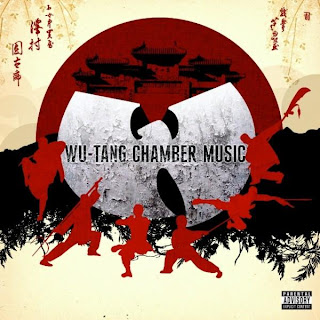
Album: Wu-Tang Clan - Chamber Music

Chamber Music
Album: Chamber Music
E1 Entertainment, 2009
Rating: ********* (9/10)

As the album title suggests, Wu-Tang Clan's new LP is a return to the group's roots, their 1993 debut, 36 Chambers. And being sixteen years older and short one Ol' Dirty Bastard, the WTC's new project does remarkably well at recapturing the raw, independent spirit of that first release.

Of course, this isn't nearly that album's equal, but who could expect that? Their debut was hands-down the greatest rap album of the 90's and better than anything in the last decade as well. Kinda hard to top.

The stylistic return could come off as a sad attempt of the group to relive its past glories, or worse, like a childish response to the accusations that the group had gone "soft" with it's last release, 8 Diagrams. But Chamber Music doesn't ignore the last sixteen years. It doesn't ignore the fact that the group has grown up musically and personally, and that the context surrounding their music has also shifted dramatically.

It also doesn't ignore the fact that in addition to ODB's death, several original members have left the fold - the absence of Method Man and GZA is glaring, though the rest of the core crew returns. Any gaps in the group are filled in by a well-selected set of guests, many old-school luminaries predating even the WTC's earliest work. Outstanding contributions from such legendary MCs as Masta Ace and Kool G Rap certainly soften the blow.

The album may be "retro" in its sound, but it is self-consciously so. The beats are largely built around contributions from soul group the Revelations and under RZA's heavy production, the samples sound like a throwback to the 1970's - that is, a throwback to the last time mainstream R&B was actually good. And don't worry that the R&B backing is overkill, there are plenty of stretches of minimalist beats to keep the album from sounding cramped or overwrought. There's still that pure, primal attack that makes fans of early hardcore rap (like me!) very pleased.

The album does include an all-out soul cut, "I Wish You Were Here," but doesn't include the muddle of rapping and sing-song that has plagued so many recent hip-hop releases. This may be because, as in the beats, the soul components in the vocals hearken back to the glory days of soul and R&B instead of mimicking the banal top-forty whiners.

In a way, the vintage sounds unearthed and combined in Chamber Music provide a stunning cross-section of the music's history. Unlike most modern hip-hop, even most modern music in general, Chamber Music not only acknowledges its roots but fully incorporates them. Instead of sounding like a washed up effort to recapture some glory past, the Wu-Tang sound more relevant than ever in the context of the evolution of hip-hop music and culture.

If there was any doubt, consider it gone: Wu-Tang Clan can still do it harder and better than any post-2000 kid. Sixteen years down the road, they still ain't nothing to fuck with.

Monday, March 16, 2009

Album: Wavves - Wavvves

Wavvves
Album: Wavvves
Fat Possum, 2009
Rating: ********* (9/10)

In 2008, Wavves, the vehicle of San Diego-based Nathan Williams, put out a self-titled album (only two v's) on the very underground label Woodsist. A raw, ultra-lo-fi burst of punk and surf recorded on a four-track in Williams's bedroom, Wavves won my respect from its first note on. It made #3 on my "Best Albums of 2008" list and has been in heavy rotation on my stereo since I first heard it.

I wasn't the only person to fall in love with Williams's independent, self-assured sound. Since the release of Wavves, he's shown up on Pitchfork Media, signed to Fat Possum and started touring. It was inevitable that such a rapid and dramatic change would affect Williams's music. But I'm happy to report that so far, all the success has changed Wavves in only the best possible way.

Wavvves has all the fuzzy lo-fi roar of the first album, with drums, vocals and guitars buried and blended under layers of distortion. However, this time around Williams obviously had more recording resources, or at least more time. The sound is better controlled and crafted, with more layers of guitar, percussion and vocals on many songs.

Moreover, the songwriting itself has vastly improved from the first album. Though Wavves had a few really great tracks, many others were simply unmemorable. On average, Wavvves has better hooks and melodies, better lyrics and better compositions. "Beach Demon" starts out with a veil of noise that's almost beautiful, giving way eventually to a brilliant reprise of the song from the first album. "Sun Opens My Eyes" opens with a bold, clattering beat and "Summer Goth" even has a slight swing.

But Wavves is still Wavves, the ultimate disaffected southern California youth. Songs like "So Bored" and lyrics like "I'm getting high / to pass the time" are reminiscent of the suburban angst that gave rise to California's 80's hardcore scene. Sometimes (for example, on the obviously-titled "No Hope Kids") the whole "I'm a slacker from California" thing feels a little like overkill. But for the most part, Wavves manages to be an epitome of youth culture in a way that still sounds fresh. This is everything punk rock should be - stubbornly independent, unabashedly young and hella noisy. Props.

Thursday, February 26, 2009

Album: The Antlers - Hospice

Hospice
Album: Hospice
self-released, 2009
Rating: *********' (9.5/10)

When I first listened to the Antlers in late 2008, I shrugged it off as nothing special, but Pop Tarts Suck Toasted was carrying on about this album at such length that I decided to give it a listen. And I was completely taken aback by what I heard.

Hospice is not only an outstanding album, it's one of the most exciting releases since the 90's. I wavered on the rating - sometimes leaning towards 10/10 to help get it into the spotlight it deserves, other times thinking 9/10 would be more appropriate - it's far from perfect and far from the level of the masterpieces it references. In the end, I settled on 9.5 - the highest rating I've given an album to date and also the first time I have ever used a half point. The reason? This album is the most worthy of your attention of any I have ever reviewed (on this blog or elsewhere) - but I don't want to believe this is as good as it's going to get. I want to believe another Loveless or Aeroplane Over The Sea is in the works, and I'm saving the 10/10 for that. But in this meantime, we have this, and this is something.

But to say I enjoy or even like Hospice would be misleading. In fact, it is easily the most unsettling album I have heard in years and for several weeks, it consumed me, even triggering the return of nightmares I thought I had shaken long ago. It's an intensely haunting, profoundly affecting album that will stay with listeners long after the final notes.

On the surface, Hospice is a concept album that intertwines stories of terminal cancer, mental illness and dissolution of a relationship into dysfunction and cruelty. Where these tales intersect is the painful truth that love does not conquer all. The record documents songwriter Peter Silberman's growing awareness of this immutable fact, revealing not only feelings of heartbreak and helplessness, but also, and most importantly, a pervading guilt. The narrator's point of view is always that of a caretaker, seeking to heal, to comfort, to save, and the entire album reads as a confession of failure.

Sonically, Hospice is a creeping ambient lo-fi, as if Radiohead had recorded OK Computer in Thom Yorke's basement. At some moments it assaults the eardrums, while at others, it replicates the shaky hum of life-support machines. But mostly, it is full of subtle sounds breaking up, faltering and struggling under the weight of the album's pain. It is this, the struggle of each sound, that sets Hospice apart from such reference points as OK Computer and Arcade Fire's Funeral. Hospice's best beats are built with shards of static and noise and mixed with such restraint that many listeners may not even notice a drum track at all. Synthesized sounds are prominent, but they never seem like a cheap trick - instead, they mimic the oppressive sterility of the album's hospital setting. The use of horns may be an overblown nod to Neutral Milk Hotel but it's restrained enough to forgive and the other sounds - the weakly bowed banjo, thudding piano chords and shivering guitars - are more inspired. All are masterfully executed.

Over the uneasy ambiance, Silberman's voice carries the album. His high crooning is clear and controlled, but although his tunes and tone are spot-on, there's something unsteady about his delivery - it's the wavering of a young voice delivering painful and personal words. And there is good variety alongside the consistency in his voice, ranging from the surprising dramatics on "Sylvia" to the intimate, homey delivery of "Shiva."

The songwriting on the album is imperfect - the often-understated melodies and the album's tempo make it hard to tie everything nicely together. I think this explains why I didn't get drawn in by Hospice's two singles ("Two" and "Bear") when they were released. But viewing the album as a whole, it becomes much more coherent. Melodies are recycled as Silberman revisits stories and ideas, and viewed in this context, most of the tracks do become memorable, each a unique step in the album's journey.

The only really bad song on the whole album is "Thirteen." The first half is an experiment in loud ambiance that doesn't seem to move the album forward. The second is a short song sung by Silberman and guest vocalist Sharon van Etten. Van Etten is a beautiful singer but the sudden introduction of female vocals is jarring, and the addition of a woman's voice to sing a song subtitled "Sylvia Speaks" takes the album's concept to a level of literalism that is, frankly, goofy.

However, this track is the only outstanding mistake. Hospice's two singles and the album track "Sylvia" are all high points, with engaging rhythms and melodies, identifiable choruses and foot-tappable tempos. And even these are outdone by less structured and more intense tracks like "Atrophy" and "Wake." Rising in and out of murky noise, these songs contain many of Silberman's most uncomfortable revelations.

"Wake" comes second-to-last and marks the climax of the story. It is the album's only true moment of absolution: "Some patients can't be saved / But that burden's not on you / Don't ever let anyone tell you you deserve this." Whenever I listen, it takes a few repetitions for the last line to really sink in, and when it does, it usually brings me to (or past) the brink of tears. Anyone who needs to hear these words needs to hear them over and over again before they can begin to believe it. And when I say "needs," I mean that - for the listeners with whom Hospice resonates (and I know I won't be the only one), this moment, this final refrain, is necessary.

But then again, it's not the final refrain. There is one more track, an understated nightmare that draws narrator and listener alike back into the album's underlying terror. It's not that nothing has been accomplished, it's just that healing is a process without an end. Hospice is mercilessly honest - scars will remain, wounds will reopen and everything will not be alright. Though the emotional strides of Hospice are immense, Silberman seems to realize they are dwarfed by the enormity of the task at hand.

A work of remarkable maturity and profound vision, Hospice doesn't sound like the product of musicians barely in their 20's. Perhaps it's the youth of the members, however, that gives the music its kick - a subtle kick, surely, but enough to hold my famously short attention. It's an imperfect work, of course, but it's still a rare and exciting accomplishment. It's musicians like these who will lead us out of indie rock's dead ends and on a personal level, who will help us mend from life's damages and carry on.

Antlers on MySpace

Tuesday, January 20, 2009

Album: Animal Collective - Merriweather Post Pavilion

Merriweather Post Pavilion
Album: Merriweather Post Pavilion
Domino, 2009
Rating: ********* (9/10)

Easily the most anticipated release of 2009, Merriweather Post Pavilion is around the fifth or sixth album from the Brooklyn-based Animal Collective. Most of their half-dozen releases have been greeted with massive acclaim, but none more so than this, which has been lauded as the band's finest achievement to date.

I can't speak to that, because I'll admit I'm not all that familiar with the band's earlier work. What I can say is that it's an outstanding album, and one you should get your hands on soon.

I'm not going to the extreme that some reviewers have (I think the folks over at Pitchfork have started a cult or something), but it's definitely worth a lot of the excitement it's generated so far. This is psychedelic pop at its best, with melodies that could compete in the UK's 1960's and rhythms that draw equally from New York City club tracks and Afro-caribbean radio hits. Most impressive of all is the production - every voice and every effect is honed with such care that the album is unbelievably near to sonic perfection.

The other aspects of the album aren't as flawless - there are tracks that will probably get more skips than listens as the album's novelty wears off, and there are melodies and compositions that become irritating or unfocused, but those certainly constitute a small minority of the album. I have no doubt that songs like "My Girls," "Summertime Clothes" and "Lion in a Coma" will be listened to and loved for many years to come. What's more, the album as a whole will rightfully hang on to its anticipated status as a classic of experimental pop, earning Animal Collective once and for all a place alongside Mercury Rev, the Flaming Lips and the rest of the great wacky popsters of the American underground.