Showing posts with label albums. Show all posts

Sunday, April 15, 2012

Album: Dinowalrus - Best Behavior

Dinowalrus (Best Behavior)
Album: Best Behavior
Old Flame
Release Date: March 6, 2012
Rating: ****** (6/10)

Outside the UK, there doesn’t seem to be much middle ground when it comes to the Second Summer of Love—either you’d give your favorite limb for a time machine set to the glory days of the Haçienda, or you have no idea what this sentence is referring to. >> Read the full review at popmatters.com

Album: Mirrorring - Foreign Body

Foreign Body (Mirrorring)
Album: Mirrorring
Kranky
Release Date: March 20, 2012
Rating: ******** (8/10)

If there was an award for saddest-slowest-quietest abstract songwriter of the last five years, Jesy Fortino (better known as Tiny Vipers) and Liz Harris (better known as Grouper) would have to duke it out. But there is no such prize. Instead, Fortino and Harris have formed some sort of sad-slow-quiet abstract Dream Team, named it Mirrorring, and put out a record. >> Read the full review at popmatters.com

Friday, March 16, 2012

Album: Bowerbirds - The Clearing

The Clearing (Bowerbirds)
Album: The Clearing
Dead Oceans
Release Date: March 6, 2012
Rating: ******* (7/10)

Folk outfit Bowerbirds' third album flirts with jazz and rock without clouding the rustic simplicity that first put the band on the map. >> Read the full review at popmatters.com

Wednesday, February 22, 2012

Album: Sleigh Bells - Reign of Terror

Reign of Terror (Sleigh Bells)
Album: Reign of Terror
Mom & Pop
Release Date: February 21, 2012
Rating: ******* (7/10)

Personally, I think you’d have been foolish to harbor high hopes for Sleigh Bells’ follow-up to their 2010 debut, Treats. Sure, Treats was, hands down, the best album of 2010. But remember, 2010 wasn’t exactly 1991. The reason Treats was such a treat is that it was one of the only albums that sounded like 2010. >> Read the full review at piquedmag.com

Tuesday, February 7, 2012

Album: A Place To Bury Strangers - Onwards to the Wall [EP]

Onward to the Wall (A Place to Bury Strangers)
Album: Onward to the Wall
Dead Oceans
Release Date: February 7, 2012
Rating: ******* (7/10)

It's no secret that A Place to Bury Strangers is a one-trick pony, but it's a damn good trick. Guitarist and singer Oliver Ackermann makes his own custom guitar pedals and uses them to annihilate his songs in a peeling monolith of distortion and feedback. A driving beat and heavily reverbed tenor vocals emerge from the murk and shape the wash of noize into irresistible bite-sized songs.

The band's new E.P., Onwards to the Wall, is in many ways a more interesting release than the band’s last full-length album, 2009’s Exploding Head. >> Read the full review at piquedmag.com

Tuesday, July 26, 2011

Album: The Horrors - Skying

Skying (The Horrors)
Album: Skying
XL Records
Release Date: July 26 or August or something (in the US)
Rating: ******** (8/10)

The first time I heard the Horrors, they were opening for someone or other at Music Hall of Williamsburg and I thought they were one of the worst bands I'd ever heard - a "goth" band that had probably never listened to real goth music in their lives, a band who ripped off real musicians to create an "edgy" image and used some cheap effects to try to disguise the fact that their music is as formulaic as any mainstream teen radio idol.

But I kept seeing their 2009 record Primary Colours on Best of Oh Nine lists including lists by some people I hold in high regard. Like Fucked Up. I grudgingly sat down with a copy. And was astounded.

I can still hear in the Horrors what inspired my very mistaken first impression. On one level, they are a blatantly derivative 80s throwback. You'd be hard pressed to find any single element in their music that wasn't directly sourced from a UK band circa 1982 (give or take a couple years). And if I'm to be honest, that fact really does prevent this band from full-on greatness. The silver lining here is that they don't sound like most of the other bands of the moment. They sound big and their music resonates with drama and genuine pain. It's a sad truth that a band that doesn't sing about going to the beach is now exceptional. Fuck the beach. Ian Curtis never sang about the fucking beach - not because he didn't like the beach (probably) but because he knew it would be a stupid thing to sing about.

This is all kind of irrelevant because I actually have no idea what the Horrors are on about, except that it’s not the beach (probably). But what I'm saying is that the Horrors are true Romantics and are definitely not into this escapist bullshit. Romantics may be dramatic goofs, but if you can say one thing for them, it’s that they are much too busy getting their hearts broken to think about the beach.

For all its moodiness, Skying is less dark than Primary Colours. Which isn’t saying much. It also sounds much larger than Primary Colours, which definitely is saying something. Instrument for instrument, the Horrors owe their biggest debt to Public Image Ltd and Joy Division. The guitar is straight up Keith Levene (Public Image) with bass recalling Peter Hook (Joy Division) and vocals that are, at most, two generations down the musical family tree from Ian Curtain (Joy Division again). There is another band that ripped of Keith Levene and Joy Division, and they are called U2 and Skying doesn’t sound unlike U2’s first record (okay, it sounds exactly like it), even if the Horrors’ pseudo-gothic image doesn’t exactly jive with golden boy Bono. I haven’t heard anyone rip off Keith Levene quite so well since the Edge did back then (a long long time ago).

This guitar, however derivative, is the highlight of the album. It’s never high in the mix, but below the surface, it twinkles and shimmers like glowing embers. There's some Kevin Shields influence in there too, pitches bending achingly in and out of tune. The sparkling chorus on "Changing the Rain" is stunning and the melting reversed reverb on "Still Life" might take your breath away.

The synthesizers, on the other hand, are entirely lacking in subtlety. The cheesy parts may be hard for some folks to swallow, but at least the band fully embraces them. There's nothing worse than self-aware, apologetic synth pop. If you feel you have to apologize for your music, you shouldn't be making it in the first place. The Horrors offer no apologies when the blaring synth textures introduce "You Said" or when synthesizer riffs burst in rather rudely on songs like "Moving Further Away" and "I Can See Through You." Although the synths do sound modern, their parts unabashedly channel London, 1981. The band is not shy about signposting their New Romantic roots - you remember all those synth bands out of London in the early 80's: Soft Cell, Eurythmics, Spandau Ballet, Depeche Mode and the rest of them? Those guys.

The vocals also owe their biggest debt to that period - direct Ian Curtis descendents though they may be, they are more dramatized and less despondent. Sure, singer Faris Badwan has anguish, but it's the anguish of a showman. The Horrors are writ large and deliver a performance, a production, drama in the sense of theatrics as well as emotion. Like so many of their influences, they draw on glam rock, which draws in turn on cabaret - it's spectacle, it's fully removed from the mundane, it's the soap opera to punk's gritty documentary.

Granted, the band has some roots in punk and garage rock as well. The Birthday Party (Nick Cave's original band) is the first example that comes to mind but the band learns from bands as far back as 60's garage rockers like the Seeds and ? and the Mysterians. But on Skying, they've largely said adieu to their grittier side in favor of a massive, polished sound. They're still noisy, no doubt about it, but they don't have a lot of rough edges left.

The most polished and least dated element in the music is the rhythm section. Just as the vocals are Ian Curtis via New Romantics, the bass is Peter Hook via U2 in as much as it tends to hang on the root a lot and sticks to a lot of quarter notes. But this sort of minimal melodicism fits perfectly with the dance-y grooves of the drums, which unlike the beatz of 1981, have the advantage of having a chance to learn from hip-hop, trip-hop and acid house (of which the last is the most direct rhythmic blueprint for Skying). They've got that whole baggy, Madchester thing down pat, especially on the slower tracks like "Changing the Rain" and "Moving Further Away."

The album boasts a decent amount of variety, ranging from the one rough'n'gritty track, "Monica Gems" to the slick "Changing the Rain," from the Telescopes ripoff "Dive In" to the M83ity "Moving Further Away." The best tracks are the biggest, shiniest, danciest, poppiest, rockin'est ones: "Changing the Rain," "I Can See Through You," "Dive In," "Still Life" and the eight minute opus "Moving Further Away." The remaining tracks are a bit less inspired but work well enough in the context of the LP.

It's hard for me to admit this album is made up entirely of recycled 80's Britishisms and that's probably because I enjoy it so very much. I want to believe in the Horrors. I want to believe they are doing something that matters. I want to believe I'm not buying into an act that merely pillaged a decade and dressed it up all as something new, but I am. And so what? I started asking myself why anyone would want to make an album that sounds exactly like early U2, but I've ended up with a different question - why wouldn't anyone want to make an album that sounds exactly like early U2. Skying isn't important. But it's so beautiful it makes my heart skip a beat. And that's not a bad accomplishment, even if it's fleeting.


Tuesday, July 19, 2011

Album: Crystal Antlers - Two-Way Mirror

Two-Way Mirror (Crystal Antlers)
Album: Two-Way Mirror
Recreation, Ltd.
Rating: ***** (5/10)
Release date: 7/19/11

I love simplicity. Some of my favorite songs stick relentlessly to four quarter notes, three-note melodies or two-chord progressions. The key word in that sentence is "or." Our Crystal Antlers seem to have overlooked those little two letters on their most recent bore of a release. Two-Way Mirror is devoid of harmonic or melodic interest. It does occasionally veer into vaguely interesting rhythmic territory but it's not enough to carry the album. If the opening vocal melody doesn't immediately put you to sleep, you probably need to cut down on your caffeine intake.

Two-Way Mirror is, primarily, an exercise in late 60's psych rock cliches. Most of the riffs, many of the melodies and nearly all of the beats sound familiar. However, those cliches are filtered through modern sounds - that sort of strained, shouty male vocal that's dominated indie rock since punk, and a lotta noise. Despite these 2011 touches, though, the album sounds dated and frankly, dated to a time when rock music kind of sucked, when psych rock started to get really bloated, when Jimi was dead and the Dead were taking over. Listen to the opening notes of "By the Sawkill" and tell me you haven't heard it before. It's like friggin Santana, only at least he was a) better and b) doing this shit in 1970, when people didn't know any better. It was a primitive time back then, before people knew about punk rock and computers and haircuts.

That said, I've probably knocked these kids enough. There really are some cool moments on the album. The droning synth-and-drum interlude "Way Out" is brilliant and original and not 1970 at all. "Summer Solstice" is less exciting but at least sounds modern with its post punk drums and murky mix. In fact, it sounds kind of like the Arcade Fire, which in 2011 is better than sounding like Santana.

"Always Afraid" sounds pretty par for the album until it's taken over by some avant jazz saxophone which is rarely a good idea but miraculously works here and puts the band on a completely different level. It's the beginning of a triumvirate of inspired songs. The next track, "Knee Deep," accomplishes what the rest of the album is probably trying to accomplish, which is a fresh, if not radical, noise-and-chaos take on a familiar form. It wallows in that form, but it's also bold enough to have something new to say about it. However, no track on the album holds a candle to end of this brilliant triptych, the breathtaking "Sun-Bleached." A smoldering guitar, faintly warbling organ and subdued voice bleed together in a song so stunningly dissonant it really, genuinely makes me cry.

Unfortunately, this late piece of pure brilliance doesn't end the album. There's another song, "Dog Days," which sounds like what you'd think a song called "Dog Days" would sound like, which is to say, not very exciting. I'm sure it sounded pretty gnarly to the band when they wrote it after smoking a lot of weed. But the whole point of weed is that it makes boring shit seem interesting, and well, my dear antlers, I'm sorry to tell you that this song isn't up to snuff without chemical enhancement.

The Crystal Antlers obviously have something going for them. Otherwise, they could never have written anything as simple and arresting as "Sun-Bleached." The sonic components are pretty well in place throughout the album, actually - cut the reverb (which isn't as obscene as most recent bands' anyway) and they'd be just the right kind of noisy. The only missing piece to this puzzle is song-writing. But unfortunately, that's a pretty important piece and all those 1-4-5 chords and melodies are enough to bore ya to tears.

Hopefully, "Sun-Bleached" is enough to tide us over until these guys learn how to write.

Tuesday, July 12, 2011

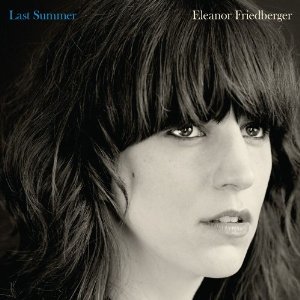
Album: Eleanor Friedberger - Last Summer

Last Summer (Eleanor Friedberger)
Album: Last Summer
Merge
Release Date: 7/12/11
Rating: ****** (6/10)

Eleanor Friedberger is the singer from Fiery Furnaces, the band that brought you Blueberry Boat, the world's first ever concept album about, er, a blueberry boat. And in answer to your question, no, no one knows what a blueberry boat is, nor what it has to do with a lost dog, tacos and the album's other jumbled subjects. What we do know is that Blueberry Boat was one of the freshest, most original albums of the last decade.

It's not that Last Summer is lacking the elements that make Fiery Furnaces great. Friedberger's rich voice, the relentless quirkiness, the effortless mid-song genre shifts - all of that is here. But where Fiery Furnaces exude a disarmingly pure sense of purpose and charming lack of self awareness, Last Summer sounds a mess. Friedberger can't seem to make up her mind if she wants to create art or play pop music. Of course, art and pop are inseparable, but the two nevertheless unravel here; rather merging, Friedberger's impulse toward the tuneful and her arty sensibilities sound conflicted and each hampers the other rather than enhancing it.

At least, sometimes it does. There's a lot of good ideas here and nothing here to indicate that Friedberger won't get them sorted out by her next release. "My Mistakes" opens the album rather abruptly - without any semblance of an intro, the first sound of the song (and the album) is Friedberger's voice launching into Verse One. Although the song is not lacking for production, the endearingly clunky synth should put a smile on your face. Sadly, the first misstep is a doozy - a reverbed smooth jazz saxophone solo. Whether it's an ironic statement or a post-ironic statement or no kind of statement at all, it's pure shite.

The saxophone solo illustrates exactly where this album goes wrong. The homey, intimate feel of the album, combined with its refusal to observe the boundaries of genre, should make it a winner. However, it veers too sharply in both directions. The experimental elements sometimes (as with the saxophone) sound forced and superfluous, while the singer-songwriter pieces bring the album - at moments - to the brink of sounding generic.

The album has some bright spots, though. The simplest parts are often the best - the first two thirds of the melancholy "Scenes from Bensonhurst," the tempered psych-folk of "One-Month Marathon" and the textbook disco of "Roosevelt Island" (where Friedberger's very un-textbook vocals save the song from being obnoxious, despite its shameless disco groove). "I Won't Fall Apart on You Tonight" is kind of rocking, even. Of course, the spell of such moments is always rudely interrupted by something corny and over-the-top. Knowing Fiery Furnaces, corny and over-the-top could be lovable. But, whether from too much self-awareness or not enough, it just isn't.

Friedberger uses Last Summer as an opportunity to showcase her impressive skills as a vocalist, but like any truly talented singer, she has no need to overdo it. In that sense, the album is exactly what it should be, a chance for Friedberger's curious voice to explore the world outside her brother's avant garde compositions (her brother being the other member of Fiery Furnaces, of course). In addition to having a distinct and powerful voice, Friedberger sets herself apart with her unusual cadence, melodic but conversational and often divorced from the beat in its rambling.

Turning away from the Furnaces' drug-addled nursery rhymes, Friedberger uses her solo album to explore more conventional subjects like regret and New York (the album is packed with Brooklyn/NYC-centric geographic specificity, including no less than two song titles). It's not quite as interesting as the mad whimsy of Blueberry Boat, but Friedberger still seems legitimately off her nut and her take on even the most mundane of subjects is still a bewildering barrage of stream-of-consciousness associations. As in Blueberry Boat, you can follow strands of stories and themes but the connections that seem so clear in Friedberger's confident delivery are, upon closer inspection, entirely inscrutable.

Those who keep listening through the embarrassing arrangements that define much of the album will be rewarded for their patience. The second to last song, "Owl's Head Park" is promising but its cool is spoiled by yet another nauseous saxophone. But the album finally redeems itself with the closer, "Early Earthquake." Starting with simple vocals over click-clacky percussion, the song warms with a restrained choppy rhythm guitar. Instrumental voices slip naturally in and out around this simple skeleton, a waft of feedback, a simple lead guitar and most notably, a harmonica, all executed with exquisite taste.

There should be no doubt, at this point, that Friedberger is a talented musician with a rare spark of originality. Her first solo outing shows that she's far more than just an instrument of her madman brother's wild genius; she is, as we were already pretty darn sure, an equal genius in her own right. But extracted from the creative partnership of Fiery Furnaces, Friedberger seems a little at sea. (The same could be said of some her brother's solo ventures.) Her creativity and god-given musical ability can't fail, and Last Summer is nothing if not promising. It's just going to take a little while for Friedberger to find balance on her own.

Stream the album here.

Monday, July 11, 2011

Album: Grooms - Prom

Prom (Grooms)
Album: Prom
Kanine Records
Release Date: July 12, 2011
Rating: ******** (8/10)

To cut to the chase, Grooms' sophomore full-length is startlingly great. The album oozes the professionalism and confidence of a band that - finally - knows exactly what they're trying to do. It is refreshingly original and strikingly mature.

Grooms still often evoke Sonic Youth in their odd dissonance, the guitar (and vocals) often transcending key signatures to create mysteriously, deliciously warped harmonies and scales. Still, compared to their first album, Prom owes relatively little to Sonic Youth or anyone else for that matter. It's not hard to name reference points (Sonic Youth, Radiohead, Microphones, My Bloody Valentine, the Notwist), but Prom could only have been made by Grooms.

The album announces its identity immediately - "Tiger Trees" opens with a foreboding military march, traced out not by the thud of drums but rather by shards of static, then explodes into a wash of noise. It's that rare sort of noise that doesn't depend on volume as its primary ingredient, the kind you can find in albums by Eric's Trip and the Microphones and very few others. It's a sort of quiet roar that evokes mountains and oceans. It doesn't sound murky but it's nearly impossible to figure out exactly what is going on.

That sort of masterful engineering is coupled with noticeably electrodance leaning elements such as the relentlessly elliptical acid house bass on the title track, the sputtering drums of "Imagining the Bodies" and the industrial beat in parts of "Into the Arms." These elements recall Radiohead, with their deep, post-dub, asymmetrical b-lines, but they are always balanced with organic elements. Likewise, when the guitar drifts off into space on the slow "Expression Of," the bass is at its most earthy.

The album is impressively consistent - none of the tracks feel like filler, either in that they are underdeveloped or in that they don't fit with the record overall. The explosive, melting-out-of-key "Aisha" balances the gentle, sad ambient-folk of "Psychics." In "Sharing," Grooms take a cue from My Bloody Valentine circa 1988 with bassist Emily Ambruso's only lead vocal, a sticky-sweet indie pop song swimming in blurry, underwater noise.

My only major complaint about the album is that the vocals are too far forward in many songs. Some of the middle tracks ("Imagining the Bodies," "Skating With Girl") are about right, but many songs, including the first two (otherwise, the album's strongest), simply seem to have vocals pasted over the top. While everything is a whirl of sound, Travis Johnson's vocals are bizarrely exposed - which might work if they were better but realistically, vocals are not the band's strongest suit. They aren't bad, by any means, but the melodies are a little underdeveloped and Johnson's voice just a little thin in contrast with the rich tapestry of the instrumentals.

Still, for an album as bold and original as this, you gotta hand it to these guys. Prom is a keeper.

Tuesday, June 21, 2011

Album: Ty Segall - Goodbye Bread

Goodbye Bread (Ty Segall)
Album: Goodbye Bread
Drag City
Release Date: 6/21/11
Rating: ******* (7/10)

On the one hand, more scuzzy garage rock may not exactly be what the indie world needs right now, but on the other, Ty Segall does it right. There's a reason Segall became a rock critic's darling with last year's Lemons. His songs are well composed - simple but full of not-quite-predictable hooks and supercool licks, and he keeps it up on this new LP with impressive consistency.

The album certainly benefited from Segall's experience on multiple instruments. Prior to (and concurrent with) his solo career, he played drums and guitar in a variety of bands. The arrangements are brilliant. While staying within the minimalist confines of the psych/garage/punk genre, they demonstrate a knowledge of the potential of each voice. The guitar and vocals make plenty of room for drums and bass, and none of the parts sound like afterthoughts.

Some of the tracks on Goodbye Bread go in for big, blues, rock'n'roll riffs - "California Commercial" and "The Floor" rock hard, all crashing drums, bristling guitar and meaty bass. The strongest track on the album is the vocal-driven anthem "You Make the Sun Fry," boasting one of Segall's best melodies ever, a near-perfect bass line and a rad solo.

The album is its best at its brightest, most youthful moments. The most obvious foray into minor keys, "My Head Explodes," falls short, starting on the right track but ultimately coming off a bit limp. "Where Your Mind Goes" is a more successful attempt to give the album a darker side. It's an exciting song, but could use to be whittled down from four minutes to three. Most of the rest of the album consists of slower, ballad-y songs under 70 BPM (i.e. a bit slower than "Hey Jude"). But while the tempo suggests ballad and the volume is generally restrained on these songs, they still have that garage grit to them.

Ty Segall does his thing well, but he definitely has a "thing," and it's pretty much just one thing. So despite great songwriting, Goodbye gets a little samey at times. It's also generic enough in style (garage rockers have been a dime a dozen since the 60's) that it's somewhat forgettable. Let's just say unless you've been in a coma for the last fifty years, it's not going to blow your mind. But it might set your head to bobbin' and maybe, when you're home alone, you'll bust out your air guitar for a track or two. At the very least, it's a lot of fun.

Monday, June 20, 2011

Album: Jeff the Brotherhood - We Are the Champions

We Are the Champions
Album: We Are the Champions
Infinity Cat
Rating: ******** (8/10)
Release Date: June 21, 2011

The new Jeff the Brotherhood album is exactly what fans of the band's 2008 debut will be expecting. It polishes the band's three-string psych rock and like their first album, it's a celebration of rock'n'roll excess. The indulgent fun of the album is first announced by an ungodly amount of flange at the beginning of the opening track. I'm not the only person who considers flange top among guitar's guilty pleasures - too cheap a trick to actually use in writing but super fun for enjoyment in one's bedroom. (For those that don't know, flange is an effect pedal that causes a "sweeping" sound without the guitarist actually doing anything.) But Jeff has always wallowed in cheap rock cliches, and in the best possible way. In the face of the wussy anti-rock bias of indie music, someone needs to bring back the wailing solo, the guitar hero posturing, the distortion pedal and the nasty riff. Oh yeah, and over that flange is not one but two guitar solos. At the same time. It's pretty sick.

Although the album does show the band moving towards more sophisticated musicianship, writing and production, they don't really step out of the boundaries they established on Heavy Days, just hone their craft within those boundaries. Some of the riffs even sound like particular riffs off Heavy Days, just reworked and embellished. That's not quite fair, but on the other hand, it's hard not to notice how familiar some of the songs ("Cool Out," "Mellow Out") sound.

The band does amp up their psychedelic side with songs like "Diamond Way," "Stay Up Late" and most of all, "Health and Strength," complete with Beatles-style sitar and high vocal wails. This may be a new dimension for the band, but it's such a 60's throwback that it doesn't really feel like an expansion. To the band's credit, though, they don't opt for a 60's vibe in the processing of their sound, using modern digital effects and beefy 90's guitar tones. As a result, as much as they consciously recall the 60's, their recordings wouldn't be mistaken for actual records from the time. Although they do seek a return to a time of simpler fun, Jeff aren't nostalgic in the sappy way of so many indie bands in the last decade and they aren't afraid to sound modern. They also aren't afraid to rock.

And in terms of rock, there's plenty here. Those thirsting for more ditties by the King of the Riff (Jeff's Jake Orrall) won't be disappointed by Champions, especially if they listen all the way through. Some of the early songs have the band tripping over their own ideas by adding too many complications to their ultra-simple formula. "Cool Out" and "Shredder" are rad tunes, but the album doesn't fully take off until "Ripper," one of the few songs that beats the raw power of the band's debut. Like the original raw power masters, the Stooges, Jeff don't shy away from the grittiest, simplest primal rock'n'roll urges - but unlike the Stooges, there's nothing anguished about Jeff. They're about raw fun.

Unfortunately, the band brings back one rock cliche we could all do without on their ambiguously misogynistic "Wastoid Girl." I know that's not what the band's about, but it's still a bad move on their part.

That track aside, Champions is an enjoyable listen. For folks new to the band, I'd probably recommend Heavy Days. It's got more weak links but its best tracks still pack more punch than almost anything on the new record. Still, it's a toss-up and fans will find lots to love about the new disc - as long as they don't have the audacity to expect something new.

Tuesday, June 7, 2011

Album: Arctic Monkeys - Suck It and See

Suck It and See (Arctic Monkeys)
Album: Suck It and See
Domino
Release date: 6/7/11
Rating: ***** (5/10)

The Arctic Monkeys are one of the better semi-indie bands to make it big lately, but after a couple of good albums, they've really dropped the ball with their latest release, Suck It and See. It's not bad in any particular way, it's just so fucking boring. So far, the record has garnered a lot of really positive reviews but I can't figure out why.

The album was meant to be "more vintage" than the last couple releases and it seems to have accomplished, with earthy production and mellow songwriting that recalls Lou Reed. The songs are almost all the same tempo (130 BPM give or take 10). They almost all start with guitar, then add vocals, then add the rhythm section. They're mostly in the same couple key signatures. There's little distortion, mostly just a slight amp-generated crunch. Nearly every track features tambourine and although the drum beats vary, they are so produced and unspectacular that they end up sounding the same. The vocals never stray from their most comfortable range. There is reverb on the vocals, guitars and drums and it never varies noticeably anywhere on the album.

Taken individually, most of the songs are above average in terms of both writing and execution. The melodies are poppy but pleasantly languid and certainly tasteful. The simple arrangements are well thought out and the guitar sound is beautifully controlled. The topics of the lyrics are generic but more clever than most.

The record does have its moments. "Library Pictures," the album's heaviest track, is propelled by frantic bass and drumming - but even this song drops down to half tempo for half the song and returns to the jangly crunchy guitar of every other track. "All My Own Stunts" is satisfyingly dark and the vocal melody is the only one on the album that breaks the mold. Meanwhile, "Brick by Brick" rocks hard and recalls the minimal blues-punk of the White Stripes and the gritty psychedelia of bands like Black Rebel Motorcycle Club and Brian Jonestown Massacre. The album's lead single, "Don't Sit Down 'Cause I've Moved Your Chair" - though similar in mood - takes its time in the introduction and with the slow tempo and highly repetitive, generic melody on the verse, it doesn't really accomplish what it sets out to do.

As for the songs that match the album's signature formula, of course, some are better than others. The title track is warm and gently enticing. And the closer, "That's Where You're Wrong," is a subtle, exquisitely written song, all jangling guitars and finespun hooks. In contrast, the first two songs are painfully boring and entirely lacking in melodic interest in the vocals (although there are a couple of good guitar riffs thrown in).

Arctic Monkeys may be good songwriters and they may have perfected their sound, but there is a vacuum in Suck It, a void where energy and inspiration should be. I'd rather hear a sloppy, mistaken-ridden record than one that's polished and lifeless. Skip it.

Monday, June 6, 2011

Album: Fucked Up - David Comes to Life

David Comes to Life (Fucked Up)
Album: David Comes to Life
Matador
Release Date: 6/7/11
Rating: ******** (8/10)

I don't like rock operas. Not Tommy. Not Zen Arcade. Not even really Ziggy Stardust. I like a lot of the songs on those records but I find the whole opera thing really hard to get past. And Fucked Up's new album, David Comes to Life, is no exception. But that's a personal hangup. And setting personal shit aside, David is an outstanding accomplishment.

The double album, clocking in at 80 minutes, is a proletarian meta-drama that explores themes like the subjectivity of truth and personal redemption in the face of guilt. The title character, David, is a factory worker (perhaps the very same worker imagined by guitarist 10,000 Marbles in his flagrantly Dickensian interview with Stereogum) who falls in love with a woman with whom he plots an insurrection of sorts. Soon after the lovers meet, the woman is killed in an explosion and David takes the blame for her death. However, the listener eventually learns that the originally distant narrator was actually (probably) responsible. The truth comes out and David finds redemption and peace, his belief in love restored.

Fucked Up have reinvented hardcore punk before and here they continue to push the boundaries of the genre. There's no mistaking Damian Abraham's voice for any other style, but just as the Who proved rock could reach the epic level of opera, Fucked Up are here to show the same for punk, more convincingly than anyone else has managed to date. Abraham's roar is couched in a wash of guitar, the sort of shimmering layers of sound that characterized the band's last release. Lead guitar also frequently joins Abraham on the melodies, outlining the tunes his gruff voice implies. It all works.

Moreover, David recalls the Who's Tommy not only in its story and the statement it makes on rock music but even in its sound. Although the layers of guitar could be no one but Fucked Up, some of the scintillating textures and broad open chords have Pete Townshend all over them. Although compositionally the furthest the band has gotten from traditional pop, the album is the band's brightest to date in terms of the chords, keys and melodies.

The lyrics are literate and clever. The story isn't all that clear because the band chooses to focus on the characters' internal battles rather than the plot that links them together. Although the ambiguity of the album can be frustrating, it's actually much better for this decision. After all, the whole story is metaphor and allegory. The moral of the tale seems to be "believe in love and seize the day," which is in itself not all that original, but it works because the band tackles huge subjects en route to this conclusion - truth, justice, religion, class struggle and free will among others. The unreliable narrator is not a new literary device, but it's rare to find a narrator so actively and candidly discussing his role as narrator and his reason for taking on this role - to hide his own guilt.

The band's approach here does have its drawbacks, though. There is some dialog among the characters that comes off as a little trite and the constant couplets are a bit annoying for those looking for the kind of pop-structured ragers of the band's previous releases. The lack of straightforward songs is the most disappointing thing about this album - but then again, the bands songs were never terribly straightforward by conventional standards anyway. The album's best tracks are often its simplest. Anthems "A Slanted Tone" and "Serve Me Right" stand out and the quality of the songs seems to improve as the album carries on - as the band's passion peaks and the story's broader implications come into focus.

David is an ambitious undertaking but Fucked Up has not overreached. Indeed, they've earned this and their execution, while occasionally burdensome, is never indulgent. Fucked Up have approached this project with the same passion and love with which they do everything. And despite the heavy subject matter and daunting length of the record, it rocks as hard as anything the band has done to date. I doubt it will find itself in as frequent rotation in my headphones as the band's more song-oriented releases, but it's a humbling achievement and a vital contribution to punk.

You can hear the whole album for yourself right here.

Wednesday, May 25, 2011

Album + Live: Her Vanished Grace


Album: See the Moon
Athame Music, 2011
Rating: ******* (7/10)

I've more or less retired from reviewing local shoegaze and shoegaze-affiliated bands for a number of reasons, but against my better judgment, I'm temporarily suspending the moratorium to do a couple of reviews.

First against the wall is Her Vanished Grace, who are not really a shoegaze band but are a part of that scene. Their music is dream pop - a style that takes the processed layers of shoegaze but tones them down enough to make audible their concisely-written indieish pop tunes. At times, HVG sounds more like U2 than they do My Bloody Valentine.

Her Vanished Grace have been making music in NYC for about twenty years now. The core of the band are married couple Nance and Charlie Nieland who both play guitar and trade lead vocal roles. For quite a while now, the duo has been joined by a rhythm section of Maria Theodosiadou (bass) and Billy Loose (drums). The quartet cranks out a new album every year or two and despite the volume of output (it adds up after this many years), the quality of the band's LPs is impressively consistent.

There is a parallel consistency between the tracks of their latest release, See the Moon. None of the record's eleven tracks sound like filler; each seems to have been given the same level of attention. Rather than looking for a way to fill up 45 minutes, the band seems to have waited until they had 45 minutes of material, then released their record.

Just because the songs are given equal attention doesn't mean they are equally successful. There are some standout moments, like the second track, "Passenger," and the album's lush centerpiece "Beauty Lingers." There are some awesome bass lines ("Make It Lighter" is the best example of many) and strong melodies and drumming throughout.

If you have low tolerance for sappy pop cliches, there are plenty of points where this album will put you off, but that's the nature of the genre. The album is genuine and for music so "dreamy," it's strikingly down-to-earth. Although the sound is beautiful, the transitions can be charmingly un-smooth, a reminder that this band is indeed just regular folk in a modest Brooklyn studio, great soundsmiths and great songwriters but neither aloof nor pretentious. Even the processing on some of the vocals and all of the guitars reminds us of the music's humanity even as it gives aural polish.

Live
When: May 19
Where: Pianos

I love seeing HVG live mainly because the band loves playing live. Many bands are so mired in ambition, whether it be for major label deals or hipster cred or artistic revolution, that they seem to forget why most of us got into playing in the first place - it's fun. But every time they take the stage, HVG seem delighted just to play their songs for their friends and whoever happens to want to listen . That's not to say the band is without ambition - but whatever hopes they may have for their music, they enjoy the moment for what it is.

On stage, Charlie and Nance are one of those adorable couples that seems to still really, really like each other even though they've been together quite a while as bandmates and spouses, stealing admiring glances at each other across the stage. Meanwhile, unassuming badass Theodosiadou rocks out over on stage left, her face seldom visible from behind a curtain of hair. And Loose manages to find a technique that's surprisingly interesting for an oppressively mid-tempo, 4/4 genre, filling the sound with swelling fills and crashing cymbals without once overplaying.

HVG aren't out to shatter preconceived notions about art. They aren't out to be cooler than you or to get rich. They're day-job types who have spent years making music they love. And their sincerity (and no small amount of talent) makes them a refreshing, compelling and relevant band that will outlast trend and whim alike.

I also want to make a quick note about the other band I saw at Pianos on Thursday, one Dead Leaf Echo who, unlike HVG, are pretty clearly a shoegaze band. I shouldn't review them - after all, I quit reviewing shoegaze bands for a lot of reasons. Not the least of these reasons was that my general philosophy of supporting bands and scenes through criticism seemed to be in direct conflict with a prevalent attitude shoegaze circles which sees criticism (even its positive elements) as counterproductive and antithetical to the creation of music. There's validity in both viewpoints and not any chance of coming to a compromise, so I thought it best to bow out. (The other reason I stopped writing about shoegaze is that my own tastes shifted, but I never stopped loving the genre even as I came to love other styles more.)

So, allow me to keep this note very brief. To avoid any confusion, this is a positive review. The last time I reviewed DLE was ages ago and I panned them pretty severely for a lack of songwriting and momentum. But based on the show Thursday, it's a totally different story now. It was never in question that DLE could create beautiful layers of sound, but in their latest songs, they've sculpted those layers into exciting songs full of energy and momentum. It's not a matter of conforming to conventional pop structures, it's just a matter of crafting a musical arc instead of a stagnant pool of sound. And DLE have honed this skill in recent years. Their new material still has moments of sound collage, as it should, but they don't overstay their welcome, and there are moments where the band truly rocks a la kindred neo-psychedelics BRMC and A Place to Bury Strangers.

The band has forgone a live bassist and shockingly, doesn't seem to suffer one bit from the shift to prerecorded b-lines. Frontman Lloyd Galyon is now joined by Ana Breton (formerly of Mahogany) and Christo Buffam (of the Vandelles), both of whom complement Galyon's scintillating 12-string ambiance, Breton with thick, dreamy textures and Buffam with sheets of white noise. The greater contrast in textures actually makes the music more coherent - and more memorable - than ever before. Galyon's obvious talent for soundmaking is finally articulated in these new songs and lives up to its potential at last. Whether that's the new band members, personal evolution as a musician or most likely a combination of the two, DLE are out of a rut and on a roll. Check out their new EP, Verisimilitude, out now.

Tuesday, May 24, 2011

Album: Thurston Moore - Demolished Thoughts

Demolished Thoughts (Thurston Moore)
Album: Demolished Thoughts
Matador
Release date: May 24, 2011
Rating: ******** (8/10)

Thurston Moore, Sonic Youth's good-natured wild boy, has an impressive diversity of output. The tonal/atonal experimentation of Sonic Youth as well as the band's more straight-forward pop and punk moments, free jazz and noise with various avant garde collaborators and hushed folk as a solo artist. The content of Demolished Thoughts, an acoustic album produced by Beck, is not a shock. It's acoustic guitar and Thurston's frank, boyish voice, surrounded by a fair amount of orchestration and nuanced arrangements. What is slightly surprising is that it's this good.

Demolished Thoughts may not surpass Moore's previous best solo efforts (i.e. 1995's Psychic Hearts and 2007's Trees Outside the Academy). Then again, maybe it does. It's really good. Every song is beautifully written, every voice is carefully arranged and masterfully mixed.

Moore can pull off some cheesy stuff, like a dang harp on several tracks, because everything about the songs is unassuming. His voice is plain and conversational and might make you wonder what sort of lullabies Moore sang his daughter when she was a baby. It's a lullaby voice because it sounds more personal than performed but it's not a raw, soul-baring jumble of personal trauma like Neutral Milk Hotel or Will Oldham. It's just songs, sung by Moore, for you.

Moore's tone aside, though, it's not all lullaby fare. The lyrics hint at a dark (if loving) sexuality and while the songs are comforting, they also point towards the dark things that cause a need for comfort. The opening track sets the tone for the album, a gentle, reassuring folk song that sounds as though it was written to bring peace to a troubled loved one. But there's also something darker there; the lyrics rather cryptically warn, "You better hold your lover down / and tie him to the ground."

A few tracks are even as anxiety-ridden as Sonic Youth (only acoustic). "Circulation" is the clearest example with it's dark layers of sound, contrasting traditionally pretty string parts with unsettling noise and tense guitar that subtly strays from the key and gives the sense that something is wrong. The minor-modal "Mina Loy" is even a bit ominous.

The high point of the album is probably the seven minute "Orchard Street," which twists like the sweetest of folk music has been refracted and misinterpreted. The entire album exists like this, though, suspended in the space between the pure 60's folk it recalls and the atonal raw nerves of Thurston's other music. It invites you in, but once you're in there, you will find yourself disoriented. And as you feel the music protecting you from danger, you may find it was the album that put the danger so close to begin with. At once simple and perplexing, comforting and haunting, earthy and otherworldly - and it proves that this boyish 50-something still has some tricks up his sleeve, some thirty years after he first started reinventing popular music.

Monday, May 23, 2011

Album: Boris - Attention Please

Attention Please (Boris)
Album: Attention Please
Sargent House
Release date: May 24, 2011
Rating: ******* (8/10)

I think you'd be hard put to argue that Boris isn't one of the best bands on earth right now. And in 2011, it seems they are only surpassed in prolificacy, historically, by Bob Pollard and R. Stevie Moore, in terms of the sheer number of songs and albums one can possibly release in a year. On closer examination, you'll find a large number of songs here overlapping with other Boris releases - but any that have seen more than one release have been significantly reworked.

What makes this seventeenth LP unique in Boris's discography is that all lead vocals are sung by Wata, the band's female guitarist. If you've ever seen Wata play, you'll know she can shred like a motherfucker. Her singing is eerie and ethereal, making this Boris's most dreamy record to date (of the ones that I've heard, anyway - to be fair, I haven't listened to all seventeen).

Boris is a difficult band to explain. In one way, they wear their influences on their sleeve, but those influences are so diverse that the band never sounds like anyone else. And while a fair number of bands incorporate vastly different styles, few do it as seamlessly as this group. Sounds reminiscent of My Bloody Valentine or Brian Eno lock into doom metal drones. Industrial racket segues into a sort of demented folk music. Alt rock flare folds into chirping electronica. Nods to the wildman yelps of the Boredoms slip naturally into gaps between speed metal riffs. Attention Please is at once light and heavy, smooth and jagged, gentle and harsh. It's also - as all Boris albums are - simultaneously inviting and impenetrable, accessible on one level but entirely esoteric on another.

That said, Attention Please is more accessible and less esoteric than most Boris releases. That's not necessarily a good thing - this album just doesn't sound as original as most of the band's output. It's softer, more atmospheric and less metal than the last few LPs from the band. The restraint is interesting, especially on songs like the tense title track, with its pulsing house groove, creeping guitar textures and Wata's near-whisper. "Party Boy," with its thickly distorted guitar mixed low over another throbbing dance club beat is less immediately haunting, but also seems to boil just under the surface. Throughout the album, there seems to be a buried anxiety on the verge of exploding.

Attention Please suffers a little from the electronic aspects. Drummer Atsuo's playing is one of Boris's greatest strengths. His approach to drums is raw, animate, wild, vital in a way that is the antithesis of the mechanical beats on much of Attention Please. The mechanical beats have their own charm, and it's not the first time we've heard Boris dabble in electronics. In fact, they use these sort of robotic beats very well, creating a cold, industrial sense of alienation. But despite being effective, it just doesn't sound as fresh - other bands use these sorts of beats, but no other band has Atsuo behind an acoustic drumkit.

Between the foreboding electro ("Attention Please," "Party Boy," "Tokyo Wonder Land") and the hushed noisescapes ("See You Next Week," "You," "Hand In Hand") are some moments of pure pop. I mean, weird, scrambled pop that's juiced up and tripped out, but poppy rock'n'roll ragers nonetheless. "Spoon" is the obvious example, a soaring dream pop anthem, as lush and warm as anything the band has ever put out. In both this song and the similar "Hope" (the album's single), the guitar grows increasingly hard-edged as the song wears on and in the final minute, the band's metal influences seem to take over. But somehow it works, making sure the songs rock without weighing them down.

"Les Paul Custom '86" is an odder track, but hooky with a strange spluttering beat, a quirky and very Japanese (a la Boredoms, Shonen Knife) lead guitar line, and some strange coughing (again recalling the Boredoms). But there are warmer layers of sound here as well, something deeper and more solid than that would imply - it's a layer of low-register sound that prevents the song from drifting off as oddball songs are wont to do.

For a band with such high output, Boris do an exceptional job of keeping things fresh. This album isn't as good as their 2005 record Pink, but in many ways, it can be better to have an album that's not quite as good as, say, Pink, but that also doesn't sound exactly like Pink, or anything like Pink at all. This album is worth buying because you don't already have it. If you have one Boris album, you have one; the band is in a constant state of discovery and invention. That takes both courage and ingenuity and few bands could match Boris on either of those fronts.

Tuesday, May 17, 2011

Album: Gold-Bears - Are You Falling In Love

Are You Falling In Love? (Gold-Bears)
Album: Are You Falling In Love?
Slumberland Records
Release Date: May 17, 2011
Rating: ******** (8/10)

It would be nearly impossible for me to overstate my love of Haribo Gold-Bears candy. The floor of my room is littered with empty gummy bear packages and I've been known to hide stashes of the little bear-chens around my room drug-addict style. When friends come from Europe, they come bearing Bears - at least, if they want to sleep on my couch, they do. So admittedly, I am a bit biased in favor of the new Slumberland band by the same name - I mean, if they are the kind of people who appreciate this candy, they're my kind of people. And really, they do have a fair amount in common with the kindercandy - their sound is technicolor and sugary and makes me smile!

Calling Gold-Bears Atlanta's very own Pains of Being Pure at Heart would be lazy and not entirely accurate, but it's hard to ignore the parallels between the bands. Both are adorable indie pop quartets with catchy melodies buried beneath walls of guitar sound. Both are signed to Slumberland Records. Both feature three white guys and an Asian woman. Both are playing at Cake Shop Thursday for the opening night of NYC Popfest 2011.

But there are some key differences. Gold-Bears' melodies are more nuanced than the Pains - still Chock full o' Hooks, but with a scattering of unexpected notes that shift the emotion of whole songs. Their noise is also different from that of the Pains. The Pains' songs are coated in a shoegazy sheen, while Gold-Bears' songs sink into pools of sonic murk. The result is a much darker sounding album, one where the saccharine poptunes seem barely able to keep their heads above water - relentless bleak/black waves threaten to swallow them entirely.

The best example of this sonic struggle for survival is the title track. Warm blankets of guitar muffle the vocals and drums. But these blankets are at once comforting and dangerous - squeals of feedback peel out of the drone. It's as the though the guitar is some half-wild animal loose in a corral - the band isn't making this sound, just containing it. Indeed, they seem to approach the sound like you would an animal you hope one day to tame - gently coaxing it, patiently nurturing it but respecting that it's a long way from being yours.

There are more than a few songs on Are You Falling that would need only minor adjustments to fit snugly under the "pop-punk" label. In their composition, tunes like "Record Store" and "In this City, I'm Invincible" are all youthful energy; the band's sophisticated sound defines the band as indie pop or post punk, but in terms of songwriting, this band could be mistaken for high-end kiddiepunk. Which may sound like a jab, but it's not meant that way at all - it's far from easy to master songwriting with the consistency displayed on Are You Falling and the deceptively simple, bite-sized and easily digestible song structures are what guide us through the album's more abstruse elements.

In addition, Gold-Bears are succinct and even abrupt. While many "twee" bands shy away from anything startling, these kids aren't afraid of quick starts and stops. The music isn't jerky but when the band decides a song has lived its life, they cut it off and jump into the next without stopping for a breath. It's easy to get swept up in this exhilarating pop rush and it's also refreshing to find a band that seems eager not to waste our time.

Although the lyrics can be hard to make out in the aural fog, they seem to hit your usual indie pop subjects. The beautiful anthem "East Station Attendant" is a classic crush-from-a-distance tale, while "Beside You," a story of confused young love, is a bittersweet goodbye letter to childhood. The naive "Xmas Song" confesses secret insecurities and the restrained "Are You Falling In Love?" is a modern love story, equal parts regret and hope.

From the triumphant (and excellently named) "Totally Called It" to the pleading "Yeah, Tonight," Are You Falling is a heartfelt record of youth trying to make sense of beauty and pain. It's executed with rare talent and rare passion. Sure, it's not the most original album in history and may be a bit sappy for some, but as an exercise in indie pop, it succeeds beautifully. Indeed, it is one of the most accomplished albums in its genre in recent years and it will stay with you long after its (startling) end.

Tuesday, May 10, 2011

Album: Liturgy - Aesthethica

Aesthethica (Liturgy)
Album: Aesthethica
Thrill Jockey
Release Date: May 10, 2011
Rating: ******** (8/10)

I always hesitate when reviewing music that's outside of my normal area of expertise. So I've been sitting on the new Liturgy for a while, trying to figure out how to write about it without reviewing the entire history of black metal.

But it occurs to me that this album only ended up in my hands in the first place because of Liturgy's crossover appeal and because of the band's [apparently conscious] efforts to "cross over" to indie rock fans. It matters more to me, and probably to the band, what this album will mean to those outside the genre. After all, black metal (fast post-thrash metal with extreme technical prowess, no melodic lines and song structures more akin to post-rock than pop) is often an insular world, one associated with morbid, angry teenage boys (at best) or church-burning neo-Nazis (at worst).

Liturgy are not of this ilk. Given the strict elitism - near fascism - of the black metal underworld, "crossover" doesn't mean existing in both worlds. You're either in or you're out, and Liturgy have rather courageously elected to alienate those who are most disposed towards their musical stylings in favor of those who are more in line with their artistic vision. Because Liturgy is not your typical black metal band. While their closest kin musically may be the Norwegian teens of yesteryear (1991 to be exact), there's a sensibility to Liturgy that goes far deeper than the pure aggression of those rather juvenile (albeit technically skilled) bands. That's not to say Liturgy aren't brutally aggressive, but they also recognize their music as an artistic statement in dialog with the rest of independent music. For most adherents, black metal is an xtreme culture, but in the hands of Liturgy, it's simply a tool, the artists' chosen medium.

So, what of the actual album? It's dense and dramatic, anguished and violent. I actually feel a little sick to my stomach after listening to it for too long (and this is one of those rare instances where that's a compliment). While the high shrieking vocals are not all that far from traditional black metal, there's something more vulnerable in frontman Hunter Hunt-Hendrix's plaintive, desperate wail. Meanwhile, while all black metal is musically dense, the genealogy of Liturgy's "wall of sound" can be traced to psychedelic rock. Their droning noise has also been rightly compared (by none less than the Village Voice) to the downtown Manhattan art scene of the late 70's - Glenn Branca, Rhys Chatham and the like.

There's also audible goth influences at moments - not goth in the "goth metal" sense, but in the sheer melodrama of the sound. Hunt-Hendrix's screech could hardly be further from The Cure's Robert Smith, but you can hear the very same mournful desperation behind each. Of course, the goth side of Liturgy is also gothic in their exploration of European religious history. From the synthvox choral that opens "True Will" to the straight-up fugue "Helix Skull," from song titles like "Veins of God" to buried sounds evoking church bells and organs throughout the record, Aesthethica is mired in religious imagery.

The album rarely grooves, which is par for the black metal course. There are moments of syncopation that exist just on the border between jerky math rock and a more traditional rock'n'roll pulse. But by and large, the drums stick to steady eighth notes on snare, bass drum and cymbal or simply chaotic fills. Rarely does the snare even fall back on the usual two-four of most popular music. This is because while most popular music tries to hook the listener in with its beat, this sort of metal tries to beat the listener over the head. Rather than sliding forward on an easy groove, the music's inertia pulls it backwards at every beat, so even as the guitar hurdles forward at high speeds, the listener feels as though they are pushing a stalled train up a steep hill. It's exhausting.

Clocking in at over an hour and brutally dense, Aesthethica is be a lot for those unaccustomed to black metal to digest. Even when broken up by the quieter sound experiments that start, end or occupy entirely numerous tracks on the album, it's still a tough listen. It can also become a bit samey, always with the same shrieking vocals, the same bambambambambam on the drums, the same wall of distorted guitar. Add to that the ruthless repetition of some riffs for five minutes or more. Of course, that's part of the point of music like this, to abuse the listener, to push them to the limits of tolerance. And while that's artistically fascinating and often satisfying, over an hour of it is a lot for the black metal greenhorn.

Of course, this style, this band, this album, aren't about making concessions or going easy on anyone. It's not about winning over listeners and no doubt, a lot of people will shut this album off after only a few minutes. And that's one of the reasons it's so very daring of Liturgy to reach out to the hostile indie audience. Liturgy wants to be the token black metal record in your collection (although they might also like it if you were inspired by their music to broaden your horizons and dig deeper in the genre). Just as sludge metal has Mastadon, black metal has Liturgy, a place where fans of Arcade Fire and Interpol can dip their toes in a foreign genre.

Perhaps more than anything, it bears noting that Aesthethica is not all misery. While its torment is relentless, there are moments of ecstasy buried in the screams, even in the first track. There's a rush, an elation, a surging upwards even as the weight of the music seems to drag us downward. Despite the effort, or maybe because of it, Aesthethica feels triumphant. But you'll need a nap afterward.

Monday, May 9, 2011

Album: Gang Gang Dance - Eye Contact

Eye Contact (Gang Gang Dance)
Album: Eye Contact
4AD
Release date: May 10, 2011
Rating: ******** (8/10)

After 2008's exceptional Saint Dymphna, Gang Gang Dance are back to business as usual for their 4AD debut, Eye Contact, out tomorrow. The band are the uncontested masters of rhythm 'n' synth experimental dub, weaving waves of electronic sound and Lizzi Bougatsos's enchanting/crackpot vocals through ritualistic percussion and club-worthy bass. Eye Contact is a distinctive album, but it falls well within the boundaries established by the band's previous releases - there's not a lot of new ground covered here.

GGD is not an easy band. They've never handed their music to their listeners in a simple pop-song package. (The closest they got was a handful of tracks on Saint Dymphna.) As a result, GGD can be a challenging and frustrating listen, and Eye Contact is no exception. The eleven-plus minute first track is more than half intro, just wafts of synth sound, light cymbals and snippets of a man's voice. I have to admire the band's self-control and somehow, it comes off more ballsy than indulgent when they dare to ask the same patience of their listeners. In the fourth minute of the track, the small cymbals give way to rumbling toms while the synths gradually begin to carve out melodic motifs. But it's only after the six minute mark that the song truly begins and we first hear Bougatsos's familiar ululation.

The album pushes the band's mysticism to the fore with three interludes (titled respectively "∞" "∞∞" and "∞∞∞"), the first of which features a stunning sample of what sounds like an eastern orthodox hymn (according to The Guardian, it's Bougatsos's late uncle) laid gently in an analog-sounding bed of synth. The third interlude, sung by Bougatsos, sounds equally religious, drawing on eastern European and Middle Eastern scales that carry through the next and final track, "Thru and Thru." The band's shamanistic instincts were apparent on their last two LPs but never so literal as here.

Eye Contact is certainly a remarkable album and displays the band's control as well as their unending passion for riddim. The band is fascinated with every beat they can find, and they've searched the world for groove, drawing on sources that range from UK underground dance music to reggaeton to South Asian percussion ensembles. Surprisingly, given the breadth and spirit of the album, it doesn't overreach, nor does it sound bloated or narcissistic. First of all, Eye Contact can't overreach because the band is just that good. And it is saved from narcissism by the band's very real curiosity about the musical territory they inhabit. It's immediately evident that no one but Gang Gang Dance could have made this album.

But on the other hand, it hasn't got the richness or the punch of Saint Dymphna. A few tracks are exceptions: the club-inflected soundworld of "Adult Goth," the reggaeton-house anthem "Mindkilla" and the deep post-funk groove of "Romance Layers" come close, but nothing here is quite as good as "First Communion" and "House Jam."

The difference, and the reason that this album isn't quite equal to its predecessor, is in songwriting. Gang Gang Dance is one for sprawling epics that twist and morph and never give a hint of verse, chorus, bridge or any other recognizable building block. Sometimes the result is tight and bold, like Saint Dymphna's epic "House Jam" but other times, it can sound aimless and begs for an editor.

There are some duds on Eye Contact as well. "Chinese High" is uncharacteristically bright, even hinting momentarily at calypso. While that in itself is not bad, the band pushes it past sunny and into corny with the synthesizer's melodic motif at the end of the song. "Sacer" also gets a little lost with a melody that's simply too formless to carry a six minute song.

The final track, "Thru and Thru," may be the album's strongest. Eastern melodies intertwine with warm layers of sound and a beat that seamlessly merges the "tribal" with a eurodisco nightclub pulse. It's a perfect closer for the album, showing both sides of the record's split personality - its 3 AM clubhopper and its mystical seer - and finally satisfying both.

An album as bold and accomplished as Eye Contact shouldn't be a disappointment, but the band has simply set the bar so high that I've come to expect a revolution from them on every LP. Eye Contact isn't that, it's more about honing the band's existing sound, articulating its longing and its euphoria, going deeper into the trance. It's an album of exploration, like all of GGD's albums, but its exploration doesn't cover new latitudes, it just plunges deeper and reaches higher. It doesn't always succeed in these endeavors and can come off as detached and disconnected from the real world in a frustrating and at times even arrogant way. But the album's failures are part of its charm - its power comes from its fearlessness, its willingness to fail and to document its failures. That's what makes this album worthwhile.

Friday, May 6, 2011

Release: Liquid Me - Liquid Me (EP)

Liquid Me (s/t)
Album: Liquid Me
Self-released
Release Date: May 6, 2011
Rating: ****** (6/10)

A couple of weeks ago, this guy sent me an e-mail telling me how awesome I am and asking me to review an EP by some band called Liquid Me. I like it when people tell me how awesome I am, so I agreed. I gotta say, not many bands in my little universe would name their influences as "Nirvana, Motorhead, Black Sabbath, Foo Fighters, and Queens of the Stone Age."

Turns out, they weren't joking. They sound pretty much like exactly everything that was on alternative radio in the 90's. I'm not sure why anyone would want to play a style that hasn't really been relevant since 1993. I'm not really sure why if they did, they'd want someone like me to review it. (I'm also not sure why they are releasing on a Friday. Mysteries!)

But the band does succeed at what they set out to do (assuming what they set out to do was imitate In Utero-era Nirvana and Pearl Jam - oh, and Queens of the Stone Age). The guitar work is impressive - lots of harmonics and nasty riffs. "See Thru" is probably the best example, with a mean solo and a hook doubled on octaves, a la Smashing Pumpkins. But the guitars are on their game for the whole EP. "Resist" also has a fun riff and the drummer Todd is at his best here, endlessly reacting to minutiae in the guitar line.

"She Said" (will people please stop using that as a song title?) branches out a bit sonically, with some distinctly industrial-inspired elements. Meanwhile, "Resist" has moments that recall Black Flag - but only a few. Most of the song is straight alt rock. The EP is also book-ended by their most Nirvana-esque songs so what musical range they do show is buried.

Lamentable lyrics aside, this is clearly a talented bunch. I haven't heard anyone do this genre this well in a long time. But I don't really understand the point of doing something that's already been done, and in fact, done to death and then had its carcass trampled flat and dragged through the mud for years and years by crappy radio stations nationwide. Never mind that Liquid Me is better than quite a few of the bands that made it big post 1995. Like any throwback, it's a fun listen if you're into that kind of thing. But it's not interesting and I can't help but think it's a waste of talent.

Who knows, if the band digs deeper, they may find some influences that broaden their horizons. But for now, they're just chewing up the 90's and spitting it back out. So, if that's your thing, check them out.