Showing posts with label ambient pop. Show all posts

Monday, May 2, 2011

Album: The Anters - Burst Apart

Burst Apart (The Antlers)
Album: Burst Apart
Frenchkiss Records
Release Date: May 10, 2011
Rating: ******** (8/10)

It would be difficult for me to overstate the impact that the Antlers' debut album, Hospice, had on me when I first started listening to it in early 2009. The arrival of my review copy coincided with a moment in my life when I was turning to face certain demons in my past. Hospice put into words, into sounds and into metaphor what I couldn't - the feelings of guilt and confusion that haunt us in the wake of abuse by a loved one. (Many critics seem unable to grasp metaphor and insist the album is about a dying friend, but Peter Silberman, Antlers' songwriter and singer, stated in interviews that the album was about the breakup of an abusive relationship.) I was at a dark point and felt no one could understand - until I heard Silberman singing exactly what I was trying to express. Hospice was a comfort to me, and a guide, and the first time I felt any absolution from the guilt that had pervaded my life for over a year.

So it's impossible that the Antlers' sophomore release would live up to that standard. Hospice grew out of an experience that was not chosen and out of Silberman's subsequent search for understanding and absolution from those closest to him. It's an intensely personal album that always sounded like it was directed more towards friends and family than to an audience of unknown fans. (After all, when Antlers wrote the album, they didn't have fans. I remember seeing them at Cake Shop in January 2009 with a whopping 15 people.)

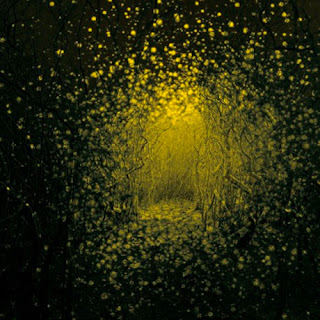
As much as I touted Hospice, as much as I wanted that album to reach everyone who needed it, I knew success would likely doom the band to musical mediocrity. But when I saw the name, cover art and track listing for Burst Apart, I began to suspect the band was going to pull it off.

And they have. They made good decisions, particularly in not trying to make Hospice, Part 2. Burst Apart is not a concept album and surprisingly, it's not bloated at all. The band also found a way to take advantage of actually having money to record and to become more radio-friendly without capitulating to trend or losing their unique sound. Indeed, Burst Apart's most notable accomplishment lies in the way it establishes the Antlers' sonic identity, staying true to the musical ideas explored in Hospice but also growing naturally into the band's audibly higher production budget. The band passed their toughest challenge with more sure-handedness than anyone could have expected.

The Antlers have said that they wanted to explore a broader emotional range on their second album and hope to establish that they aren't just sad. But with song titles like "No Windows," "Every Night My Teeth are Falling Out" and "Putting the Dog to Sleep," Burst Apart isn't exactly a barrel of laughs. The album is still melancholy, but it is infused with hope and redemption.

"I Don't Want Love" is the perfect opener. It recycles a melody from Hospice (an album that was defined by its reappearing melodic themes) while showcasing the band's shiny new sound, larger and brighter than anything on the first album. The song is breathtaking, one of the band's best to date, all glimmering layers of guitar and synth. It shows a band ready to pick up where they left off and move forward into new territory - musically and emotionally.

Despite successfully establishing the Antlers' identity, the album does suffer in some production choices. In particular, there often seems to be a disconnect between the many layers in the sound. It's obvious the band is not attempting to recreate a live sound, nor should they, but the studio imprint on Burst Apart, the gaps between each instrumental line, dilutes the album's humanity and damages its sincerity. In addition, the heavy effects, mostly reverb, put on the drums often come off as a bit cheesy and lacking in subtlety.

The second song, "French Exit," is a great, radio-ready pop hit, but it suffers from an uncharacteristically bad mix - the synth that carries the melody between vocal strands is far too high in the mix, effectively killing the actual complexity of sound behind it. It's an odd error for a band that usually excels in this area, particularly given how low Silberman's vocals are mixed throughout much of the record. Still, the strong songwriting makes "French Exit" a single-worthy, if flawed, track.

Next up, "Parentheses" shows a grittier, darker side of the Antlers. Silberman's high voice often recalls Thom Yorke, but here the elliptical dub-style bass and crunchy guitar scream Radiohead. While the song fails to quite reach its potential, it hints at what this band may be capable of, at what we might hear from them in years to come.

The middle of the album does drag a bit. There aren't any bad songs in the bunch and quite a few interesting ideas such as the juxtaposition of frail sounds (e.g. banjo) against swelling seas of synth or the low-mixed syncopation that pins down many songs. "Rolled Together" stands out, a brilliantly understated, bluesy ballad that drifts gently into existence but never builds much beyond a whisper. "Every Night My Teeth Are Falling Out" is another signature Antlers' song, boasting one of their best melodies yet. Still, sandwiched between weak tracks, these gems fail to generate the momentum they should. "Tiptoe" is probably the album's weakest point, a two-minute instrumental, that (mostly because the muted trumpet) doesn't fully mesh with the rest of the album - instead of building a bridge into the following track, it stagnates a bit.

"Hounds" is put in an unenviable position - a five minute track near the end, it's hard not to take it as some sort of intended climax. Twinkling guitars and distant-yet-warm vocals envelope the listener. The song may fall short of the masterpiece it's meant to be, but its restrained melodic hooks and subtle horns are triumphant and leave no doubt of the band's growing maturity and sophistication.

But the two closing tracks may be the album's greatest achievement. The lullaby hymn "Corsicana" treads lightly, but its sparse melody is deceptively powerful. The final song, "Putting the Dog to Sleep," is simply devastating. His clear voice punctuated by R&B guitar and bare-bones drums, Silberman is at his best. In some ways, the song sounds very much like Hospice, the compelling melody, the searing pain, the brutal lyrics. But it also shows how far the band has come, seamlessly incorporating new influences (like R&B), breaking the sound wide open, at once gigantic and sparse, vaulted in a way the claustrophobic Hospice never was.

Burst Apart is not as flooring a personal accomplishment as its predecessor, but it shows the Antlers at a new level of professionalism. And most importantly, it establishes the Antlers have greatness in them. It's rare that a young band can establish such a distinctive voice for themselves, especially in the wake of such a rapid rise to fame in 2009. It's a signpost, a foreshadowing of greatness to come. The Antlers have what it takes to change the course of independent music. They may still sink into banality, but if Burst Apart is any indication, Antlers have something earth-shattering in them. It's not here yet, but it's in them, that identity and drive that only comes along a few times in a decade. I knew it when I first saw them live and when I first heard Hospice - these guys are something special.

Tuesday, July 6, 2010

Album: 28 Degrees Taurus - All the Stars in Your Eyes

All the Stars in Your Eyes (28 Degrees Taurus)
Album: All the Stars in Your Eyes
Self-released, 2010
Rating: ******** (8/10)

I listen to enough music at this point to be pretty jaded, and even when I really like something, there's a certain rush that I just don't get anymore. Sure, I can get excited about a lot of bands and jump up and down on the subway platform like a maniac and listen to songs on repeat for days on end, but there's a particular thrill of discovery that's an inevitable casualty of time and experience.

There are a handful of bands, however, who can bring that feeling back, like I'm fifteen and putting on some mix CD from my bandmate for the first time. Back then, everything sounded fresh and original but now, it's a rare band that doesn't automatically lock into a neat little slot of context - influences, artistic movements, harmonic analysis and all the rest. But sometimes, with originality and passion, a band can shut down my nerdy neurons and just make me happy. And 28 Degrees Taurus is one of these few.

It's hard to say exactly why. After all, it's not hard to play "name the influence" with the band's music - dream pop, shoegaze, psychedelic and ambient music make up 28DT's not-so-uncommon parentage. Still, there's something in the druggy haze that sets the band apart, a sort of new interpretation, or misinterpretation, of its sources. Like so many great bands, 28DT seems to have found their genius by accident, by following instinct and passion and genuine insanity and having enough talent to make their unintended experiments well worthwhile.

I don't want to exaggerate the band's originality. In many ways, they sound like any of dozens of the shoegaze revival bands that populate our fair East Coast these days. The clouds of guitar, measured drumming and subtle, guiding bass don't immediately stand out. It's in smaller ways that 28DT make themselves relevant. The ringing guitar riffs often have just the slightest hint of oriental modes, while the interplay of Karina Dacosta's floating, high-range melodies and Jinsen Liu's nearly-as-high, aspirated, otherworldly whisper make the record unmistakably 28 Degrees Taurus. The guitars wobble and shimmer if held underwater - in fact, even the drums seems as if seen from behind glass, perfectly clear yet somehow distant.

On the opening track, Dacosta's vocals rise with noticeable purity above the uncalm noise of the guitar in a sort of half-human duet. "Turn Me On" achieves a similar effect, but built on a more solid rhythm section into a more conventional song. Next up, "Universal Love" severs the album's last ties with the earth as Liu's strange voice takes the fore. The album doesn't wane on "Seeking Heat" and "Electricity" either, the former held aloft by Dacosta's breathtaking melody and the latter driven forward by Liu's gently raging guitar.

The entire album doesn't quite match its opening. "Sun Chaser" is an interesting experiment in blatantly country-style slide guitar, with a 28DT twist. The band tries the same experiment again "Missing You," again with success. Unfortunately, some of the other later tracks are just not as memorable and not only mildly disappoint, but also dilute the quality of the earlier songs. Still, they aren't bad songs by any means and the album is strong enough to withstand some simply "pretty good" filler.

I don't know that 28 Degrees Taurus will ever catch on in a big way and I don't know that they necessarily want to. Still, they remain one of the best and by far one of the most underrated East Coast bands around. They are better than 95% of what gets love from the indie scene. That's not just because they're more talented but also because they're more passionate and honest and pour more love into their music than the vast majority of bands. They have that purity of intention and a courage of exploration that, as a listener, I lost long ago. And reminding even a few listeners of that feeling is more than most bands can ever hope to achieve. Thanks, guys.

[myspace]

Monday, November 9, 2009

Album: CFCF - Continent

Continent (CFCF)
Album: Continent
Paper Bag, 2009
Rating: ** (2/10)

The first time I heard CFCF must have been last spring when part of the Panesian Nights EP mysteriously showed up on my hard drive. I gave it a listen and though I wasn't blown away, I was reasonably impressed, especially by the club-inspired dark ambiance of "Crystal Mines." It was just an EP by an artist early in his career (one Michael Silver), and I figured by the time an LP came around, we might have something worth at least a short-term obsession.

Apparently, I was overly optimistic. Sometimes when I'm bored and often spaced out with a migraine, I pull out my keyboard, turn on some cheesy synth sound and plunk out little chord progressions and riffs with club-style rhythms. Although I have fun making dark, ominous chords bounce out in a head-bobbing rhythm, I've really never thought it was worth recording even to subject my friends and family to, let alone to put into an LP and foist on the world at large. Perhaps if I had, I'd have a small record deal and some lukewarm reviews on Pitchfork - it worked for Silver.

Yes, folks, what I'm saying is that I can write music this good in my sleep. And the kicker is, I'm really not a synth player at all. Yeah, ouch.

For one thing, I think I misunderstood the purpose of CFCF. While I thought it was experimental ambient in a dark way, this album is like electronic easy-listening, with synthesized saxophone, guitar and fucking pan pipe solos. Even when the music starts with something good - the guilty-pleasure pop of "Invitation to Love," the breaking beat and half-phrase synth lines of "Letters Home" and the sweeping dynamics of "Break-In" - he ruins it with the aforementioned fake saxophone and pan pipe shit or by just dragging it out waaaay too long. Vocals randomly pop up on a few tracks. In a pitchfork interview, Silvers said "I wouldn't consider myself a very strong songwriter or vocalist, so most of the time I try and then fail so I just don't bother." Yeah, we can tell.

The best track of the album is probably "Come Closer," one of those adorned with vocals. Though it wears on far too long, it's got more force to it. It's a much bolder, clearer statement than the rest of the album and comes closest to what I heard from Panesian Nights. Still, I can't even say that track is worth a buck to download. When surrounded by the far-less-than-half-baked monotony of the rest of the album, it's a nice break, sounding almost like a completed thought. But on its own, it doesn't have much to stand on either.

A celebration of self-indulgent rambling electronica, Continent is an album only a mother could love. Or so I hope.

[MySpace]

Monday, November 2, 2009

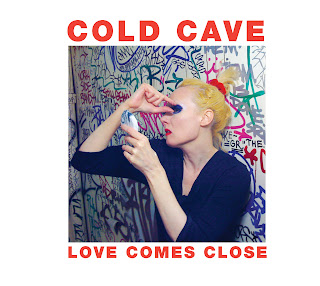
Album: Cold Cave - Love Comes Close

Love Comes Close (Cold Cave)
Album: Love Comes Close
Matador, 2009
Rating: ******** (8/10)

I'm not sure what to make of the Cold Cave debut album, to be (re)released on Matador this week. Though I normally scoff at press releases, the one accompanying this album actually put a finger on a quality of the music I couldn't quite describe myself: "equal parts of romance and nihilism." That's the essence of Cold Cave and what sets them apart from any other band around.

I first heard Cold Cave nearly a year ago, when I caught the tail end of a set they did opening for someone or other at Bowery Ballroom. I enjoyed them, especially because their sheer volume threatened to make my ears bleed, but I didn't think they were anything special. It wasn't until the spring, when I stumbled upon the track "Sex Ads," that I came around to thinking of Cold Cave as something outstanding.

"Sex Ads," which is not featured on Love Comes Close, is one of the noisiest tracks I've ever heard. It sounds like a synthesizer apocalypse and in its unforgiving attack, reminds me more of the no wave movement than of anything contemporary. The most obvious reference point is Suicide, for those who are familiar with the history of synth music, but ultimately, the splintering shards of static and roar of icy, inhuman noise burying a desperate and inaudible vocal melody - well, they aren't much like anyone else at all.

Sadly, no song on Love Comes Close is quite as as bold as "Sex Ads." The album contains a collection of nine rather more accessible tracks which, if not as striking, have a similar intrigue. The opener, "Cebe and Me," creeps forward at a morbidly measured pace, while synthesizers blink unnerving squalls of dissonance and a distorted voice mumbles an undecipherable speech. The tension breaks over the dark pop of the title track. The somber-yet-catchy baritone melody is reminiscent of bands like New Order and Depeche Mode, but stripped of all hints of 80's polish.

There aren't any bad tracks on the album, so picking highlights is a little tricky. "Heaven was Full" is a classic centerpiece, with a memorable title, a heavy, full sound and single-worthy tune. However, the real highlight of the middle stretch is "The Trees Grew Emotions and Died." The simple, rhythmic vocals and ascending synth riff seems too basic to be the album's best track, but it had me on my knees.

From the dance pop of "Life Magazine" to the would be 80's radio hit "Youth and Lust" and the krautrock-inspired "Laurels of Erotomania," the album is mysteriously refreshing. The sounds are dated and could come straight from the earliest digital synthesizers of the late 70's and early 80's. This is cheesy and gives the whole album a campy sound. Further "campiness" is added by the fact that the actual synth parts are, for the most part, incredibly simple and obvious. But that's not to say the band is just some sort of Duran Duran throwback - the level of noise and the indie rock-influenced imperfection are distinctly modern. Couple this with great songwriting, and you've got something very worth listening to.

Check it out! [MySpace]

Monday, October 19, 2009

Album: Little Girls - Concepts

Concepts (Little Girls)
Album: Concepts
Paper Bag, 2009
Rating: ******* (7/10)

Little Girls first came to my attention last summer when the mythical "Jasper" saw them live and told me they were the shit. I saw them for myself twice, and it quickly became apparent why they were associated with Mike Sniper's Captured Tracks label early on - Mike Sniper (a.k.a. Blank Dogs) is the only other band around making this type of nervous, lo-fi, gothy post-punk. Like Blank Dogs, Little Girls is mostly a solo project, this one of Josh McIntyre, a high-strung youngster from Toronto whose influences span from no wave to hip-hop.

Concepts is a spooky album that does well capturing the band's tense energy - and it's this tense energy that sets the band apart from its peers and makes it worthy of note. On the opening track, "Youth Tunes," the vocals are almost completely inaudible, warning us that McIntyre will be speaking from a dark and distant place. The vocals never really come above the surface on the whole album, so though the press release says the album is about coming of age, the listener's only real clues are the song titles.

Following "Youth Tunes," the ominous mix continues with the atonal, reverbed vocals of "Seeing." "Tambourine" is the first semi-accessible song, with a great riff and vocals, but we don't leave the minor scales until "Imaginary Friends," a tune that manages to be simultaneously upbeat and sinister. The tightly wound, repetitive "Venom" is something of a mess, with the instruments and vocals seemingly fighting for control of the rhythm. [Update: it just occured to me that I should have indicated that comment on "Venom" is a compliment. (11/6)]

However, there are some questions of originality. The dramatic melodies of "Salt Swimmers" and "Thrills" are distinctly familiar - I'm almost positive I've heard the latter in some sort of musical theater or soundtrack. This may be more reference than accident, showing a refusal to be held back from dramatics by any typical indie rock sense of self-consciousness. It's a bold move, but I'm dubious that this was the best way for the band to display their lack of self-awareness.

Moreover, the Joy Division influences are undeniable, and at times a little overboard. "Concepts" has almost the same bass riff as "Disorder" and "Last Call" also borrows more than a few notes from Bernard Summer and Peter Hook. The similarities don't ruin the music, by any stretch, but it is a bit disappointing if you're looking for something new.

The songwriting in general leaves a bit to be desired. Repetition is clearly a part of Little Girls' craft, as is their anticlimactic composition, but the songs sometimes stagnate too much, crossing that thin line from expressing a dark ennui to being, well, a little boring. I appreciate short, simple songs, instead of cramming a million ideas into a single track, but here it sounds a little underdeveloped.

Still, all in all, Concepts is an electrifying album and shows a band with great promise. The uneasy darkness of all eleven tracks demonstrates McIntyre's rare ability to translate emotion into sound, making an indescribable anxiety palpable in the music. However, the band is young and this album wants for maturity in many instances. Of course, the rawness adds to the excitement in a way, but it also frustrates. The unsophisticated songwriting makes this album seem far more trifling than it actually is. However, McIntyre's sharp sense of pop, his innovative ideas about sound, and most of all, his sincerity are unmistakable. He's the real deal.

"Growing" makes a warm closer, as though the tensions of the album have found a little peace. But despite the major key, it's not a happy peace. It's a lullaby for the darkest of hearts, a resignation without resolution and a testament to the secrets told, if never explained, on the previous ten tracks of the record.

Thursday, September 17, 2009

Album: A Sunny Day in Glasgow - Ashes Grammar

Ashes Grammar (A Sunny Day in Glasgow)
Album: Ashes Grammar
Mis Ojos Discos, 2009
Rating: ****** (6/10)

I’ve been sitting on this album for months now, listening from time to time and trying to figure out what to write. Finally, the release date (September 15) snuck right past me, and still nothing written.

Finally, I have to admit that it’s simply not a remarkable album. I’ve known of ASDIG long before I started this site, and was a major fan from the start. Their walls of electronic and guitar sounds are startling and make what feels like a physical impact (like running into a brick wall, yeah?). This coupled with an underdeveloped but clear pop sensibility made the band a quick favorite.

As such, I’ve been looking forward to this album since last fall (actually, you can read proof of that in my first RFR review ever, which was of ASDIG’s CMJ show) and when I got my hard copy and put it in my stereo this summer, I was prepared for a mind-blowing experience. Instead…nothing.

I didn’t and don’t hate this album by any stretch. It certainly has its good moments. But it’s not only fair but even necessary to judge an album based on its ambitions, and at twenty-two tracks, it’s clear this record aimed high. An album made as party music can be judged on being fun and catchy, but one like this must be evaluated for its artistic achievements, sonically and conceptually. And held to its own high standards, Ashes Grammar fails.

First of all, there is the lack of hooks and melodies to engage the listener. A few songs, starting with the unexpectedly bouncy "Failure" (already the fourth track) are head-nod-able, though you have dig through quite a bit of chaff to find them. And no matter how hard you search, you won’t find a riff in over an hour of music.

That’s not to say that melodies, riffs and hooks are the only way music can be good. Unfortunately, this album doesn’t really succeed on other fronts either. Although there is a vague sense of journey from track to track, the album doesn’t leave you far from where it started. On both the song and album levels, Ashes stagnates. A sense of composition is, quite simply, absent.

Given the CMJ set last fall and other murmurings, I was expecting an album with balls, something loud and edgy and aggressive. Instead, this sports more semi-choral vocals, gradual volume shifts and seemingly arbitrary synthesized tones. I don’t have much love of wussy music that isn’t pop, since I can’t find anything to hold on to. Songs like this album’s title track seem decidedly un-brave.

The album does occasionally shine. "Failure" is a welcome relief from monotony, and "Passionate Introverts" is the closest the album comes to meeting my expectations. Sadly, the few good tracks are diluted by the sheer track count on the album, and finding them buried in the snooze-fest hardly seems worth the effort.

[MySpace]

Tuesday, August 18, 2009

Album: The Antlers - Hospice

I originally published this review in February. Hospice is rereleased today on Frenchkiss Records.

Hospice
Album: Hospice
self-released Frenchkiss, 2009
Rating: *********' (9.5/10)

When I first listened to the Antlers in late 2008, I shrugged it off as nothing special, but Pop Tarts Suck Toasted was carrying on about this album at such length that I decided to give it a listen. And I was completely taken aback by what I heard.

Hospice is not only an outstanding album, it's one of the most exciting releases since the 90's. I wavered on the rating - sometimes leaning towards 10/10 to help get it into the spotlight it deserves, other times thinking 9/10 would be more appropriate - it's far from perfect and far from the level of the masterpieces it references. In the end, I settled on 9.5 - the highest rating I've given an album to date and also the first time I have ever used a half point. The reason? This album is the most worthy of your attention of any I have ever reviewed (on this blog or elsewhere) - but I don't want to believe this is as good as it's going to get. I want to believe another Loveless or Aeroplane Over The Sea is in the works, and I'm saving the 10/10 for that. But in this meantime, we have this, and this is something.

But to say I enjoy or even like Hospice would be misleading. In fact, it is easily the most unsettling album I have heard in years and for several weeks, it consumed me, even triggering the return of nightmares I thought I had shaken long ago. It's an intensely haunting, profoundly affecting album that will stay with listeners long after the final notes.

On the surface, Hospice is a concept album that intertwines stories of terminal cancer, mental illness and dissolution of a relationship into dysfunction and cruelty. Where these tales intersect is the painful truth that love does not conquer all. The record documents songwriter Peter Silberman's growing awareness of this immutable fact, revealing not only feelings of heartbreak and helplessness, but also, and most importantly, a pervading guilt. The narrator's point of view is always that of a caretaker, seeking to heal, to comfort, to save, and the entire album reads as a confession of failure.

Sonically, Hospice is a creeping ambient lo-fi, as if Radiohead had recorded OK Computer in Thom Yorke's basement. At some moments it assaults the eardrums, while at others, it replicates the shaky hum of life-support machines. But mostly, it is full of subtle sounds breaking up, faltering and struggling under the weight of the album's pain. It is this, the struggle of each sound, that sets Hospice apart from such reference points as OK Computer and Arcade Fire's Funeral. Hospice's best beats are built with shards of static and noise and mixed with such restraint that many listeners may not even notice a drum track at all. Synthesized sounds are prominent, but they never seem like a cheap trick - instead, they mimic the oppressive sterility of the album's hospital setting. The use of horns may be an overblown nod to Neutral Milk Hotel but it's restrained enough to forgive and the other sounds - the weakly bowed banjo, thudding piano chords and shivering guitars - are more inspired. All are masterfully executed.

Over the uneasy ambiance, Silberman's voice carries the album. His high crooning is clear and controlled, but although his tunes and tone are spot-on, there's something unsteady about his delivery - it's the wavering of a young voice delivering painful and personal words. And there is good variety alongside the consistency in his voice, ranging from the surprising dramatics on "Sylvia" to the intimate, homey delivery of "Shiva."

The songwriting on the album is imperfect - the often-understated melodies and the album's tempo make it hard to tie everything nicely together. I think this explains why I didn't get drawn in by Hospice's two singles ("Two" and "Bear") when they were released. But viewing the album as a whole, it becomes much more coherent. Melodies are recycled as Silberman revisits stories and ideas, and viewed in this context, most of the tracks do become memorable, each a unique step in the album's journey.

The only really bad song on the whole album is "Thirteen." The first half is an experiment in loud ambiance that doesn't seem to move the album forward. The second is a short song sung by Silberman and guest vocalist Sharon van Etten. Van Etten is a beautiful singer but the sudden introduction of female vocals is jarring, and the addition of a woman's voice to sing a song subtitled "Sylvia Speaks" takes the album's concept to a level of literalism that is, frankly, goofy.

However, this track is the only outstanding mistake. Hospice's two singles and the album track "Sylvia" are all high points, with engaging rhythms and melodies, identifiable choruses and foot-tappable tempos. And even these are outdone by less structured and more intense tracks like "Atrophy" and "Wake." Rising in and out of murky noise, these songs contain many of Silberman's most uncomfortable revelations.

"Wake" comes second-to-last and marks the climax of the story. It is the album's only true moment of absolution: "Some patients can't be saved / But that burden's not on you / Don't ever let anyone tell you you deserve this." Whenever I listen, it takes a few repetitions for the last line to really sink in, and when it does, it usually brings me to (or past) the brink of tears. Anyone who needs to hear these words needs to hear them over and over again before they can begin to believe it. And when I say "needs," I mean that - for the listeners with whom Hospice resonates (and I know I won't be the only one), this moment, this final refrain, is necessary.

But then again, it's not the final refrain. There is one more track, an understated nightmare that draws narrator and listener alike back into the album's underlying terror. It's not that nothing has been accomplished, it's just that healing is a process without an end. Hospice is mercilessly honest - scars will remain, wounds will reopen and everything will not be alright. Though the emotional strides of Hospice are immense, Silberman seems to realize they are dwarfed by the enormity of the task at hand.

A work of remarkable maturity and profound vision, Hospice doesn't sound like the product of musicians barely in their 20's. Perhaps it's the youth of the members, however, that gives the music its kick - a subtle kick, surely, but enough to hold my famously short attention. It's an imperfect work, of course, but it's still a rare and exciting accomplishment. It's musicians like these who will lead us out of indie rock's dead ends and on a personal level, who will help us mend from life's damages and carry on.

[Antlers on MySpace]

Tuesday, June 23, 2009

News: Antlers release remastered Hospice online

After their self-released LP Hospice generated massive acclaim from a bunch of bloggers like me, the band got themselves signed to the excellent Frenchkiss Records. They are rereleasing the album in remastered form in August on CD and vinyl, but it's available digitally starting today.

Here's a few sentences from the review/dissertation I posted back in February (in case you don't have the patience to get through the whole thing):

Hospice is not only an outstanding album, it's one of the most exciting releases since the 90's. On the surface, it's a concept album that intertwines stories of terminal cancer, mental illness and dissolution of a relationship into dysfunction and cruelty. Where these tales intersect is the painful truth that love does not conquer all. Sonically, it's a creeping ambient lo-fi, as if Radiohead had recorded OK Computer in Thom Yorke's basement. It's an imperfect work, of course, but it's still a rare and exciting accomplishment. It's musicians like these who will lead us out of indie rock's dead ends and on a personal level, who will help us mend from life's damages and carry on.

Tuesday, March 3, 2009

News: Antlers release Hospice

I know I've been pimping this album pretty hard lately, but trust me - it's worth the excitement. The official release is today so stop reading and go get a copy!

Here's a few sentences from the review/dissertation I posted last week (in case you don't have the patience to get through the whole thing):

Hospice is not only an outstanding album, it's one of the most exciting releases since the 90's. On the surface, it's a concept album that intertwines stories of terminal cancer, mental illness and dissolution of a relationship into dysfunction and cruelty. Where these tales intersect is the painful truth that love does not conquer all. Sonically, it's a creeping ambient lo-fi, as if Radiohead had recorded OK Computer in Thom Yorke's basement. It's an imperfect work, of course, but it's still a rare and exciting accomplishment. It's musicians like these who will lead us out of indie rock's dead ends and on a personal level, who will help us mend from life's damages and carry on.

Thursday, February 26, 2009

Album: The Antlers - Hospice

Hospice
Album: Hospice
self-released, 2009
Rating: *********' (9.5/10)

When I first listened to the Antlers in late 2008, I shrugged it off as nothing special, but Pop Tarts Suck Toasted was carrying on about this album at such length that I decided to give it a listen. And I was completely taken aback by what I heard.

Hospice is not only an outstanding album, it's one of the most exciting releases since the 90's. I wavered on the rating - sometimes leaning towards 10/10 to help get it into the spotlight it deserves, other times thinking 9/10 would be more appropriate - it's far from perfect and far from the level of the masterpieces it references. In the end, I settled on 9.5 - the highest rating I've given an album to date and also the first time I have ever used a half point. The reason? This album is the most worthy of your attention of any I have ever reviewed (on this blog or elsewhere) - but I don't want to believe this is as good as it's going to get. I want to believe another Loveless or Aeroplane Over The Sea is in the works, and I'm saving the 10/10 for that. But in this meantime, we have this, and this is something.

But to say I enjoy or even like Hospice would be misleading. In fact, it is easily the most unsettling album I have heard in years and for several weeks, it consumed me, even triggering the return of nightmares I thought I had shaken long ago. It's an intensely haunting, profoundly affecting album that will stay with listeners long after the final notes.

On the surface, Hospice is a concept album that intertwines stories of terminal cancer, mental illness and dissolution of a relationship into dysfunction and cruelty. Where these tales intersect is the painful truth that love does not conquer all. The record documents songwriter Peter Silberman's growing awareness of this immutable fact, revealing not only feelings of heartbreak and helplessness, but also, and most importantly, a pervading guilt. The narrator's point of view is always that of a caretaker, seeking to heal, to comfort, to save, and the entire album reads as a confession of failure.

Sonically, Hospice is a creeping ambient lo-fi, as if Radiohead had recorded OK Computer in Thom Yorke's basement. At some moments it assaults the eardrums, while at others, it replicates the shaky hum of life-support machines. But mostly, it is full of subtle sounds breaking up, faltering and struggling under the weight of the album's pain. It is this, the struggle of each sound, that sets Hospice apart from such reference points as OK Computer and Arcade Fire's Funeral. Hospice's best beats are built with shards of static and noise and mixed with such restraint that many listeners may not even notice a drum track at all. Synthesized sounds are prominent, but they never seem like a cheap trick - instead, they mimic the oppressive sterility of the album's hospital setting. The use of horns may be an overblown nod to Neutral Milk Hotel but it's restrained enough to forgive and the other sounds - the weakly bowed banjo, thudding piano chords and shivering guitars - are more inspired. All are masterfully executed.

Over the uneasy ambiance, Silberman's voice carries the album. His high crooning is clear and controlled, but although his tunes and tone are spot-on, there's something unsteady about his delivery - it's the wavering of a young voice delivering painful and personal words. And there is good variety alongside the consistency in his voice, ranging from the surprising dramatics on "Sylvia" to the intimate, homey delivery of "Shiva."

The songwriting on the album is imperfect - the often-understated melodies and the album's tempo make it hard to tie everything nicely together. I think this explains why I didn't get drawn in by Hospice's two singles ("Two" and "Bear") when they were released. But viewing the album as a whole, it becomes much more coherent. Melodies are recycled as Silberman revisits stories and ideas, and viewed in this context, most of the tracks do become memorable, each a unique step in the album's journey.

The only really bad song on the whole album is "Thirteen." The first half is an experiment in loud ambiance that doesn't seem to move the album forward. The second is a short song sung by Silberman and guest vocalist Sharon van Etten. Van Etten is a beautiful singer but the sudden introduction of female vocals is jarring, and the addition of a woman's voice to sing a song subtitled "Sylvia Speaks" takes the album's concept to a level of literalism that is, frankly, goofy.

However, this track is the only outstanding mistake. Hospice's two singles and the album track "Sylvia" are all high points, with engaging rhythms and melodies, identifiable choruses and foot-tappable tempos. And even these are outdone by less structured and more intense tracks like "Atrophy" and "Wake." Rising in and out of murky noise, these songs contain many of Silberman's most uncomfortable revelations.

"Wake" comes second-to-last and marks the climax of the story. It is the album's only true moment of absolution: "Some patients can't be saved / But that burden's not on you / Don't ever let anyone tell you you deserve this." Whenever I listen, it takes a few repetitions for the last line to really sink in, and when it does, it usually brings me to (or past) the brink of tears. Anyone who needs to hear these words needs to hear them over and over again before they can begin to believe it. And when I say "needs," I mean that - for the listeners with whom Hospice resonates (and I know I won't be the only one), this moment, this final refrain, is necessary.

But then again, it's not the final refrain. There is one more track, an understated nightmare that draws narrator and listener alike back into the album's underlying terror. It's not that nothing has been accomplished, it's just that healing is a process without an end. Hospice is mercilessly honest - scars will remain, wounds will reopen and everything will not be alright. Though the emotional strides of Hospice are immense, Silberman seems to realize they are dwarfed by the enormity of the task at hand.

A work of remarkable maturity and profound vision, Hospice doesn't sound like the product of musicians barely in their 20's. Perhaps it's the youth of the members, however, that gives the music its kick - a subtle kick, surely, but enough to hold my famously short attention. It's an imperfect work, of course, but it's still a rare and exciting accomplishment. It's musicians like these who will lead us out of indie rock's dead ends and on a personal level, who will help us mend from life's damages and carry on.

Antlers on MySpace

Friday, February 20, 2009

Release: Gracefully - The Underground Sundae

The Underground Sundae
The Underground Sundae [EP]
Self-released, 2009
Rating: ****** (6/10)

Underground psychedelic pop band Gracefully (formerly known as So L'il) released a free, downloadable EP on Saturday. Yay!

I've been a fan of Gracefully for a while now, since long before the name-change and through several line-up shifts as well. None of these changes really matter because the band's true engine is the strange and brilliant mind of its founder and (to my knowledge) only consistent member, Ben Malkin. And apparently, that remains intact.

As EPs, and particularly free EPs tend to be, The Underground Sunday seems a little unfinished. It's not Malkin's best work, but it's definitely enjoyable and very worth five minutes to download. It's also not a bad introduction to what this band is all about - dreamy, druggy, shoegazey pop.

By far, the best song of the bunch is "Spank Me Slowly," which sounds nothing like the name suggests - it's a sad, tumbling waltz with lyrics based nautical metaphors, something about being on a sinking ship. It's intensely beautiful and might even make it onto a list of my favorite songs ever.

Of course, I've had this song in my possession for a while now because the band seems to stick it on every release. And I can't really blame them - if I wrote a song this beautiful, you can bet I'd be tacking it onto everything else I did. Also, it's hard to say what's an "official" release from Gracefully. The last thing I have from the band is a CDR with no name or track listing and just a square of an apparently-random magazine page for album art. Is this an LP? Who's to say? And in the end, it doesn't matter if Malkin wants to recycle songs - after all, it's not like he's asking anyone to pay for them!

The other songs are also worth a listen. The EP gives a little more to hold on to than some of the band's work - there are more melodies and structures here that you can get a handle on. It's still very psychedelic though, so don't expect a straightforward listen. The music does meander, drifting in and out of focus and not hurrying towards any destination, but it's got enough pop sensibility to hold my attention anyway.

The only really ungrounded song is the closer, "Dear Whipping Boy," and it wouldn't be a real So L'il release without at least one formless experimental number. And although its brand of experimentalism has been done a thousand times over, "Dear Whipping Boy" is still an enjoyable listen. "Underground Sundae" is probably the strongest track after "Spank Me Slowly," with a quirky and not-quite-catchy melody over a rainbow of noisy chords.

Here's what you do: go to gracefully.bandcamp.com and download the record. Then lie down on your bed, put it on and let your mind wander. It's twenty minutes well spent.

Gracefully on MySpace

Tuesday, February 10, 2009

News: Antlers Announce Tour Dates

Hey kids! I've been telling you a lot lately about The Antlers and how they're the greatest thing since sliced bread/OK Computer. Their forthcoming record Hospice easily deserves to be considered one of the defining albums of the decade. Yes, I really mean it!

Anyway, I'm going to wait until closer to the release date for Hospice to give you a proper review, but in the meantime, East Coasters, Midwesterners and Southerners, be sure to mark your calendars!

TOUR DATES
3/5 - HOSPICE RELEASE SHOW at UNION HALL - Brooklyn, NY
3/9 - M ROOM - Philadelphia, PA
3/10 - METRO GALLERY - Baltimore, MD
3/11 - BLACK CAT (BACKSTAGE) - Washington DC
3/12 - NIGHT LIGHT - Chapel Hill, NC
3/13 - TIN ROOF - Charleston , SC
3/14 - tba
3/15 - ALABAMA MUSIC BOX - Mobile, AL
3/16 - SATURN BAR - New Orleans, LA
3/17 - BOONDOCKS - Houston, TX
3/18 - 3/22 - SXSW - Austin, TX
3/24 - tba
3/25 - NORTHSIDE TAVERN - Cincinnati , OH
3/26 - CAFE BOURBON ST - Columbus, OH
3/27 - BRILLOBOX - Pittsburgh , PA

Also, if you want to be sure to get your copy of Hospice as soon as possible, you can pre-order here.